
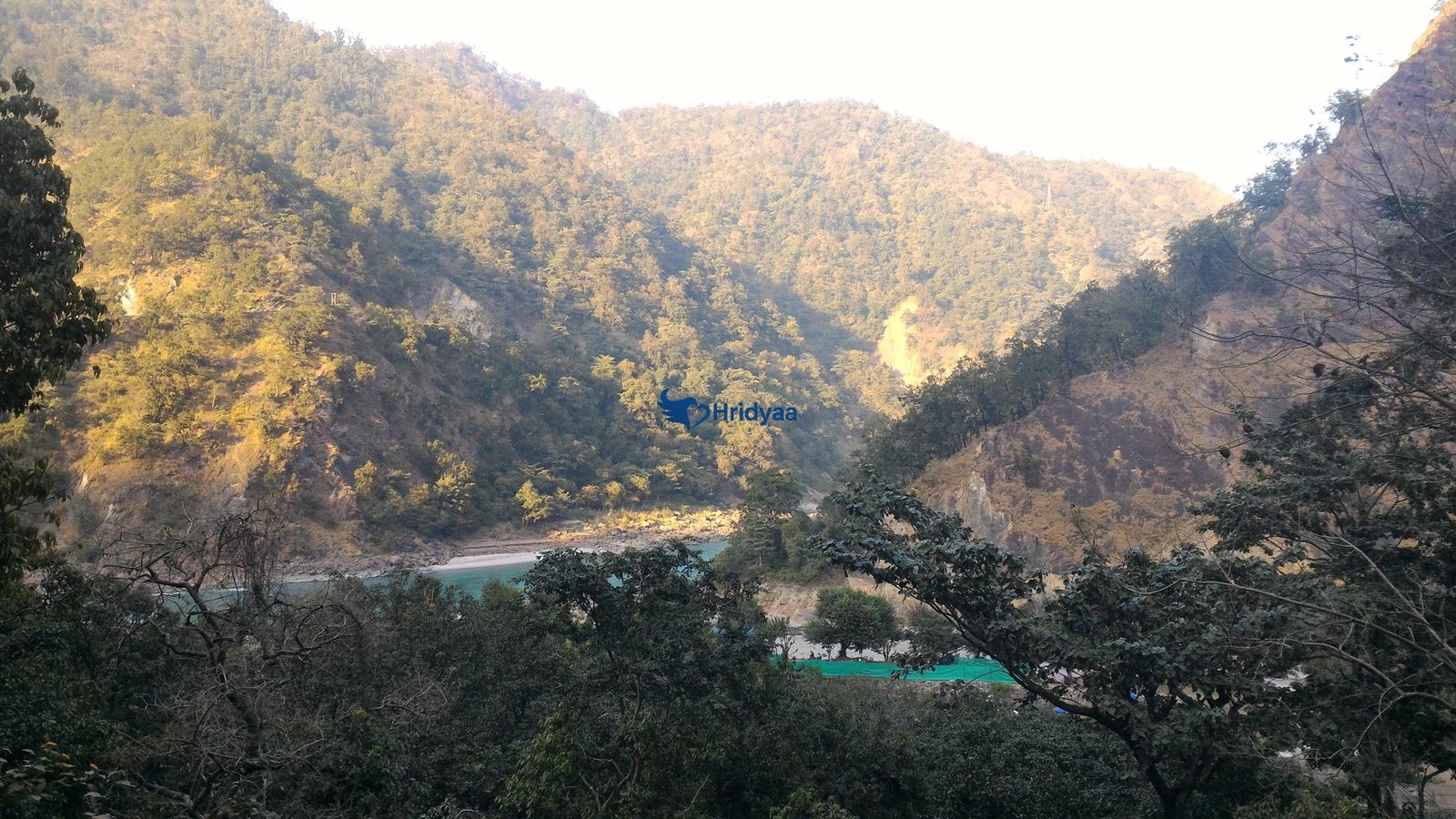
Phool Chatti is one of the quiet transition zones of Rishikesh, sitting between the crowded spiritual hubs and the deeper Himalayan foothills. It is neither a full-fledged tourist destination nor a remote village. Instead, Phool Chatti functions as a pause point — a place where the river slows, the forest thickens, and the town gradually gives way to hills. For travelers seeking calm without complete isolation, Phool Chatti offers a grounded experience.
Where Exactly Is Phool Chatti Located?
Phool Chatti is located about 6–7 kilometers upstream from central Rishikesh, along the Badrinath Highway, between Tapovan and Shivpuri. It lies on the banks of the Ganga, with forested slopes rising sharply behind it. The area is spread out rather than centralized, consisting of ashrams, river-access points, and forest trails instead of markets or town squares. This geography explains its quiet character and limited commercial presence.
Historical and Spiritual Context
The name Phool Chatti is traditionally linked to floral offerings and resting points used by pilgrims traveling along the river route. Historically, this stretch of the Ganga was used by saints and wandering ascetics who preferred staying slightly away from town centers. Over time, small ashrams developed here, maintaining a spiritual atmosphere without attracting mass footfall. The area’s importance has always been functional and contemplative rather than monumental.
Why Phool Chatti Matters Today
Today, Phool Chatti matters as a low-key spiritual and nature zone within the Rishikesh region. It attracts long-stay visitors, meditation practitioners, and travelers looking for quiet accommodation close to the river. Unlike Tapovan, it does not cater to cafés, shopping, or nightlife. Its relevance lies in restraint — it offers access to the Ganga, forest walks, and silence, without turning them into attractions.
What Travelers Often Get Wrong
Many travelers assume Phool Chatti is a sightseeing spot with viewpoints or activities. In reality, there are no major landmarks to “cover.” Others expect easy river access everywhere, but the Ganga here flows strong and deep, limiting safe entry points. Some visitors also confuse Phool Chatti with nearby rafting zones, expecting adventure infrastructure, which largely does not exist within the settlement itself.
Best Time to Visit Phool Chatti and Seasonal Reality
The best time to visit Phool Chatti is from October to March, when temperatures are pleasant and the area remains peaceful.
- October to February: Cool, quiet, ideal for meditation and walking
- March to April: Slightly warmer, forest greenery returns
- May to June: Hot afternoons, limited outdoor movement
- July to September (monsoon season): Lush surroundings but strong river flow and restricted access
During monsoon months, the Ganga swells significantly, and movement near the river must be cautious.
How to Reach Phool Chatti
Reaching Phool Chatti is straightforward by road. Taxis, private vehicles, and shared jeeps operate from Rishikesh along the Badrinath Highway. Travel time is usually 20–30 minutes depending on traffic. There is no railway station or major bus stop here, so all final access is via road. Once dropped, most movement within Phool Chatti is done on foot.
Safety, Rules, and Local Guidelines
Safety in Phool Chatti revolves mainly around river awareness. Swimming in the Ganga is unsafe except at designated points. Forest trails should be explored only during daylight hours. Loud music and disruptive behavior are discouraged, especially near ashrams. Visitors staying overnight are expected to respect early quiet hours, reflecting the area’s spiritual character.
What to Expect When You Actually Visit
On arrival, the pace slows noticeably. Traffic noise fades, replaced by the sound of flowing water and forest insects. There are few signboards and no structured attractions. Days are spent walking, sitting by the river at safe points, or attending ashram routines if permitted. Evenings are quiet, with minimal lighting and early closures. The experience feels inward and unstructured.
Phool Chatti for Different Types of Travelers
For spiritual seekers, Phool Chatti offers proximity to the Ganga without distraction. For nature lovers, it provides forest paths and riverside views without crowds. For casual tourists seeking activity or entertainment, it may feel uneventful. Understanding this distinction is key to enjoying the place rather than misjudging it.
Final Take: Is Phool Chatti Worth Visiting?
Phool Chatti in Rishikesh is worth visiting if you value silence, space, and simplicity. It is not designed to impress or entertain, but to allow stillness. Travelers willing to let go of checklists and timelines often find Phool Chatti unexpectedly meaningful. For those seeking a quieter layer of Rishikesh beyond bridges and ghats, it offers exactly that.


Join The Discussion