

You arrive in Rishikesh just before sunset. The Ganga reflects gold. Temple bells echo across the river.
You thought you booked a spiritual experience.
But by the next morning, something feels different.
Because in Rishikesh, a yoga retreat and an ashram stay may look similar online — yet they offer two completely different journeys.
And the mistake isn’t choosing a retreat.
The mistake is choosing without clarity.
The Yoga Retreat Experience: Comfortable, Structured, Supportive
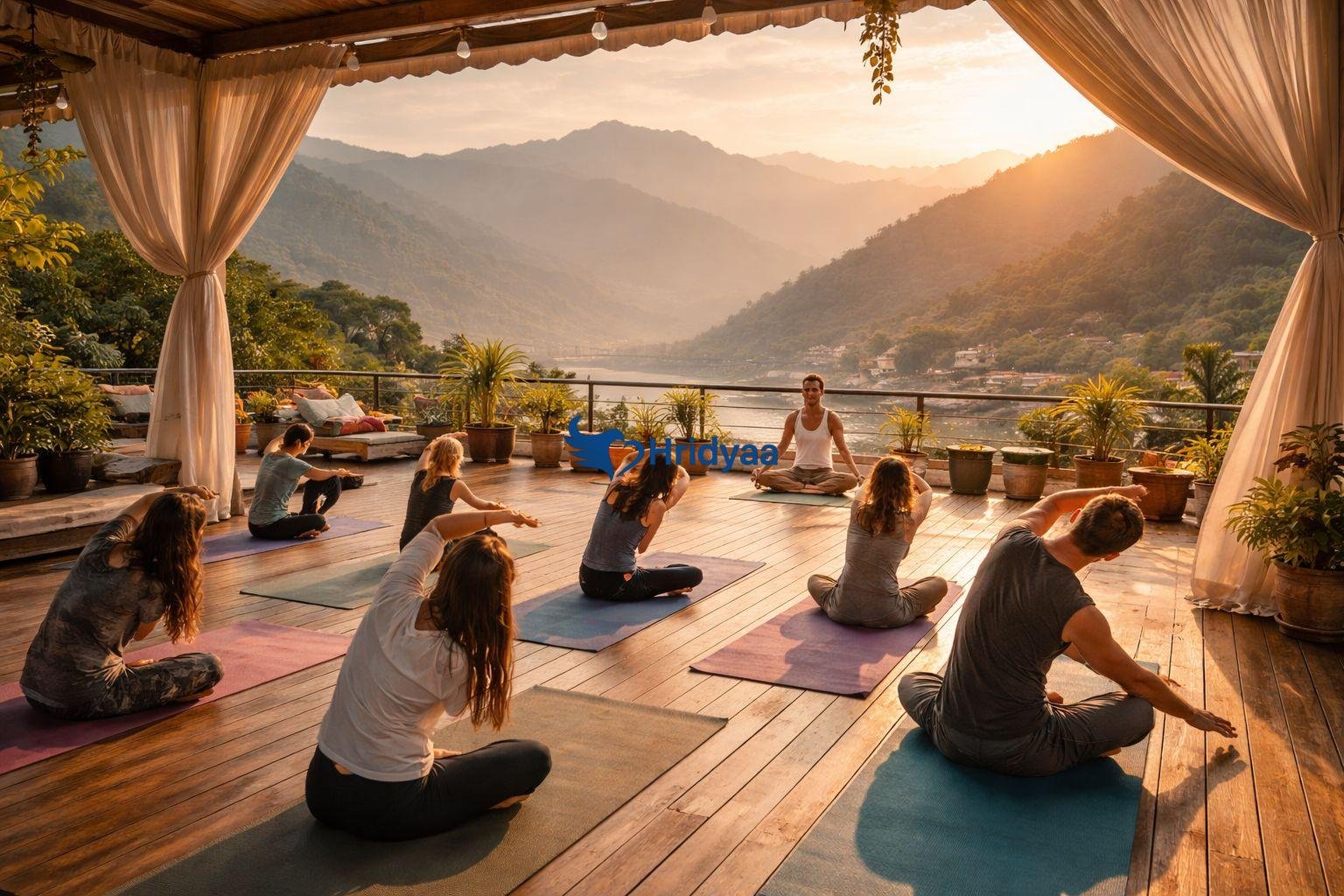
In neighborhoods like Tapovan, yoga retreats are carefully designed experiences.
You wake up at 6:30 am. There’s herbal tea. A rooftop class overlooking the mountains. A balanced schedule of yoga, breathwork, philosophy, and workshops.
Rooms are usually private. Bathrooms are modern. Many places offer Wi-Fi, filtered water, and curated meal plans.
Retreats typically run between 3 and 14 days. Some offer certification. Many cater to international travelers and beginners.
In fact, Rishikesh hosts thousands of short-term retreat visitors each season, especially during peak months, while traditional ashrams continue operating year-round with established spiritual communities.
It feels safe.
It feels guided.
It feels like choosing spirituality — without giving up comfort.
The Ashram Stay: Disciplined, Traditional, Immersive
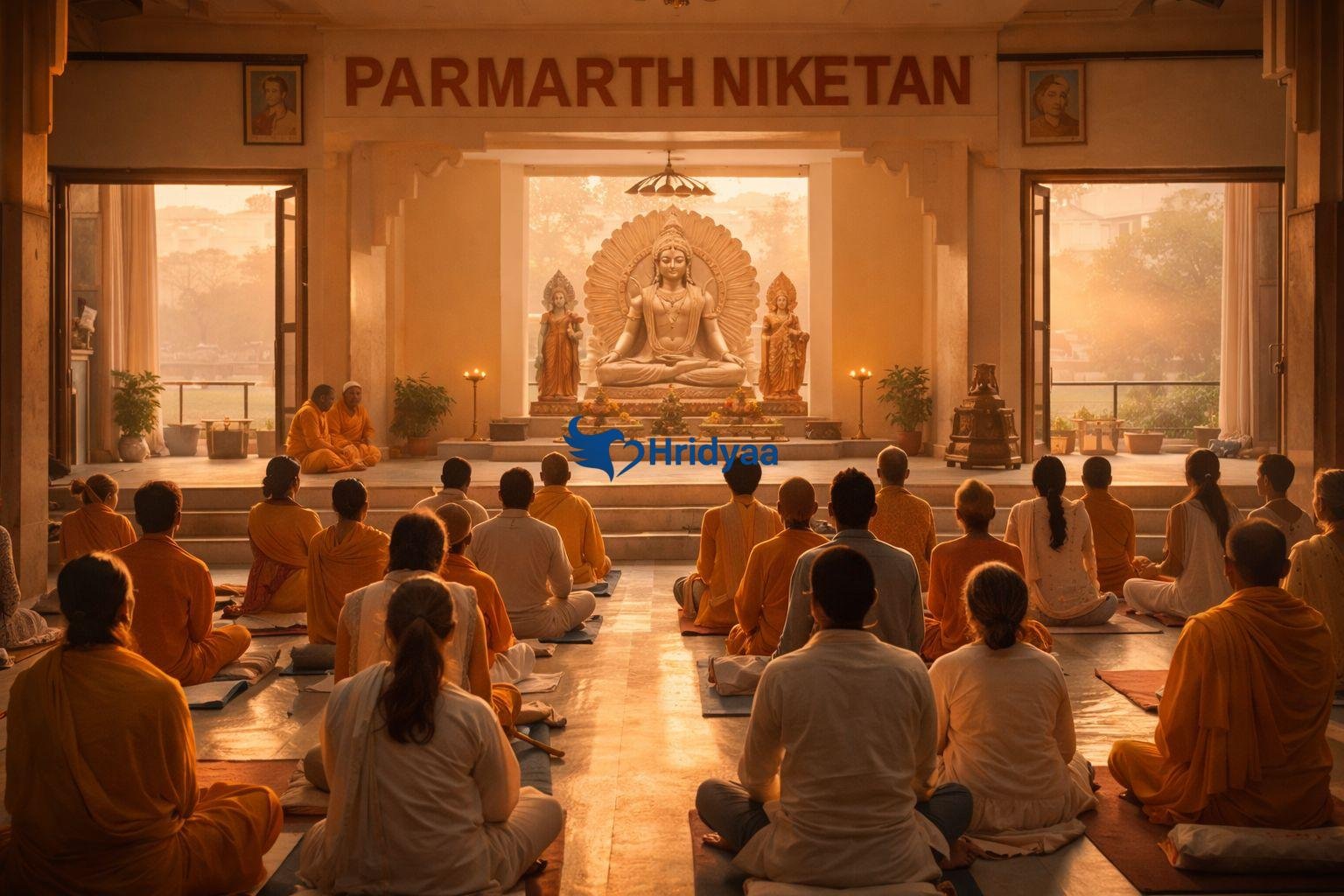
Now picture this.
A bell rings at 4:30 am.
Morning prayer begins before sunrise. Silence is observed in certain areas. Meals are simple and served at fixed times.
Institutions like Parmarth Niketan — known for its large-scale evening Ganga Aarti — and Sivananda Ashram — rooted in traditional Vedantic teachings — are not retreats.
They are living spiritual communities.
Rooms are modest. Participation is expected. Seva (selfless service) may be part of your stay.
There is less flexibility.
More discipline.
Less personalization.
More surrender.
An ashram does not adjust to you. You adjust to it.
You don’t attend when convenient.
You align with the system.
The Location Energy Feels Different Too
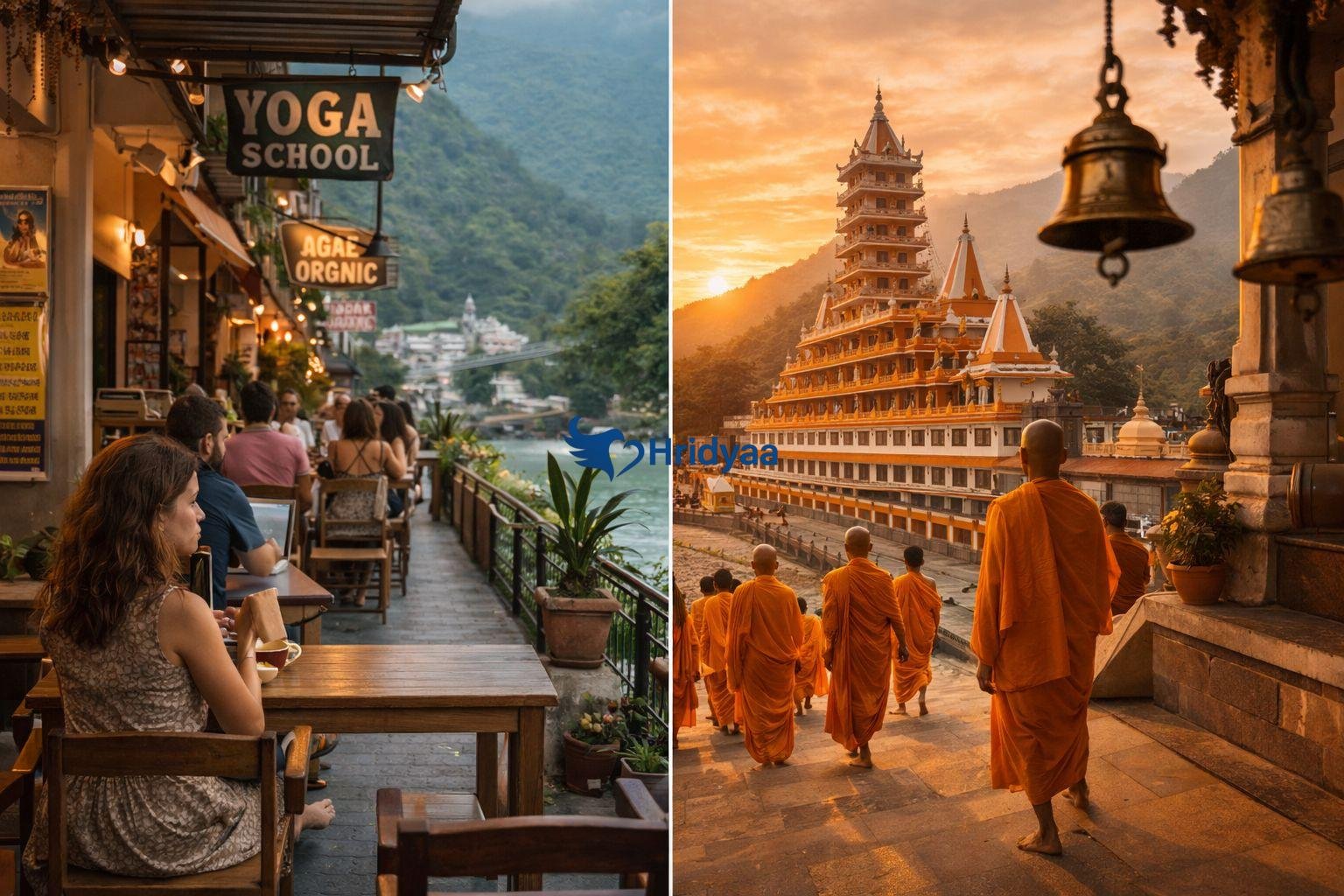
Geography in Rishikesh tells its own story.
Tapovan feels international — yoga schools, organic cafés, digital nomads, rooftop classes.
Near Ram Jhula and Laxman Jhula, the energy shifts. Temple bells. Monks walking quietly. Evening ceremonies at Triveni Ghat.
One side feels exploratory.
The other feels devotional.
Both are authentic.
But they serve different intentions.
The Real Difference Isn’t About Luxury
It’s about structure versus surrender.
A yoga retreat builds transformation around you.
An ashram stay asks you to adapt to its rhythm.
In a retreat, you can skip a session.
In an ashram, your presence is part of the discipline.
Retreat = structured growth.
Ashram = immersive practice.
Neither is superior.
But they are not interchangeable.
The Cost Comparison
A 7-day yoga retreat in Rishikesh generally ranges from ₹20,000 to ₹1,20,000+, depending on accommodation and program depth.
An ashram stay may cost ₹500–₹2000 per day, sometimes donation-based.
But the exchange isn’t just financial.
You’re trading comfort for immersion.
Privacy for community.
Flexibility for discipline.
Before You Book
Many travelers assume yoga retreats and ashrams are the same.
They’re not.
And arriving with the wrong expectation can shape your entire stay.
If you’re still unsure, explore a detailed guide to where to stay in Rishikesh and understand the neighborhood energy before deciding.
Because in Rishikesh, the river flows the same for everyone.
What changes is how ready you are to meet it.


Join The Discussion