
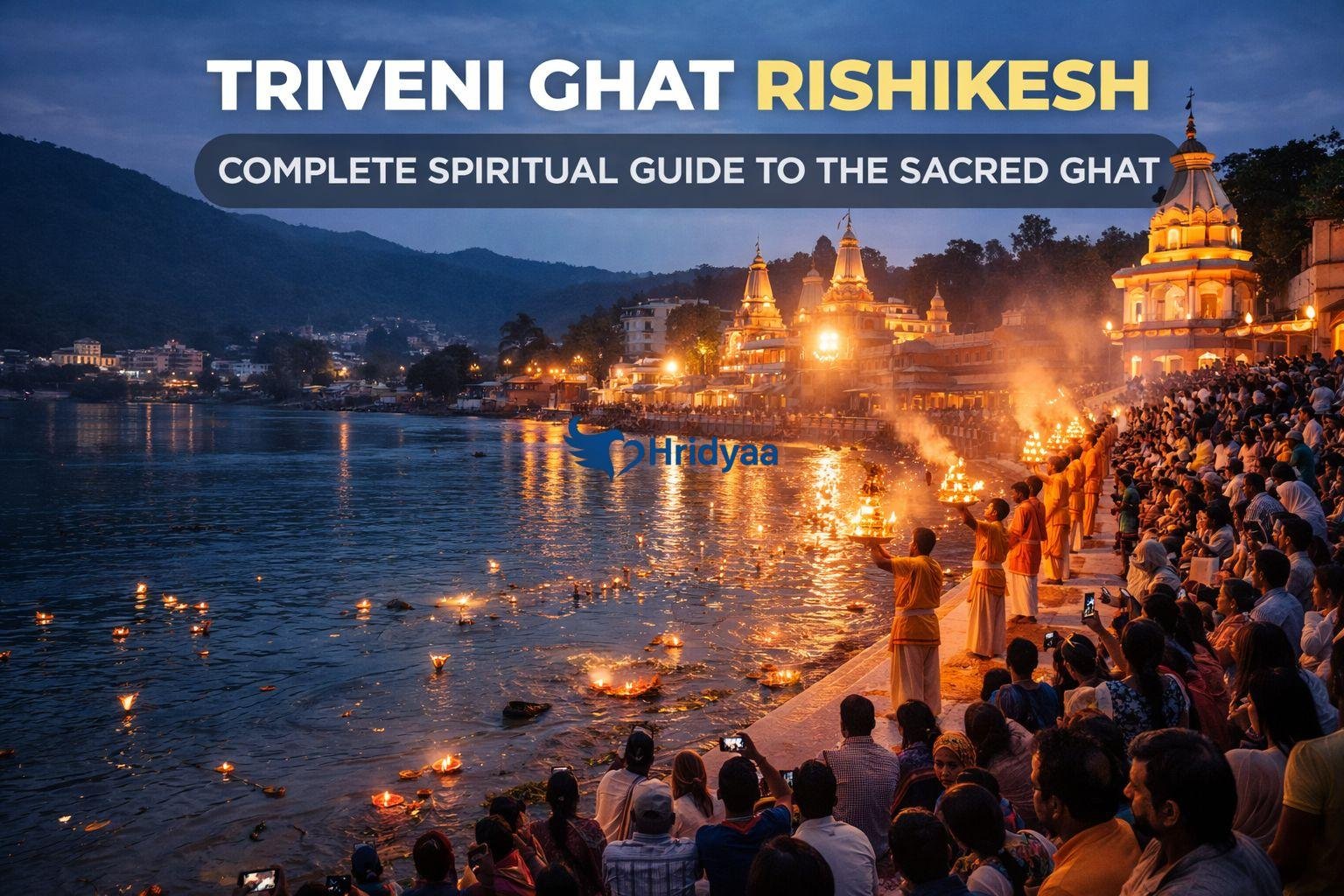
Triveni Ghat is not just another riverside spot in Rishikesh. It is one of the most spiritually charged places in the town, deeply woven into the daily religious life of pilgrims, locals, and visiting devotees. For centuries, people have come here not to sightsee, but to pray, bathe, and connect with something larger than themselves.
Located along the sacred Ganga, Triveni Ghat is believed to be the confluence point of three holy rivers — even though only the Ganga is visible today. This belief gives the ghat a unique spiritual status, making it one of the most important places for rituals, prayers, and evening Ganga Aarti in Rishikesh.
This guide explores Triveni Ghat as a spiritual place first, not a tourist attraction. It explains why the ghat is sacred, what actually happens here every day, how to experience it respectfully, and how it differs from other ghats in Rishikesh.
Where Is Triveni Ghat Located?
Triveni Ghat is located in the heart of Rishikesh, close to the main town area rather than the quieter ashram zones near Ram Jhula or Lakshman Jhula. Its central location is one of the reasons it remains constantly active throughout the day.
Unlike many other ghats that require walking through narrow lanes or ashram complexes, Triveni Ghat is easily accessible by road. This makes it especially convenient for elderly devotees, families, and pilgrims who may not want to walk long distances.
Because of this accessibility, Triveni Ghat functions as a primary spiritual gathering point in Rishikesh, rather than a secondary stop during sightseeing.
Spiritual Significance of Triveni Ghat
The word Triveni means the meeting point of three sacred rivers — traditionally believed to be the Ganga, Yamuna, and Saraswati. At Triveni Ghat, it is believed that all three rivers meet spiritually, even though only the Ganga is visible on the surface.
This belief makes bathing at Triveni Ghat especially auspicious. Devotees believe that a dip here helps cleanse past karmas and brings spiritual merit. For this reason, many pilgrims prefer Triveni Ghat for rituals related to prayer, remembrance, and inner purification.
Unlike ghats that are associated mainly with scenic beauty or tourism, Triveni Ghat is associated with faith and continuity. People come here early in the morning for prayer, during the day for rituals, and in the evening for the Ganga Aarti. The ghat remains spiritually active from dawn to night.
Rituals and Daily Practices at Triveni Ghat
Triveni Ghat comes alive early in the morning, often before sunrise. The first activity of the day is the holy bath, when devotees step into the Ganga with prayers on their lips. For many pilgrims, this bath is not symbolic—it is an essential act of purification before beginning any spiritual routine in Rishikesh.
Throughout the day, you will see people performing personal prayers, offering flowers, lighting incense, and sitting quietly by the river. Some visitors come with specific intentions—gratitude, remembrance, or seeking peace—while others simply sit in silence, allowing the rhythm of the river to guide their thoughts.
Triveni Ghat is also associated with rituals for ancestors and departed souls. Families sometimes come here to offer prayers, believing that the spiritual energy of this place helps carry intentions beyond the material world. These practices are carried out calmly and respectfully, without public display.
What sets Triveni Ghat apart is that these rituals are not restricted to special occasions. They happen every single day, forming a continuous spiritual rhythm that gives the ghat its timeless character.
Ganga Aarti at Triveni Ghat
The Ganga Aarti at Triveni Ghat is one of the most emotionally resonant experiences in Rishikesh. As evening approaches, the atmosphere gradually changes. The sounds of daily activity fade, lamps are prepared, and people begin to gather quietly along the steps.
When the aarti begins, priests offer prayers with oil lamps, incense, and rhythmic chants. The light of the lamps reflects on the flowing river, creating a moment that feels both intimate and expansive. Unlike more tourist-heavy aarti locations, the aarti at Triveni Ghat retains a deeply devotional tone.
Many attendees are pilgrims rather than casual visitors. People participate with folded hands, closed eyes, or silent contemplation. Even first-time visitors often feel drawn into the stillness of the moment.
The aarti is open to everyone and does not require any ticket or booking. It is a shared spiritual experience, where devotion rather than spectacle takes center stage.
Best Time to Visit Triveni Ghat
Triveni Ghat offers different experiences depending on the time of day, each with its own spiritual quality.
Mornings are ideal for those seeking quiet and reflection. The ghat feels gentle and personal, with fewer crowds and a slower pace. This is the best time for prayer, meditation, or simply sitting by the river.
Evenings, especially during the Ganga Aarti, are more collective and devotional. The energy is stronger, and the presence of many people adds to the emotional depth of the experience.
Seasonally, Triveni Ghat remains active throughout the year. Winters bring clearer air and calmer surroundings, while summers can be warmer but spiritually vibrant. During festivals and special religious days, the ghat becomes especially lively, though also more crowded.
How Triveni Ghat Is Different from Other Ghats in Rishikesh
Rishikesh has many ghats, but Triveni Ghat holds a distinct place among them. While ghats near Ram Jhula and Lakshman Jhula often feel closely tied to ashrams, yoga centers, or scenic walking routes, Triveni Ghat functions primarily as a ritual and prayer space.
Other ghats may feel quieter or more picturesque, but Triveni Ghat feels purpose-driven. People come here with intention—to bathe, to pray, to attend the aarti, or to perform rites that carry personal meaning. This gives the ghat a seriousness and depth that is immediately noticeable.
Another difference lies in accessibility. Triveni Ghat is easier to reach for a wide range of visitors, including elderly devotees and families. Because of this, it becomes a shared spiritual ground where people from different backgrounds and stages of life gather for the same reason: faith.
Rather than competing with other ghats, Triveni Ghat complements them by serving as the spiritual heart of the town.
Visiting Triveni Ghat with Family and Elderly
Triveni Ghat is one of the most family-friendly spiritual places in Rishikesh. The steps are broad, the area is open, and there are spaces to sit and rest without needing to walk long distances.
Elderly visitors often feel comfortable here because the ghat does not require climbing steep paths or navigating narrow lanes. Morning visits are especially suitable, as the environment is calmer and less crowded.
Families with children are welcome, particularly during daylight hours. Parents usually keep children close near the water, but the overall atmosphere remains respectful and safe. The evening aarti can also be meaningful for families, as long as they are prepared for larger crowds.
The key is to visit with patience and awareness, allowing enough time to move slowly and comfortably.
Etiquette, Rules, and Respectful Behavior at Triveni Ghat
Triveni Ghat is a living place of worship, and visitors are expected to treat it with respect.
Modest clothing is recommended, especially for those participating in rituals or attending the aarti. Loud conversations, playing music, or treating the ghat as a casual hangout space is generally discouraged.
Photography is allowed, but it should never interrupt rituals or intrude on personal moments of prayer. Many people come here during emotionally significant times, and sensitivity is important.
Offerings made to the river should be simple and biodegradable. Maintaining cleanliness is considered part of spiritual responsibility at the ghat.
Above all, visitors are encouraged to observe before acting. Watching how locals behave provides the best guidance on how to move, sit, and participate respectfully.
Festivals and Special Occasions at Triveni Ghat
During major Hindu festivals, Triveni Ghat takes on an even deeper spiritual intensity. The number of devotees increases, rituals extend throughout the day, and the evening aarti becomes especially powerful.
On auspicious days, the ghat fills with the sound of chants, bells, and prayers. While these times can be crowded, they also offer a rare glimpse into the collective devotional energy that defines the place.
Visitors during festivals should be prepared for limited space and longer waiting times, but those who come with patience often find the experience deeply moving.
Frequently Asked Questions About Triveni Ghat
Why is Triveni Ghat considered more sacred than other ghats in Rishikesh?
Triveni Ghat is believed to be the spiritual confluence of three sacred rivers—Ganga, Yamuna, and Saraswati. Even though only the Ganga is visible, this belief gives the ghat a unique spiritual status, making it especially important for prayers, holy baths, and ancestral rituals.
Is Triveni Ghat mainly for pilgrims or can tourists also visit?
While Triveni Ghat is primarily a place of worship, visitors and tourists are welcome. The key difference is intention—people who visit with respect and patience usually find the experience meaningful, even if they are not deeply religious.
What time should I visit Triveni Ghat for a peaceful experience?
Early morning is the most peaceful time to visit Triveni Ghat. The crowds are smaller, the atmosphere is calm, and the focus is on personal prayer and reflection. Evenings are more vibrant due to the Ganga Aarti.
Is the Ganga Aarti at Triveni Ghat free to attend?
Yes, the Ganga Aarti at Triveni Ghat is free and open to everyone. There is no ticket or reservation required. People usually arrive a little early to find a comfortable place to sit or stand.
How long should I spend at Triveni Ghat?
Most visitors spend between 30 minutes to 1 hour during a regular visit. During the evening aarti or on special days, people often stay longer. There is no fixed time—many stay as long as they feel connected.
Is bathing at Triveni Ghat safe?
Bathing is commonly practiced here, especially in the morning. However, visitors should stay close to the steps, avoid deeper water, and be cautious during the monsoon season when the river flow can be strong.
Can elderly people visit Triveni Ghat comfortably?
Yes, Triveni Ghat is one of the more accessible ghats in Rishikesh. It is close to the road, has broad steps, and offers space to sit and rest, making it suitable for elderly visitors.
Are there any specific dress rules for visiting Triveni Ghat?
There are no strict rules, but modest clothing is strongly recommended. Since Triveni Ghat is a religious place, covering shoulders and knees is considered respectful, especially during rituals and aarti.
Is photography allowed at Triveni Ghat?
Photography is allowed, but it should be done discreetly. Visitors are expected to avoid photographing people during prayers or rituals without permission and should never disrupt the aarti or personal moments.
Is Triveni Ghat crowded every day?
Triveni Ghat sees visitors throughout the day, but it is not always crowded. Mornings are quieter, while evenings—especially during the aarti—can be busy. Festivals and auspicious days attract larger crowds.
Final Thoughts on Triveni Ghat
Triveni Ghat is not a place to rush through. It asks for stillness, patience, and awareness. Unlike spots designed for sightseeing, its power lies in continuity—prayers that happen every day, rituals that have remained unchanged for generations, and a river that carries belief as much as water.
For pilgrims, Triveni Ghat represents faith and tradition. For visitors, it offers a chance to witness the spiritual rhythm of Rishikesh without performance or excess. Those who come with openness often leave with a sense of calm that stays long after they walk away from the river.
As a spiritual place, Triveni Ghat does not try to impress. It simply exists, quietly and steadily—much like the devotion it inspires.


Join The Discussion