
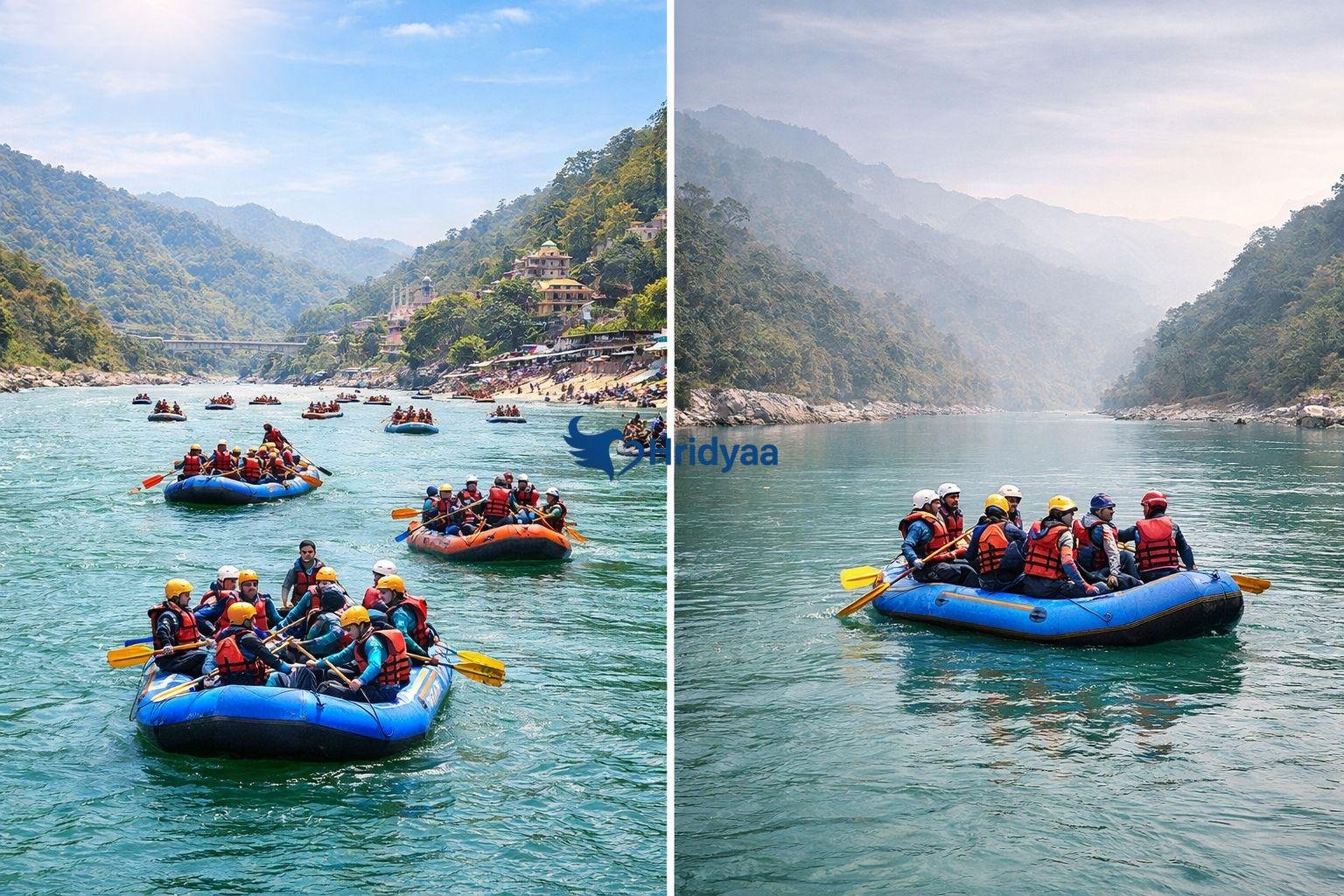
If you’ve searched for rafting recently, you’ve probably noticed something confusing.
Prices for the same stretch vary widely across months and booking platforms. Many travelers wonder why rafting price change in Rishikesh happens so frequently across seasons. Is someone overcharging? Is cheaper rafting unsafe? Or is there a real reason behind this fluctuation?
The truth is simple — rafting price change in Rishikesh is not random. It happens because river conditions, tourist demand, operational rules, and seasonal safety factors change throughout the year.
Understanding this rafting season price difference helps you make a smarter decision instead of just chasing the lowest number.
Why Does Rafting Price Change in Rishikesh?
Rafting prices in Rishikesh change due to:
- Seasonal tourist demand
- River water level changes
- Controlled release from Tehri Dam
- Weekend and holiday surge pricing
- Government safety regulations
These factors directly influence operational cost and availability, which explains why rafting cost varies across seasons and even within the same month.
If you’re comparing all available stretches and planning your experience, explore our complete Rishikesh Rafting options to see route-wise pricing and availability.
If you want to see the latest official breakdown including age limits and safety rules, read: River Rafting in Rishikesh Cost, Age Limit & Safety (2026)
Now let’s break each factor down properly.
Summer vs Winter: The Real Rafting Season Price Difference
Rafting in Rishikesh is highly seasonal, and this rafting season price difference is the biggest reason prices fluctuate annually.
Here’s how the yearly pattern works:
March – June (Peak Season)
Summer vacations bring heavy tourist inflow.
Rafting demand reaches maximum capacity.
Prices typically rise due to limited daily slots.
July – September (Monsoon Restrictions)
River flow increases significantly.
Operations may be restricted depending on district safety advisories.
October – February (Moderate Season)
Cooler weather.
Balanced tourist traffic.
More stable and competitive pricing.
Typical 16 km Route Price Variation
| Season | Demand Level | 16 km Average Price Range |
|---|---|---|
| March–June | Very High | ₹1200–₹1800 |
| October–February | Moderate | ₹600–₹1200 |
| Monsoon (July–September) | Restricted | Limited Operations |
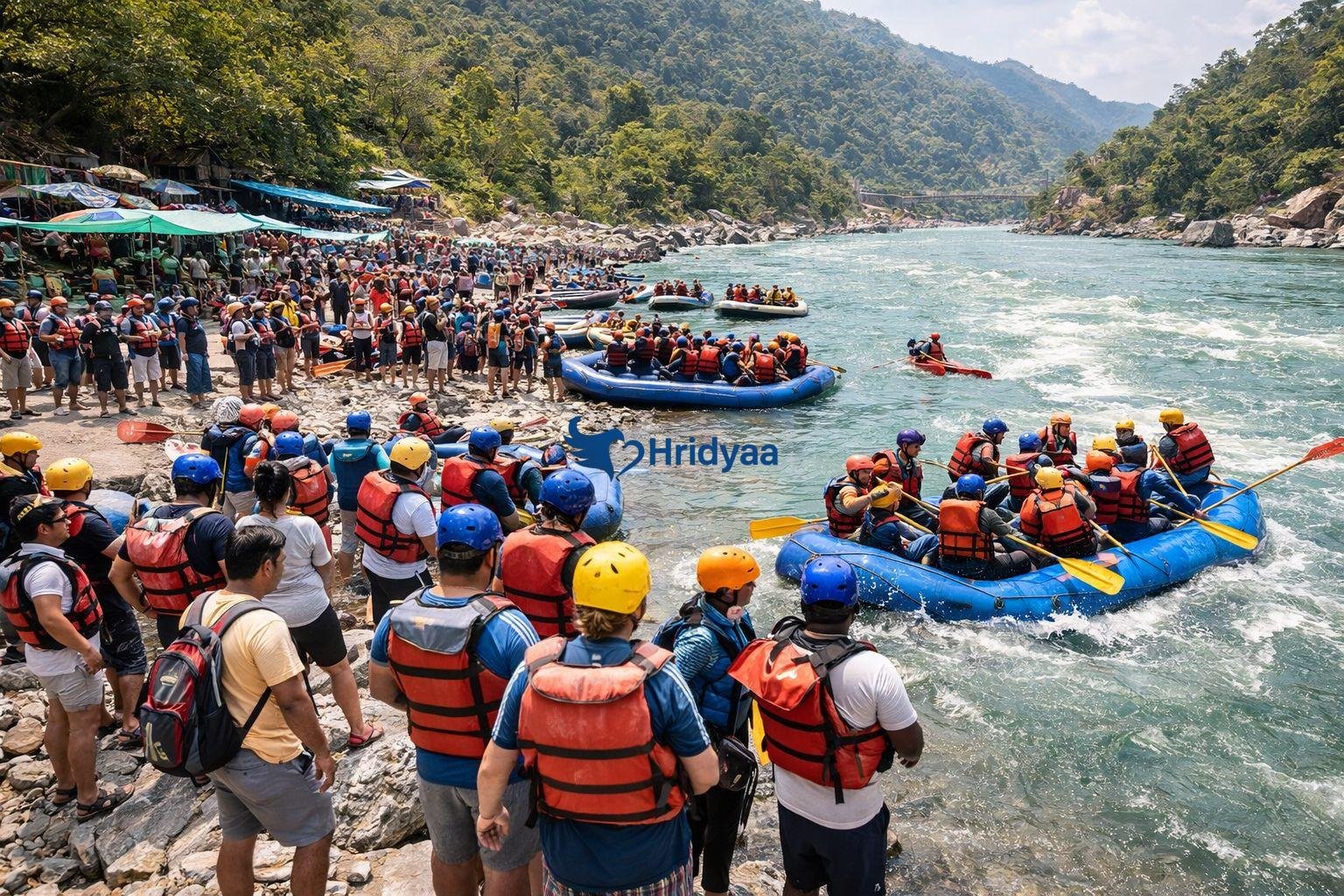
The most popular stretch is the 16 km rafting route from Shivpuri. You can explore its full price breakdown here: 16 KM Rafting in Rishikesh Price Guide
During peak summer, demand exceeds operational capacity. That imbalance directly causes seasonal price shifts.
This rafting season price difference is not arbitrary — it’s demand-driven.
If you’re planning your trip and wondering which months balance pricing and adventure best, read: Best Time for River Rafting in Rishikesh
Water Level & Dam Release: The Hidden Operational Factor
Here’s something most travelers don’t realize.
Rafting in Rishikesh operates on the sacred Ganga River, and its water flow is influenced by glacier melt and controlled dam releases.
The controlled release from Tehri Dam upstream plays a major role in river volume. When discharge increases, rapid intensity changes.
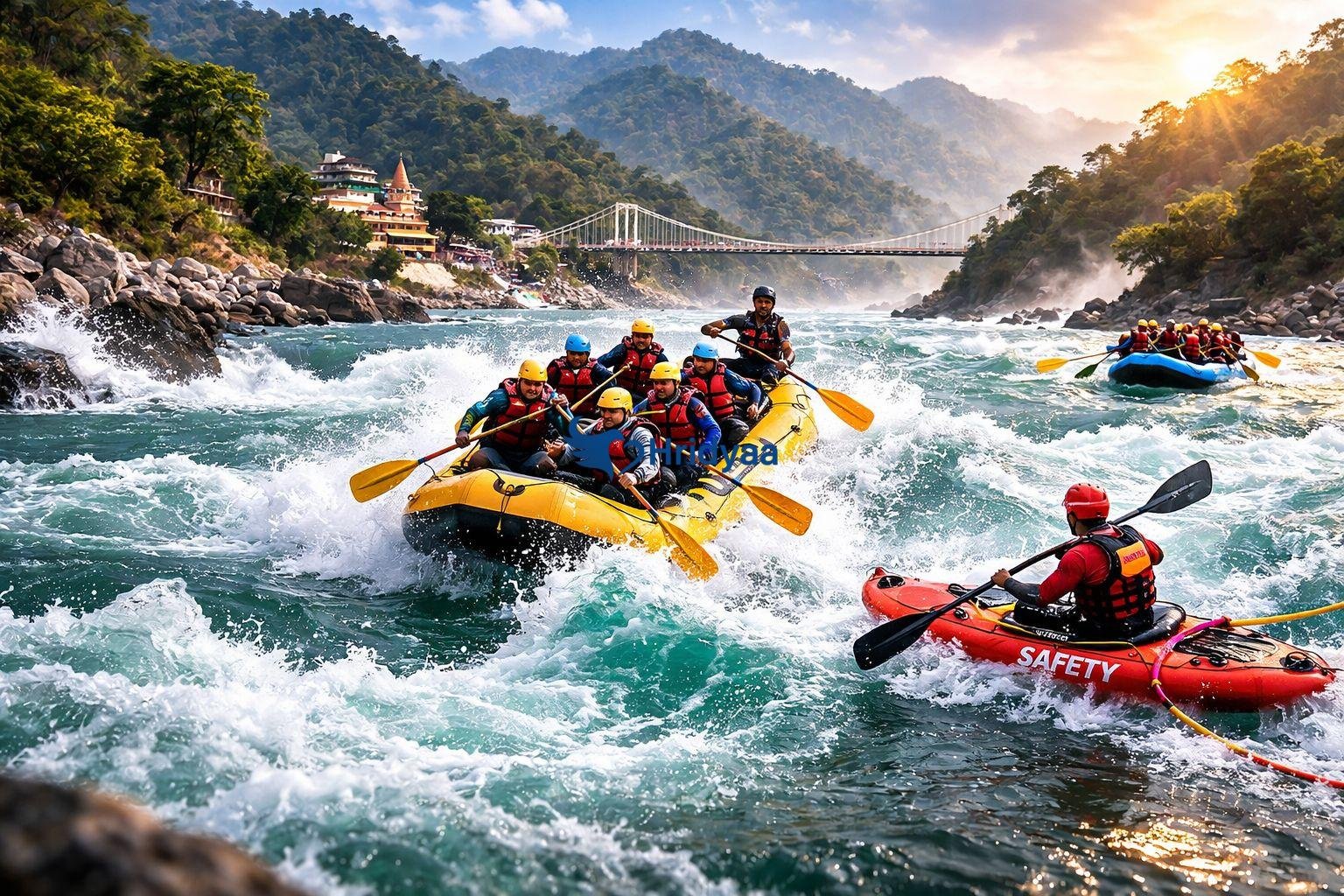
During higher water flow:
- Rapids become more powerful
- Additional safety kayaks may be deployed
- More experienced guides are assigned
- Raft spacing is strictly regulated
- Rescue preparedness increases
These adjustments increase operational responsibility and cost.
That’s a major reason why rafting cost varies beyond just distance.
If you’re curious how the dam ecosystem shapes the region’s water system, explore: Tehri Lake Day Trip Guide
When water levels are stable in winter:
- Rapids are predictable
- Risk factor lowers
- Operational flow is smoother
- Pricing becomes more competitive
To understand the full safety structure and how regulations impact rafting operations, read the complete: Rishikesh Rafting Guide
River-dependent adventure sports never follow flat pricing models. Flow conditions directly affect cost structure.
Why Rafting Cost Varies Even Within the Same Season
Even during peak months, pricing can differ between two consecutive weekends.
This explains why rafting cost varies even within the same season.
For example:
- Saturdays have higher booking pressure
- Long weekends trigger demand spikes
- School holidays increase family bookings
- Festival and New Year periods create surge pricing
- Last-minute bookings often cost more
Adventure tourism pricing behaves like airlines and hotels — it reacts to demand intensity.
So if you saw ₹900 earlier and ₹1500 today, it usually reflects demand fluctuation, not inconsistency.
If you want a complete overview of routes, safety structure, seasonal insights, and booking tips, explore the full: Rishikesh Rafting Guide
Why Rafting Price Change in Rishikesh Continues Beyond Seasonality
Seasonal demand and river flow explain a large part of rafting price change in Rishikesh — but they are not the only factors.
Even during stable river conditions, pricing can shift based on demand pressure, safety compliance, route selection, and operational capacity.
Understanding these deeper commercial dynamics reveals why rafting cost varies across weeks, weekends, and booking periods.
Weekend vs Weekday: The Hidden Surge Factor
One of the most overlooked reasons why rafting cost varies is weekend demand.
Rafting in Rishikesh operates under district administration regulations that limit:
- Number of rafts per day
- Operational time windows
- Launch intervals
On weekdays:
- Lower tourist volume
- Easier slot availability
- More competitive pricing
On Saturdays and long weekends:
- Booking pressure increases sharply
- Prime slots sell out quickly
- Prices rise due to limited daily capacity
Example: 16 km Route Price Comparison
| Day Type | Demand Level | 16 KM Average Price |
|---|---|---|
| Weekday (Mon–Fri) | Moderate | ₹900–₹1200 |
| Saturday | High | ₹1400–₹1800 |
| Long Weekend / Holiday | Very High | ₹1500–₹2000 |
Booking mid-week can easily save ₹300–₹500 per person.
This is one of the clearest examples of why rafting cost varies even when river conditions remain stable.
Government Safety Regulations & Licensing Impact
Rafting in Rishikesh is not an unregulated activity. It follows strict district safety norms.
Mandatory requirements include:
- Certified rafting guides
- Approved life jackets & helmets
- Pre-launch safety briefing
- Fixed operational timings
- Insurance compliance
When enforcement tightens or safety requirements increase, operational cost also rises.

For example:
- Additional rescue kayaks during higher flow
- Reduced raft volume per day
- Stricter slot allocation
All of this influences pricing structure.
Extremely low pricing should always be evaluated carefully.
Adventure safety always comes at a structured operational cost.
Route Length: Distance Directly Impacts Price
Another major reason rafting season price difference exists is route selection.
Not all rafting experiences are identical.
| Route | Distance | Difficulty Level | Price Impact |
|---|---|---|---|
| Brahmpuri to Rishikesh | 9 km | Beginner | Lowest |
| Shivpuri to Rishikesh | 16 km | Moderate | Mid-range |
| Marine Drive to Rishikesh | 26 km | Moderate–Advanced | Higher |
| Kaudiyala to Rishikesh | 36 km | Advanced | Premium |
The full stretch option like 36 Km River Rafting in Rishikesh is ideal for experienced rafters seeking maximum thrill and extended river time.
Longer routes require:
- More river time
- Greater guide endurance
- Extended rescue coverage
- Higher logistical cost
That’s why rafting cost varies significantly depending on route length.
Adventure seekers looking for extended rapids often choose 26 km River Rafting in Rishikesh for a longer, more intense experience.
Demand Cycles & Online Booking Trends
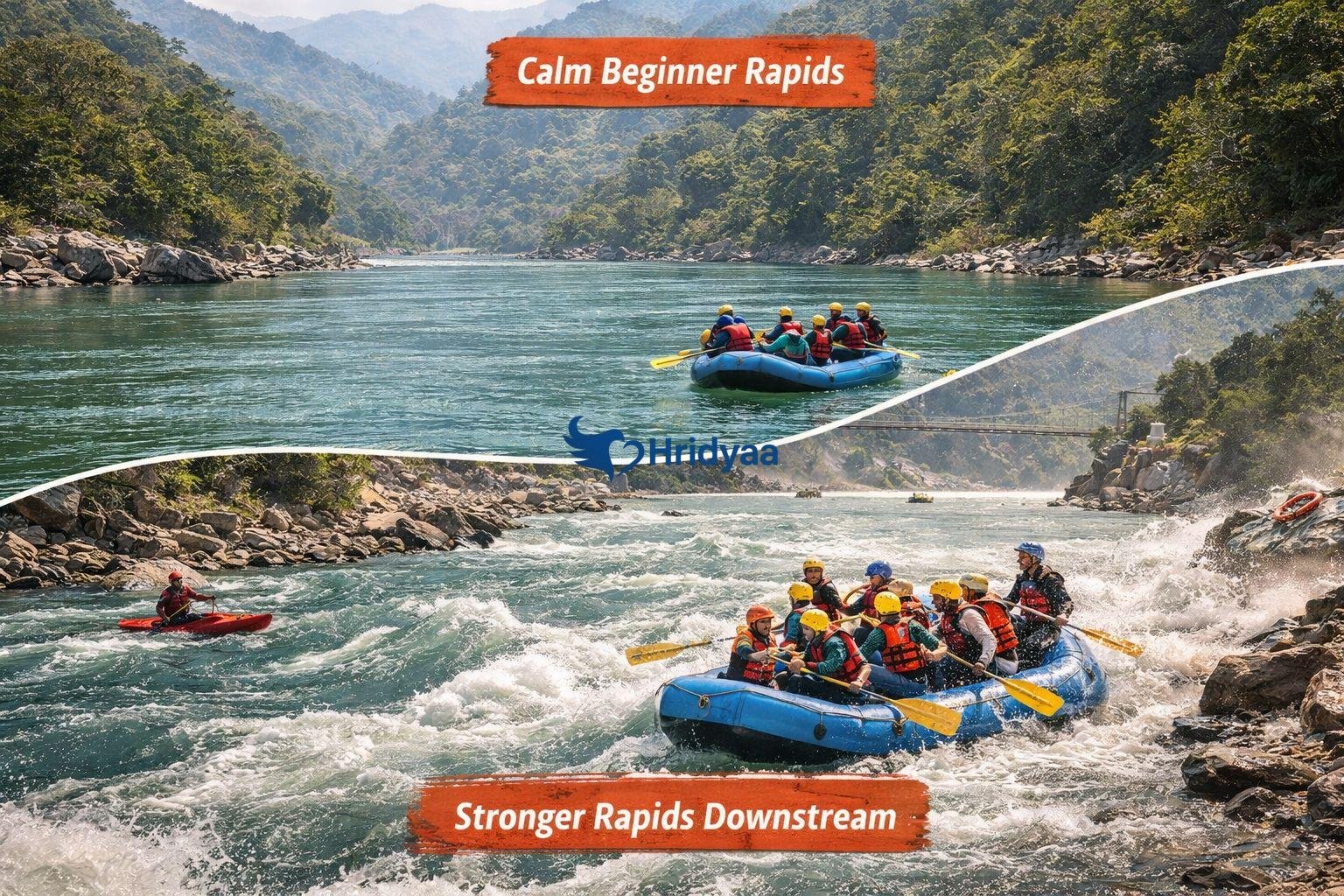
Adventure tourism follows predictable demand cycles:
- March–June peak season
- Long holiday weekends
- New Year
- School vacations
During these periods:
- Operators fill up quickly
- Online aggregators may increase margins
- Prime time slots disappear
This creates perceived inconsistency in pricing.
But in reality, it’s demand-responsive pricing.
Direct booking platforms often provide more transparent pricing compared to multi-layer aggregator listings.
Understanding demand cycles helps you book smarter.
Is Cheaper Rafting Always Better?
Low price does not automatically mean better value.
Extremely low pricing may sometimes indicate:
- Older safety equipment
- Overcrowded rafts
- Unlicensed operators
- Limited insurance coverage
- Reduced compliance oversight
Rafting is an adventure sport operating on a natural river system — not a fixed amusement ride.
Transparent pricing usually reflects:
- Certified guides
- Regulated operations
- Proper safety gear
- Structured launch control
Smart booking balances cost and safety.
Beginners and families often prefer 10 km River Rafting in Rishikesh, which offers moderate rapids with lower pricing and shorter duration.
How to Get the Best Rafting Price in Rishikesh (Without Compromising Safety)
Here’s what consistently works:
- Book on weekdays instead of Saturdays
- Avoid long holiday weekends
- Choose October–February for balanced pricing
- Reserve early during peak season
- Select the route that fits your comfort level
Why Does Rafting Price Change in Rishikesh?
Rafting price change in Rishikesh happens due to seasonal tourist demand, river water level fluctuations, dam release impact, weekend surge pricing, route length differences, and government safety regulations. These operational and demand-driven factors together explain why rafting cost varies across seasons and booking periods.


Join The Discussion