
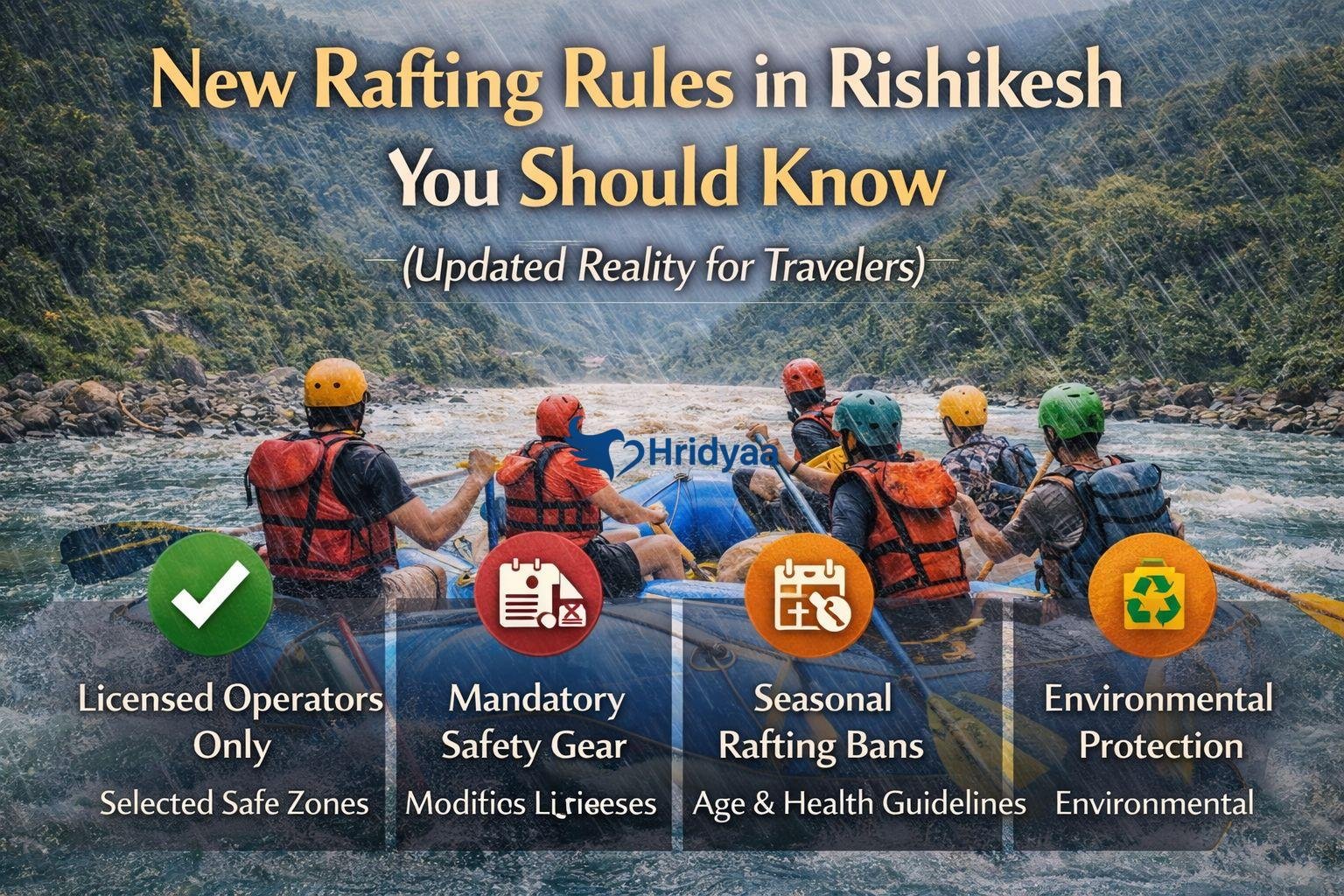
River rafting in Rishikesh has grown massively over the last decade. With rising tourist numbers, safety concerns, and environmental pressure on the Ganga River, authorities have introduced new and stricter rafting rules to regulate how, when, and by whom rafting is conducted.
Many travelers are unaware of these updates and often face confusion at the booking stage or on the ground. This article explains the new rafting rules in Rishikesh in clear, practical language, why they were introduced, and what they actually mean for tourists planning a rafting experience.
Why New Rafting Rules Were Introduced in Rishikesh
Rafting in Rishikesh was once loosely regulated, leading to overcrowding, safety lapses, and environmental damage in certain stretches of the river. As rafting became one of the main adventure attractions in North India, the need for standardization and control became unavoidable.
The new rules are designed to achieve three goals at once: improve tourist safety, protect the river ecosystem, and ensure that only trained and accountable operators conduct rafting activities. These changes are not meant to restrict travelers, but to make rafting safer and more sustainable in the long run.
Rafting Is Allowed Only Through Licensed Operators
One of the most important rule changes is that only government-licensed rafting operators are allowed to conduct rafting in Rishikesh. Earlier, many unregistered operators ran rafting trips without proper equipment or trained guides.
Under the new system, every rafting operator must be registered, insured, and regularly inspected. For travelers, this means that rafting may appear slightly more structured than before, but safety standards are significantly higher.
If a rafting provider cannot show proof of authorization, it is a clear red flag.
Mandatory Safety Gear Is No Longer Optional
Earlier, safety equipment was sometimes treated casually. Under the new rules, life jackets and helmets are compulsory for every participant, regardless of age or experience level.
Guides are required to conduct a safety briefing before the rafting session begins. This includes instructions on paddling commands, how to behave during rapids, and what to do if someone falls into the river. Rafting without proper gear is now a punishable violation for operators.
For travelers, this rule improves confidence, especially for first-time rafters.
Fixed Rafting Stretches and Entry Points
Rafting is now allowed only on approved river stretches with designated starting and ending points. Popular routes like Brahmpuri to Rishikesh and Shivpuri to Rishikesh are carefully monitored.
Unplanned or off-route rafting is strictly prohibited. This helps authorities manage crowd flow, monitor river safety, and respond faster in emergencies.
Most rafting operations are now concentrated around Shivpuri, which functions as the main operational zone due to better infrastructure and safety oversight.
Strict Seasonal Restrictions on Rafting
One of the most clearly enforced rules is the complete suspension of rafting during the monsoon season. From July to mid-September, rafting is officially banned due to unpredictable water levels and strong currents.
This rule is non-negotiable and applies to all operators without exception. Any rafting activity advertised during peak monsoon is illegal and unsafe. Travelers planning trips during this time should be cautious of misleading offers.
Rafting resumes only after official clearance, usually toward the end of September or early October.
Age, Health, and Fitness Guidelines
New rafting rules also place greater emphasis on participant suitability. While rafting remains accessible to beginners, operators are expected to assess basic fitness and health conditions before allowing participation.
Children below a certain age, people with serious medical conditions, or those under the influence of alcohol are not permitted to raft. These checks may seem strict, but they significantly reduce accident risks.
For travelers, this ensures that everyone on the raft is physically capable of handling river conditions.
Environmental Protection Rules Along the Ganga
Rafting operators are now responsible not just for tourists, but also for the river environment. Dumping waste, plastic, or food into the river is strictly prohibited, and camps linked with rafting operators must follow waste-management norms.
Noise pollution near the river has also been regulated. Loud music, unnecessary shouting, or activities that disturb the river ecosystem are discouraged, especially in eco-sensitive zones.
These rules align rafting with the broader push toward sustainable tourism in Rishikesh.
Timings and Daily Limits on Rafting Operations
Rafting is allowed only during designated daylight hours. Early morning and late evening rafting sessions are restricted to ensure visibility and safety.
There are also daily limits on the number of rafts allowed per stretch. This helps prevent overcrowding on the river and ensures a smoother, safer experience for everyone.
For travelers, this means booking rafting in advance during peak season is more important than ever.
What These New Rules Mean for Tourists
From a traveler’s perspective, the new rafting rules may feel more controlled, but they bring clear benefits. Rafting experiences are now safer, more organized, and more predictable.
While spontaneous, last-minute rafting may be harder to arrange, the overall quality of the experience has improved. Travelers can focus on enjoying the adventure instead of worrying about safety or legality.
How to Ensure You Follow the Rules as a Traveler
The simplest way to stay compliant is to book rafting through a reputed camp, hotel, or licensed operator. Avoid roadside agents who cannot clearly explain safety protocols or season rules.
Asking basic questions about licenses, safety gear, and rafting stretch is not rude—it’s responsible travel.
Final Verdict: Are the New Rafting Rules Good or Bad?
The new rafting rules in Rishikesh are a necessary step toward safer and more sustainable adventure tourism. While they reduce flexibility for unregulated operators, they greatly benefit travelers by minimizing risks and improving standards.
For anyone planning river rafting in Rishikesh today, understanding these rules is essential—not optional. A well-informed traveler enjoys a safer and far more memorable rafting experience.


Join The Discussion