
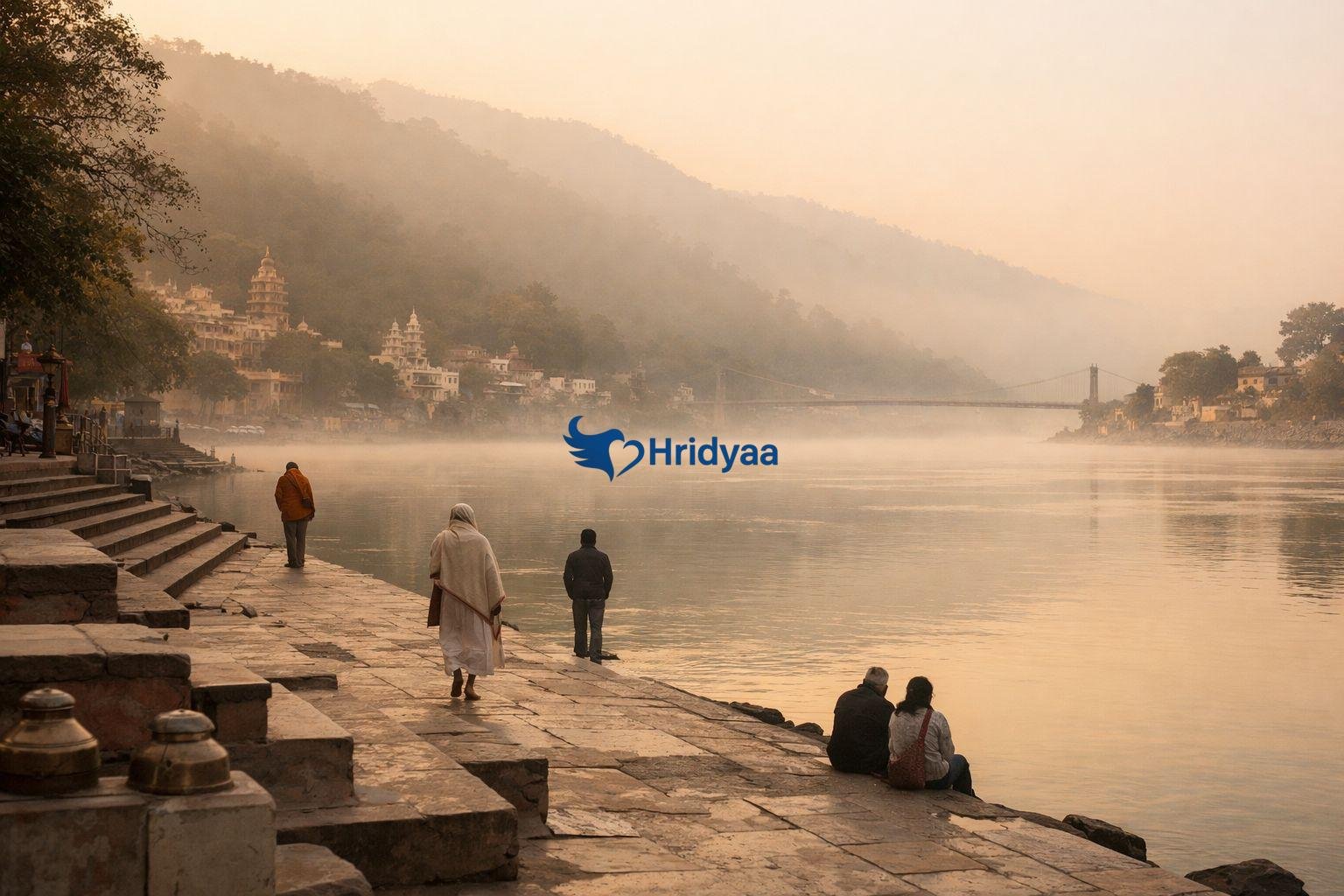
The First Question Most Travelers Ask (But Few Guides Answer Clearly)
Understanding safety in Rishikesh is less about fear — and more about knowing how the town actually works.
If you’re planning a trip to Rishikesh and wondering whether it’s safe, here’s the reassurance most travelers need upfront:
Yes — Rishikesh is generally safe for families and solo travelers, including women, when visited with basic awareness and sensible planning.
Rishikesh has low violent crime, a strong tourist presence, and a calm public environment. Most safety concerns relate to crowds, river behavior, walking distances, and timing — not crime.
Rishikesh is generally safe during the day and early evenings; late-night safety depends more on location and walking distance than crime.
That distinction matters.
Most travelers realize this after their first quiet evening walk — not after a scary moment.
This isn’t a city that tests you with risk.
It tests you with environment and expectation.
Why Travelers Worry About Safety in Rishikesh
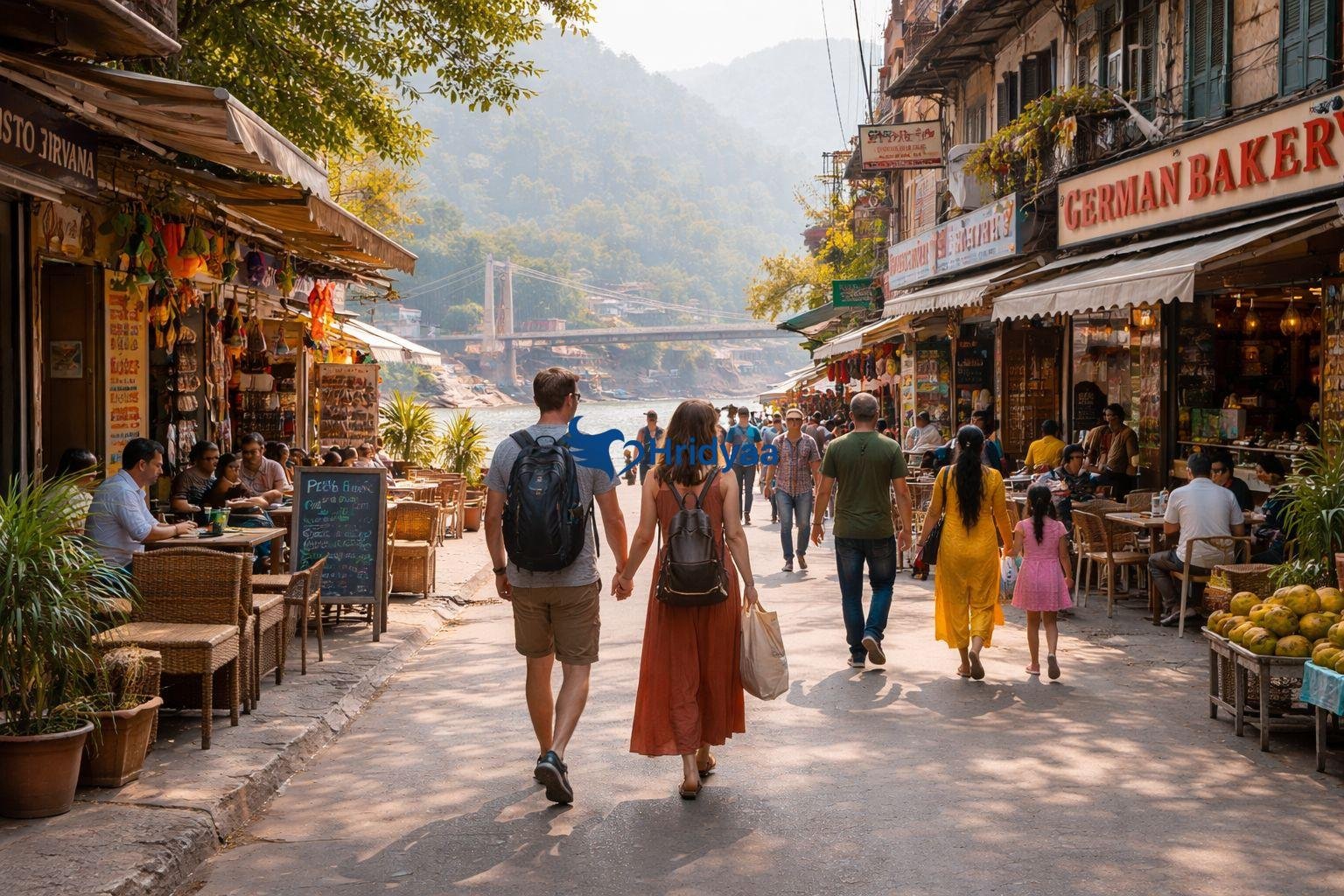
Safety questions around Rishikesh usually come from first-time visitors rather than real incidents.
Families worry about navigating crowds and riverbanks with children. Solo travelers — especially women — worry about unfamiliar social norms. International visitors often assume that spiritual towns are either perfectly safe or completely unpredictable.
The reality sits calmly in between.
Rishikesh is a town built around pilgrimage, tourism, and long-stay visitors. Locals are accustomed to outsiders. Public spaces remain active for most of the day. Shops, vendors, pilgrims, and travelers create constant social presence, which naturally discourages serious crime.
If you’re still getting oriented — understanding walking routes, bridge crossings, and how different areas behave at different times — a broad Rishikesh Travel Guide helps frame the town before diving into safety specifics.
Is Rishikesh Actually Safe? The Clear, Honest Answer
Rishikesh is widely considered one of the safer destinations in North India for families and solo travelers.
Violent crime against tourists is rare.
Petty crime exists but is uncommon and avoidable.
Public behavior is generally restrained and non-aggressive.
Police presence, CCTV coverage near ghats, and steady pedestrian movement in core areas all contribute to the town’s overall sense of safety — especially during the day and early evening.
Where travelers misjudge safety is by assuming that spiritual equals risk-free, or by ignoring how timing and location change the feel of a place.
This is not a town where danger hides in corners.
It’s a town where context matters more than fear.
A Safety Reality Most Guides Miss in Rishikesh
Most safety issues reported by travelers in Rishikesh are not about crime.
They involve slipping on wet ghats, misjudging river currents, walking long distances late at night through quiet stretches, or getting exhausted from overpacked itineraries.
Traffic and narrow roads pose a bigger safety concern than crime — especially for pedestrians unfamiliar with local driving patterns and scooter-heavy streets.
In other words, most problems come from situational misjudgment, not threat.
A walk near Triveni Ghat during daylight feels calm and communal — but the same stretch late at night feels different simply because foot traffic drops.
Same place.
Different conditions.
Who This Safety Guide Is For (And Who It Isn’t)
This guide is written for:
- Families traveling with kids or elders
- Solo travelers planning short or medium stays
- Women traveling alone or in small groups
- First-time visitors to Rishikesh
It is not written to sensationalize rare incidents or amplify fear.
Its purpose is clarity — so you know what to watch, not what to worry about.
Is Rishikesh Safe for Families With Kids?
The Short, Honest Answer Families Need
Yes — Rishikesh is safe for families with kids when days are planned around daylight, walking distances, and river awareness.
Family safety in Rishikesh depends more on supervision and pacing than on crime or location.
Most families who enjoy Rishikesh do one thing right: they treat it as a walking-and-rest town, not a checklist destination.
What Makes Rishikesh Family-Friendly (And What Doesn’t)
Rishikesh works well for families because public spaces are shared and visible. River promenades, ghats, and markets stay socially active through the day, which naturally discourages risky behavior.
What challenges families isn’t danger — it’s fatigue.
Distances feel short on maps but longer on foot, especially with children or elders. Heat, crowds, and uneven surfaces add up quickly if days are overpacked.
This is why families who plan fewer stops — and return early — usually report the calmest experiences.
River Safety: The One Area Families Must Take Seriously
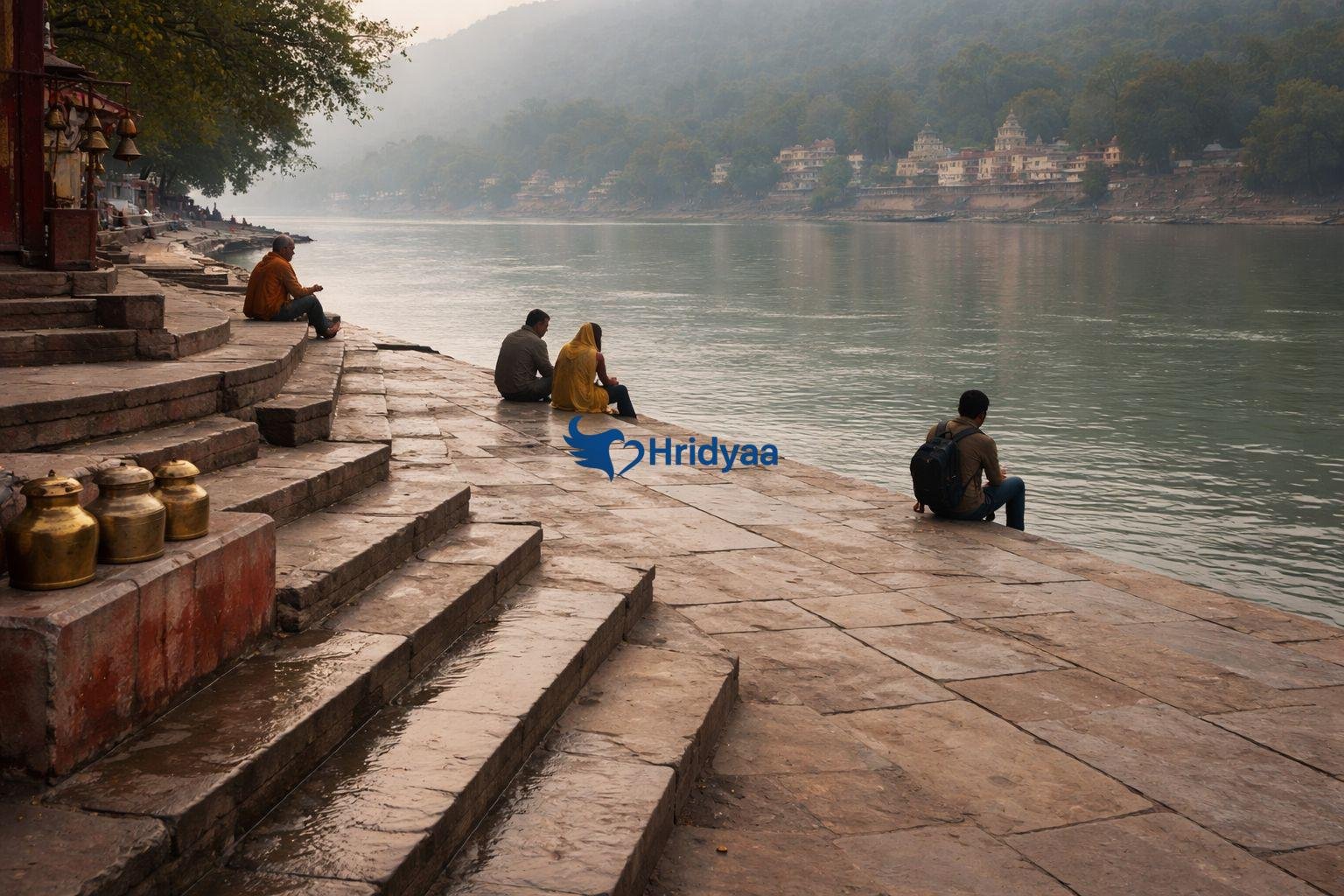
The Ganga is the most beautiful part of Rishikesh — and the most misunderstood.
Riverbanks are wide and inviting, but currents can be strong and unpredictable. Children should never be allowed to step into the water unsupervised, even near shallow-looking edges.
Daytime visits to popular ghats like Triveni Ghat are generally calm and well-populated, which helps with safety and visibility. Quiet stretches of the river are better enjoyed visually rather than interactively.
For relaxed, low-risk river views, families often prefer open stretches listed under Beaches in Rishikesh, visited during daylight hours and without entering the water.
Rishikesh is family-safe, but the river is not child-proof — supervision matters more than location.
Walking, Traffic, and Why Timing Matters for Families
Traffic behavior — scooters, narrow roads, blind turns — poses a bigger safety concern than crime, especially for children.
The safest rhythm for families is simple:
- Start early
- Walk short distances
- Rest by afternoon
- Return before evening crowds thicken
Late evening walks are not unsafe by default, but they become tiring and less predictable with kids, particularly in quieter stretches.
Families who try to “push one more stop” after sunset usually feel the strain the next day.
Best Times of Day for Family Exploration
Mornings are ideal. Streets are active but calm, temperatures are lower, and public spaces feel communal rather than congested.
Afternoons work best for slow movement — short walks, cafés, or resting near the river without crossing busy zones.
Evenings are best kept light and close to where you’re staying. Early dinners and relaxed walks work better than extended outings.
This rhythm reduces both risk and exhaustion.
Common Family Safety Mistakes in Rishikesh
Most family-related issues come from avoidable planning errors.
Trying to cover too many spots in one day increases fatigue and lowers attention. Assuming all riverbanks are equally safe leads to overconfidence. Ignoring footwear and surface conditions results in slips near ghats.
These aren’t dangers — they’re predictable stress points that compound quickly with kids.
When families slow the pace, Rishikesh responds kindly.
The Straight Answer Solo Travelers Look For
Yes — Rishikesh is generally safe for solo travelers when you follow the town’s natural rhythm and choose the right areas.
Solo safety in Rishikesh depends more on timing, walkability, and staying in active zones than on crime risk.
This applies to both Indian and international travelers.
Most solo visitors who feel comfortable here share one habit: they move with the day, not against it.
What Solo Travel in Rishikesh Actually Feels Like
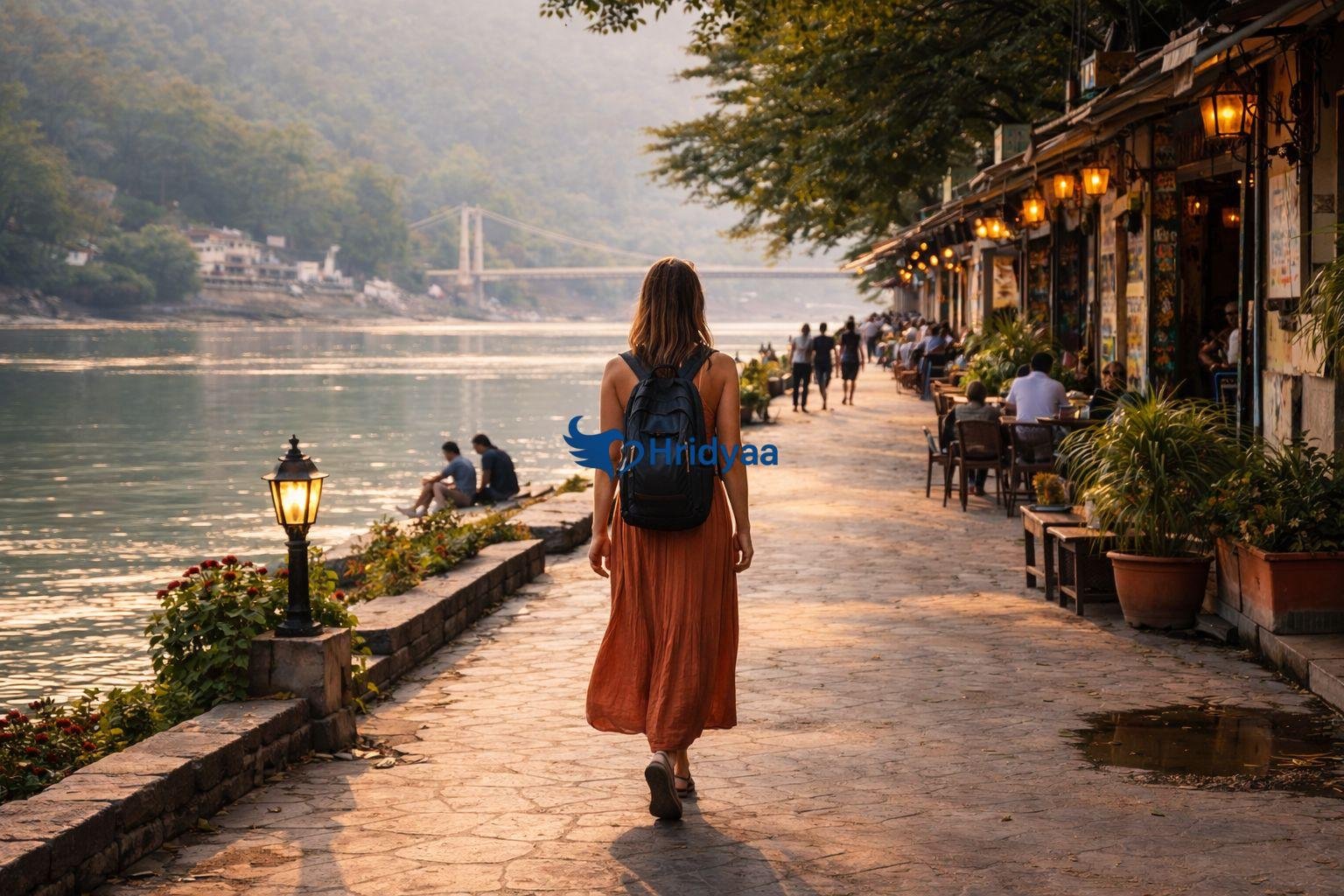
Solo travel in Rishikesh feels socially visible, not isolating.
Cafés, ghats, yoga schools, and markets are full of people moving independently — not in closed groups. This creates a sense of passive community. You’re alone, but rarely alone alone.
During the day and early evening, walking solo feels normal and unremarkable in most central areas. Locals are accustomed to solo visitors, especially in places frequented by travelers and pilgrims.
The town doesn’t feel predatory.
It feels observant.
Solo Men vs Solo Women: The Reality (Without Sugarcoating)
Solo Men
Solo men rarely face safety issues beyond environmental factors — traffic, walking fatigue, and river proximity. Social interactions are usually neutral and brief.
The main adjustment is pacing: moving slower, avoiding late-night isolated stretches, and planning days around daylight.
Solo Women
Rishikesh is one of the safer solo destinations in North India for women — with basic situational awareness.
Staring can happen, especially in crowded areas, but harassment is uncommon in central zones. Clothing that aligns with local norms reduces attention, but respectful behavior from others is generally the default.
Evening movement is best kept to active streets and familiar routes. Long, quiet walks late at night aren’t dangerous by default — they’re just unnecessary.
Solo women feel safest in Rishikesh during the day and early evening, especially in active, walkable areas.
The Importance of Area Choice for Solo Travelers
Where you stay matters more when you’re alone.
Areas with steady foot traffic, cafés, and mixed-use streets feel more comfortable for solo movement. Quieter stretches can feel peaceful by day — and too empty by night.
Solo travelers who understand how zones connect and where activity naturally concentrates tend to move confidently. If you’re still learning the layout, using a broad Rishikesh Travel Guide helps you avoid accidental isolation rather than real danger.
This isn’t about fear.
It’s about friction.
Evening and Night Safety for Solo Travelers
Evenings in Rishikesh are generally calm, not risky.
Shops close gradually. Streets thin out rather than empty suddenly. Core areas remain walkable through early night hours.
Late-night movement (after 10–11 pm) becomes quieter, not unsafe — but the lack of people means longer stretches without shops or lighting. For solo travelers, especially women, it’s sensible to plan evenings closer to where you’re staying.
This isn’t a nightlife town.
It’s a rest town.
Common Solo Safety Mistakes
Most solo discomfort comes from misaligned expectations.
Assuming silence equals safety leads people into overly quiet areas late at night. Overconfidence near the river leads to unnecessary risk. Packing too much into a single day leads to fatigue — which lowers awareness.
When solo travelers simplify plans, Rishikesh feels supportive rather than challenging.
Is Rishikesh Safe for Solo Women at Night?
The Direct Answer (No Softening, No Alarmism)
Rishikesh is generally safe for solo women during the day and early evening. Late-night safety depends far more on location and foot traffic than on crime.
This distinction matters.
Most discomfort reported by solo women in Rishikesh doesn’t come from threat — it comes from emptiness. Streets that feel fine at 7 pm can feel unsettling at 11 pm simply because shops close and movement drops.
Quiet is not danger.
But quiet can feel unfamiliar when you’re alone.
What “Night” Actually Means in Rishikesh
Rishikesh does not operate on big-city night cycles.
By 8–9 pm, many areas naturally slow down. By 10 pm, foot traffic reduces significantly outside central pockets. This is normal, not a warning sign.
Core areas with cafés, ghats, and mixed-use streets remain calm and walkable in the early evening. After that, movement becomes intentional — people go where they mean to go, not where they wander.
For solo women, the safest approach isn’t avoiding nights altogether.
It’s aligning evenings with how the town functions.
Clothing, Attention, and Social Reality
Rishikesh is conservative compared to metro cities, but not hostile.
Dressing modestly reduces attention, especially in crowded or traditional areas. This isn’t about restriction — it’s about blending into local norms so you’re not unintentionally visible.
Staring can happen. Harassment is uncommon in active areas. Direct confrontation is rare.
Most solo women report feeling observed, not targeted — a subtle but important difference.
Where Solo Women Feel Safer After Dark
Evenings feel most comfortable in areas with:
- Ongoing pedestrian movement
- Open cafés or shops
- Street lighting and visible activity
Quiet residential stretches, river paths without lighting, and long bridge crossings late at night feel uncomfortable not because they’re unsafe — but because there’s no social presence.
A calm walk near familiar ghats like Triveni Ghat in the early evening, for example, feels very different from walking isolated stretches late at night.
Same town.
Different density.
Practical Night Safety Without Overthinking It
Solo women who feel most at ease usually follow simple patterns:
- Return earlier rather than later
- Choose accommodation close to where evenings are spent
- Avoid long, unlit walks after foot traffic drops
- Trust discomfort as a cue to stop, not to panic
This isn’t about fear.
It’s about energy management and awareness.
If you’re new to the town layout, understanding which areas stay active longer through a Rishikesh Travel Guide helps prevent accidental isolation — not danger.
The Honest Bottom Line for Solo Women
Rishikesh is one of the calmer solo destinations in North India for women — when visited with timing awareness and location sense.
Most solo women who feel safe here don’t do anything special.
They simply move with the town, not against it.
Day vs Evening vs Night Safety in Rishikesh
Safety in Rishikesh is not constant throughout the day.
It changes with movement, light, and social presence — not with crime levels.
Understanding this rhythm removes most uncertainty.
Morning Safety (Early Morning to Late Morning)
Morning is the safest and calmest time in Rishikesh.
Public spaces come alive early. Locals walk, pilgrims gather, cafés open, and the riverfront feels communal rather than crowded. Visibility is high, temperatures are lower, and foot traffic is steady.
For families, solo travelers, and solo women, this is the most comfortable window to explore ghats, walk longer distances, and orient yourself to the town.
If you ever feel unsure about Rishikesh, step outside early — mornings almost always reset perception.
Afternoon Safety (Late Morning to Early Evening)
Afternoons are safe but busier.
Crowds increase, especially in central areas. This brings noise and congestion, but also strong social surveillance. Pickpocketing remains rare, and personal safety issues are uncommon.
The main risks during this time are environmental:
- Heat and fatigue
- Traffic congestion
- Overcrowded walkways
Afternoons are best for short walks, indoor breaks, or staying close to where you’re based rather than long explorations.
Evening Safety (Early Evening to Nightfall)
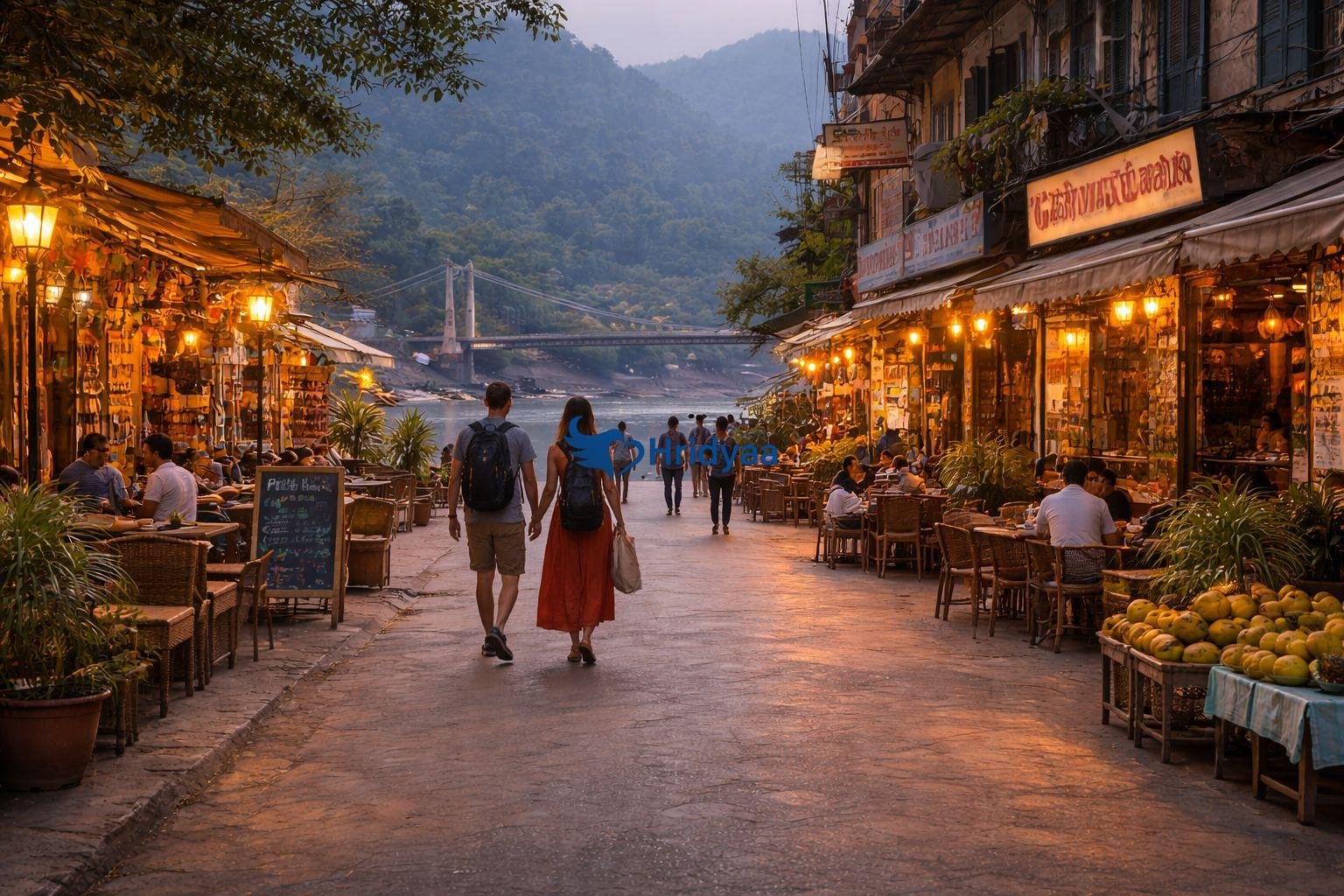
Early evenings in Rishikesh are generally safe and pleasant.
Shops, cafés, and ghats remain active. Streets are well-lit in core areas, and pedestrian movement continues until around 8–9 pm. This is a comfortable time for relaxed walks, light shopping, or sitting near the river.
Places like Triveni Ghat feel calm and socially active during this window, especially before aarti timings wind down.
This is when Rishikesh feels most balanced — not rushed, not empty.
Late Night Safety (After 9–10 pm)
Late nights in Rishikesh are quiet, not dangerous — but quiet changes how safety feels.
Foot traffic drops sharply. Shops close. Streets don’t feel threatening, but they do feel empty. For families and solo travelers, especially women, this emptiness can feel uncomfortable even when nothing is wrong.
This is where planning matters:
- Stay close to your accommodation
- Avoid long, unlit walks
- Use known routes rather than shortcuts
Late-night wandering isn’t risky — it’s just unnecessary in a town designed to slow down.
The Pattern Most Travelers Miss
Rishikesh doesn’t get riskier at night.
It simply gets less social.
And in unfamiliar places, lack of people often feels like lack of safety — even when crime risk hasn’t changed.
Travelers who align their movement with the town’s natural schedule rarely feel unsafe.
One Simple Rule That Covers All Times
Move more in the morning, slow down by evening, and stay close at night.
That single rhythm handles most safety concerns without rules, restrictions, or anxiety.
If you’re still mapping how areas behave across different times of day, a broad Rishikesh Travel Guide helps visualize where activity concentrates — and when.
Environmental Safety Risks Most Travelers Don’t Expect in Rishikesh
When people ask whether Rishikesh is safe, they usually think about crime.
In reality, the biggest safety risks here are environmental — and they affect families and solo travelers far more often than anything else.
Understanding these removes most real-world risk.
River Safety: Calm Surface, Powerful Reality
The Ganga looks calm in many stretches, but its currents are strong and unpredictable.
Even near wide riverbanks and ghats, water depth and flow can change suddenly. Entering the river without guidance is risky — especially for children and non-swimmers. Many incidents happen not because people ignore warnings, but because the river looks deceptively gentle.
Daytime visits to open riverbanks listed under Beaches in Rishikesh are best enjoyed visually — sitting, walking, or resting — not by stepping into the water.
Most river-related incidents come from overconfidence, not recklessness.
Slippery Ghats and Uneven Surfaces
Stone steps near the river stay wet year-round.
Ghats are not built for modern footwear or hurried movement. Slips and minor injuries are far more common than people expect, especially during early mornings and after aarti when surfaces are damp.
Good footwear and slow movement reduce risk more than any safety rule.
This matters especially for elders and families with kids.
Traffic and Road Safety (Bigger Than Crime)
Traffic behavior is one of the most underestimated risks in Rishikesh.
Narrow roads, blind turns, parked scooters, and pedestrians sharing space create constant micro-risk. Vehicles don’t always stop where visitors expect them to.
For walkers:
- Stick to the inner edge of roads
- Avoid distractions while crossing
- Be extra alert near bridges and market lanes
This is less about danger and more about adjusting to local driving patterns.
Adventure Activities: Safe When Structured, Risky When Rushed
Adventure activities are popular here — but safety depends entirely on operators and timing.
Experiences like River Rafting in Rishikesh are generally safe when booked through licensed operators who follow seasonal guidelines and provide proper briefing.
Problems arise when travelers:
- Book last-minute without checking conditions
- Ignore safety instructions
- Try to compress activities into travel days
Adventure isn’t unsafe here.
Poor planning is.
Walking Fatigue and Overplanning
Rishikesh looks compact. It isn’t.
Bridges, inclines, heat, and crowds turn short distances into long walks. Fatigue lowers awareness, slows reactions, and increases the chance of slips or missteps.
This is why many “unsafe moments” happen late in the day — not because of threat, but because people are tired.
Rest is a safety tool here.
The Pattern Behind Most Incidents
Across families, solo travelers, and first-timers, one pattern repeats:
Issues arise when travelers underestimate the environment — not when they overestimate danger.
Rishikesh rewards patience, slow movement, and respect for natural forces.
Which Areas of Rishikesh Feel Safer for Travelers?
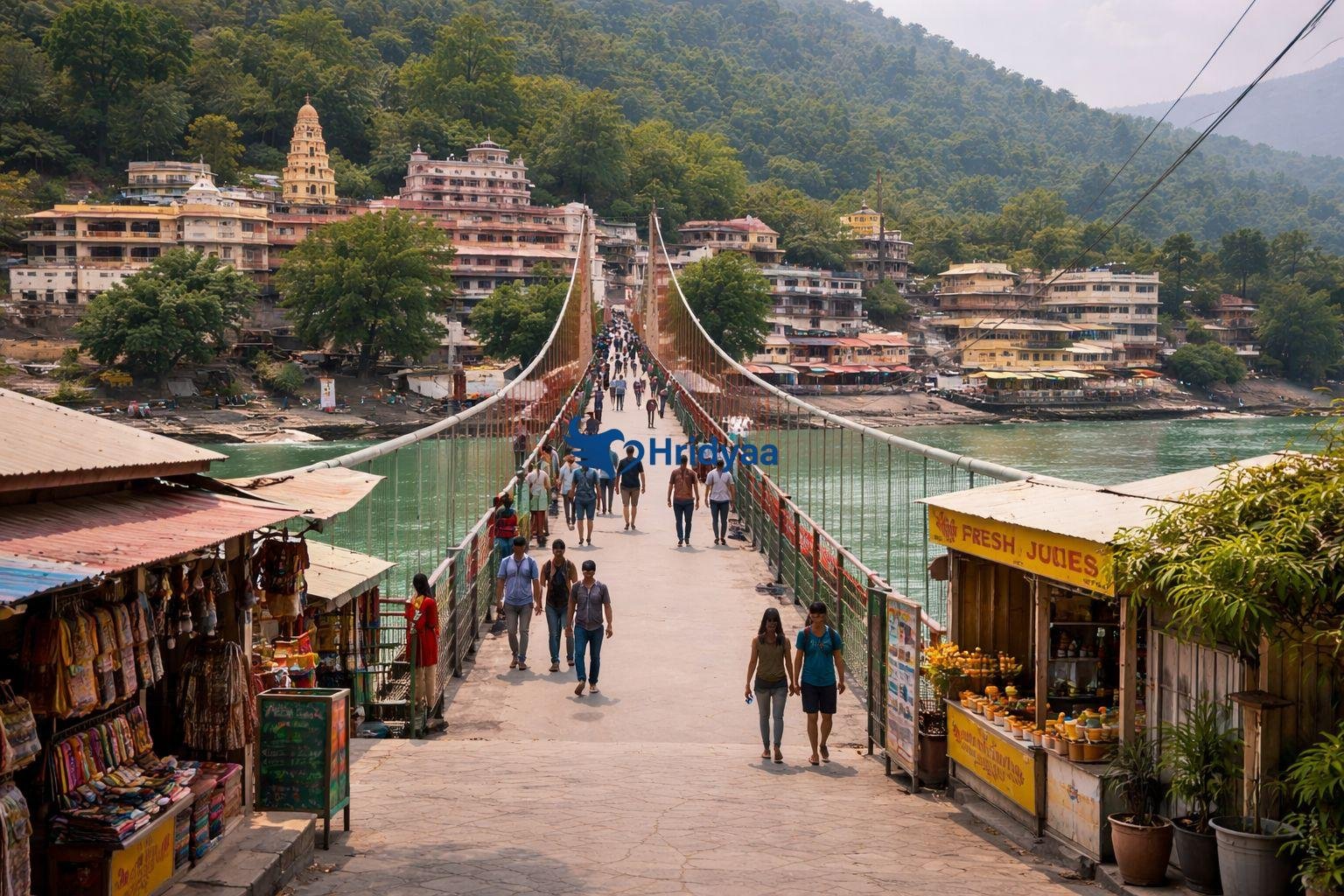
When people ask if Rishikesh is safe, they’re often asking something more specific:
“Where will I feel comfortable walking, resting, and returning at the end of the day?”
Safety here is as much about perception and practicality as it is about actual risk.
Busy Areas vs Quiet Areas: What Actually Feels Safer
In Rishikesh, busy does not mean unsafe — and quiet does not automatically mean safe.
Areas with steady foot traffic, open shops, and mixed-use streets feel safer for most travelers, especially families and solo visitors. There’s visibility, lighting, and social presence.
Quieter stretches can feel peaceful during the day but noticeably empty after dark. That emptiness isn’t dangerous — it’s just unfamiliar, and unfamiliarity often triggers discomfort.
Feeling safe comes from people, not promises.
Tapovan: Active and Visible
Tapovan feels safe largely because it stays active.
Cafés, yoga schools, rafting offices, and hostels keep streets populated through the day and into the evening. For solo travelers, this constant movement creates reassurance.
The trade-off is noise and congestion, not safety risk. Most discomfort here comes from crowd fatigue, not threat.
Tapovan suits travelers who prefer visibility over silence.
Ram Jhula Area: Calm but Connected
Areas near Ram Jhula often feel the most balanced.
They’re active enough to feel secure, especially in the evening, but calmer than Tapovan. Lighting is generally better, and movement tapers gradually rather than dropping suddenly.
Families and couples often report feeling comfortable here because evenings remain walkable without being overwhelming.
This is where many first-time visitors feel most at ease overall.
Swarg Ashram: Peaceful, With Conditions
Swarg Ashram feels safe in a different way.
It’s pedestrian-only, quiet, and structured. During the day, it feels calm and protected. At night, it becomes very still — which some travelers love and others find uncomfortable.
This area feels safest for travelers who expect silence and plan evenings early. For those who want flexibility, the emptiness can feel restrictive rather than reassuring.
Swarg Ashram rewards intention.
Lighting, Walkability, and Evening Comfort
Regardless of area, the following factors influence how safe travelers feel:
- Consistent street lighting
- Short, familiar walking routes
- Proximity to shops or ghats
- Avoiding long bridge crossings late at night
These factors matter more than crime statistics.
If you’re still learning which zones stay active later and which wind down early, a broad Rishikesh Travel Guide helps you plan routes that reduce friction and uncertainty.
One Line That Explains Area-Based Safety
In Rishikesh, travelers feel safest where daily life is visible — not where everything is silent.
That’s the principle that explains why some people love one area and feel uneasy in another, even though both are technically safe.
Common Safety Mistakes Travelers Make in Rishikesh
Most travelers who leave Rishikesh feeling uneasy or disappointed don’t experience an incident.
They experience avoidable friction — moments that feel unsafe because expectations and reality don’t line up.
Understanding these common mistakes removes most anxiety before it starts.
Mistake 1: Assuming “Spiritual Town” Means Risk-Free
Rishikesh feels calm, but calm doesn’t mean controlled.
Travelers sometimes drop their guard near the river, on ghats, or while crossing roads because the environment feels peaceful. This leads to slips, missteps, or close calls with traffic — not because the town is unsafe, but because attention drops.
Spiritual atmosphere reduces aggression, not gravity or currents.
Mistake 2: Overplanning the Day and Underestimating Fatigue
Rishikesh looks compact on maps. In practice, walking distances, bridges, crowds, and heat add up quickly.
Fatigue is one of the biggest contributors to discomfort:
- Slower reactions
- Reduced awareness
- Poor judgment near water or traffic
This is why many “unsafe moments” happen late in the day — when people are simply tired.
Rest is not wasted time here.
It’s protective time.
Mistake 3: Wandering Late at Night Without Intention
Late-night movement isn’t dangerous in Rishikesh — it’s just unnecessary.
Streets empty earlier than in big cities. Shops close. Lighting drops outside core areas. Wandering without a destination can feel unsettling simply because there’s no social presence.
Travelers who plan evenings close to where they’re staying rarely feel uneasy.
This is a rhythm issue, not a safety failure.
Mistake 4: Getting Too Close to the River “Just for a Look”
The Ganga invites proximity.
People step closer for photos, dip feet in shallow-looking edges, or let children wander near water because the surface appears calm. This is where risk quietly enters.
Enjoy the river visually. Sit near it. Walk beside it.
Don’t underestimate it.
For open, calmer viewing areas, daytime visits to places listed under Beaches in Rishikesh are best enjoyed without entering the water.
Mistake 5: Treating Traffic Like a Secondary Concern
Traffic in Rishikesh doesn’t behave like metro traffic.
Scooters weave, pedestrians share narrow lanes, and vehicles don’t always slow where visitors expect them to. Crossing casually or walking distracted increases risk more than anything else in town.
Traffic awareness matters more than crime awareness here.
Mistake 6: Believing Safety Comes From Avoidance
Avoiding everything unfamiliar doesn’t make trips safer — it makes them tense.
Most travelers feel safest when they:
- Move with daylight
- Stay in active areas
- Respect the river
- Pace themselves
Over-avoidance creates anxiety without reducing risk.
Most safety issues in Rishikesh come from overconfidence or exhaustion — not crime.
The Pattern Behind Every Mistake
Each mistake shares one root cause:
Mismatch between expectation and environment.
When travelers adjust expectations — about pace, night life, distance, and silence — safety concerns dissolve naturally.
Final Verdict: Is Rishikesh Safe for Family & Solo Travelers?
If you’re still wondering whether Rishikesh is safe, here’s the most honest, experience-backed answer:
Yes — Rishikesh is generally safe for families, solo travelers, and solo women when visited with basic awareness of timing, location, and environment.
That answer doesn’t change with hype, headlines, or hearsay.
The Straight Answer Most Travelers Want
- Is Rishikesh safe for families?
Yes. Families feel comfortable when days are paced, river edges are respected, and evenings stay close to accommodation. - Is Rishikesh safe for solo travelers?
Yes. Solo travel feels socially visible and calm, especially in active areas during the day and early evening. - Is Rishikesh safe for solo women?
Yes, particularly during daylight and early evenings. Late-night comfort depends more on foot traffic and lighting than on crime. - Is Rishikesh safe at night?
Early evenings are generally safe. Late nights are quiet rather than dangerous, and feel safest when movement is intentional and nearby.
What Actually Keeps Travelers Safe Here
Rishikesh’s safety doesn’t come from heavy policing or strict control.
It comes from community presence, routine, and visibility.
Public spaces are shared. Locals are accustomed to visitors. Streets stay socially active through most of the day. Serious crime against tourists is rare.
Where caution matters most is not crime — it’s:
- River currents
- Slippery ghats
- Traffic behavior
- Fatigue from overplanning
When those are respected, safety concerns fade quickly.
One Line That Explains Everything
Rishikesh feels safest when you move with the town, not against it.
Travelers who align with its rhythm — early mornings, slower afternoons, lighter evenings — rarely feel uneasy.
Those who expect big-city nightlife or push the day too far often mistake quiet for risk.
A Simple Safety Mindset That Works
You don’t need fear.
You don’t need rules.
You don’t need constant caution.
You need:
- Daylight awareness
- Respect for the river
- Sensible walking habits
- Realistic pacing
If you’re new to the town layout, routes, and how different areas behave by time of day, a broad Rishikesh Travel Guide helps reduce uncertainty before it becomes anxiety.
The Calm Conclusion
Rishikesh is not a place that demands vigilance.
It rewards attentiveness.
For families, it offers shared, visible spaces.
For solo travelers, it offers community without pressure.
For women, it offers one of the calmer solo environments in North India — when timing and location are respected.
Go prepared, not worried.
That’s when Rishikesh feels exactly like it should:
grounded, steady, and quietly reassuring.


Join The Discussion