

When the Question Feels Bigger Than It Sounds
People rarely arrive in Rishikesh with a clear answer to how long they should stay in an ashram. The question usually appears quietly—after the journey, after the phone is put away, often after the first evening when the silence feels unfamiliar.
Many of us arrive in Rishikesh exhausted—not physically, but mentally.
For first-time visitors, an ashram stay in Rishikesh can feel both inviting and intimidating. Some wonder if two or three days will feel rushed. Others worry that committing to weeks might feel overwhelming or unnecessary. For anyone deciding between a short or long ashram stay, this guide looks at what different durations actually offer—without pressure, exaggeration, or spiritual hype.
Why This Question Matters More Than People Admit
Choosing how long to stay in an ashram isn’t just about dates on a calendar. It’s emotional.
A short stay can feel “not enough.”
A long stay can feel irreversible.
This is usually where people begin questioning their choice.
There’s also silent comparison. Stories of month-long stays and deep transformations circulate easily, creating an unspoken expectation. But not everyone comes seeking change at that scale. Some come seeking rest. Some clarity. Some distance from noise.
Understanding why you’re here matters more than matching anyone else’s timeline.
What an Ashram Stay Actually Involves
Before deciding on duration, it helps to understand what an ashram stay realistically looks like.
Most ashrams follow a structured daily rhythm—early mornings, fixed meal times, yoga or meditation sessions, and often some form of seva. Silence may be encouraged or expected, not as punishment, but as a way to reduce distraction.
Well-known spaces such as Parmarth Niketan operate with clear routines that bring stability for some and mental resistance for others.
An ashram isn’t something you casually dip into. Even short stays ask for attention, discipline, and willingness to adapt. How you respond to that structure often answers the duration question by itself.
Short Ashram Stays (1–3 Days): Who They’re Really For
Short stays are often underestimated.
In one to three days, you experience the rhythm without fully surrendering to it. You wake early. You follow schedules. You notice how the mind reacts when stimulation drops away.
What you gain is exposure, not resolution. Short stays work well for first-time visitors, cautious travelers, or those unsure how structured environments affect them.
What usually appears here is resistance, not clarity.
That resistance is information, not failure.
Medium-Length Ashram Stays (4–10 Days): The Turning Point
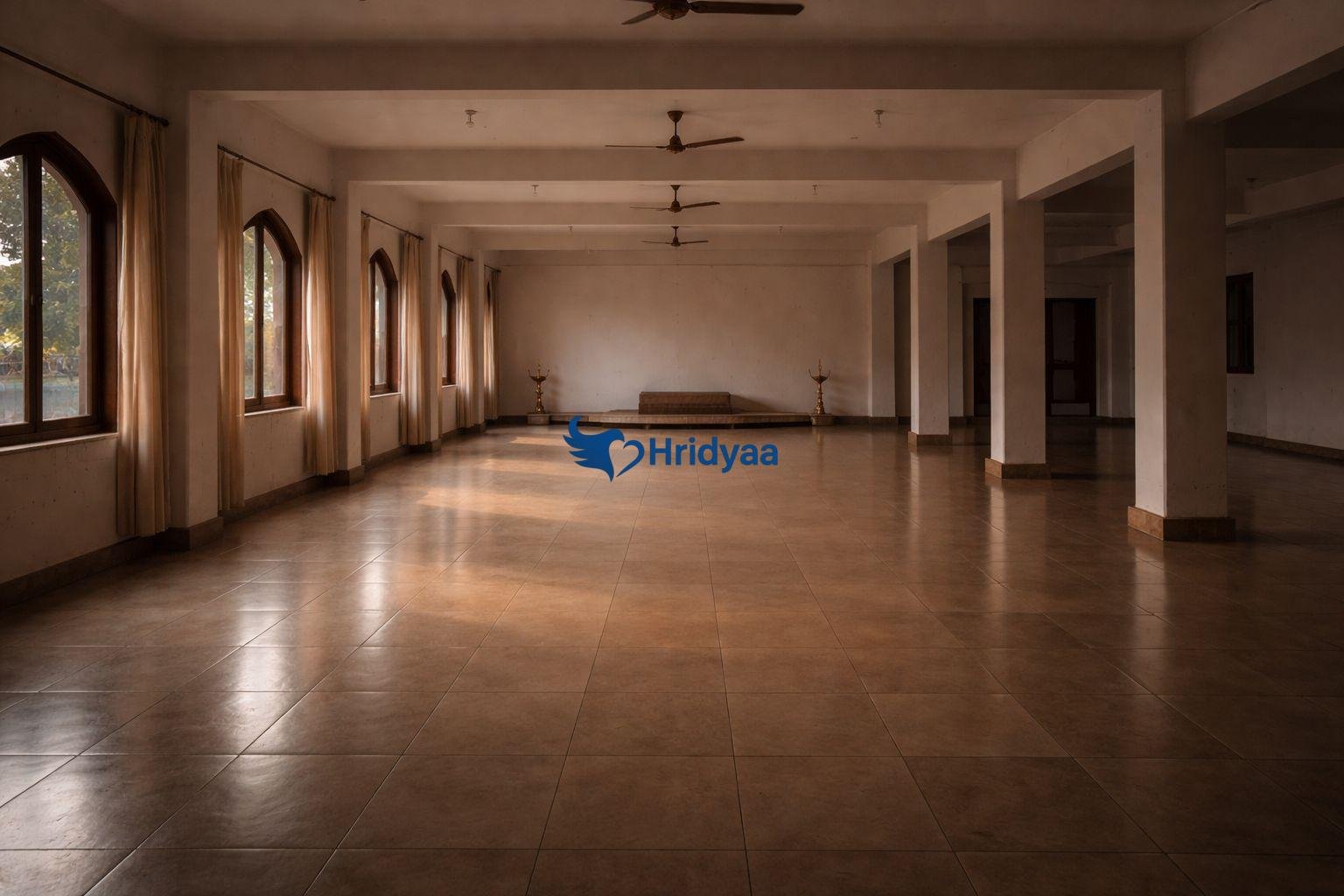
This is where things begin to shift.
The novelty fades. The routine feels repetitive. Restlessness often peaks. Many people consider leaving at this stage—not because something is wrong, but because silence starts revealing patterns.
This is usually where people begin questioning their choice.
At the same time, awareness deepens. Attention steadies. Thoughts lose urgency. For many travelers, this duration offers the most honest experience—long enough to settle, short enough to step back consciously.
It’s also the point where people most often decide to either extend or leave with clarity.
Long Ashram Stays (Two Weeks to Months): When It Becomes a Lifestyle
After two weeks, an ashram stops feeling like a stay and starts feeling like a system.
Structure replaces novelty. Discipline becomes non-negotiable. Silence deepens, but emotional waves can feel stronger rather than calmer.
Some people thrive in this environment. Others feel constrained. Neither response is more “spiritual” than the other.
Longer does not mean better. It simply means sustained exposure—to routine, restraint, and yourself.
Short vs Long Ashram Stays: A Grounded Comparison
Short stays offer perspective without pressure. They allow curiosity without obligation.
Long stays offer immersion, but at the cost of flexibility and comfort.
Short stays help you listen.
Long stays ask you to live with what you hear.
They serve different moments in life—not different levels of seriousness.
How to Choose the Right Duration for You
Instead of asking how long you should stay, ask quieter questions.
Are you seeking rest or discipline?
Does structure feel supportive—or heavy?
Can you sit with discomfort without immediately trying to escape it?
There is no fixed rule for how long to stay in an ashram in Rishikesh.
Your honest answers matter more than any recommendation.
Common Mistakes People Make When Choosing Their Stay Length
One common mistake is committing to a long stay too quickly, driven by inspiration rather than readiness.
Another is leaving early purely out of discomfort, without understanding what that discomfort is revealing.
Some travelers stay longer than needed out of obligation.
An ashram stay isn’t something to complete. It’s something to pay attention to.
Can You Combine an Ashram Stay With Normal Travel?
Yes—and many people do.
Some travelers begin with an ashram stay to slow down, then explore the town with greater awareness using a broader Rishikesh Travel Guide to pace movement without breaking the calm.
Others prefer easing out of ashram life gradually, choosing quiet Cottages in Rishikesh afterward so structure softens rather than disappears overnight.
Transitions matter. Space between silence and stimulation helps integrate the experience instead of compartmentalizing it.
There Is No Perfect Duration—Only an Honest One
There is no universal answer to how long you should stay in an ashram.
A stay is long enough when attention feels clearer, not heavier—when silence begins informing daily life instead of becoming an escape from it.
If you’re planning time in Rishikesh, allow flexibility. Let the decision unfold rather than forcing it. Often, the right duration becomes obvious—not before you arrive, but while you’re already there.
Sometimes, listening is the real practice.


Join The Discussion