
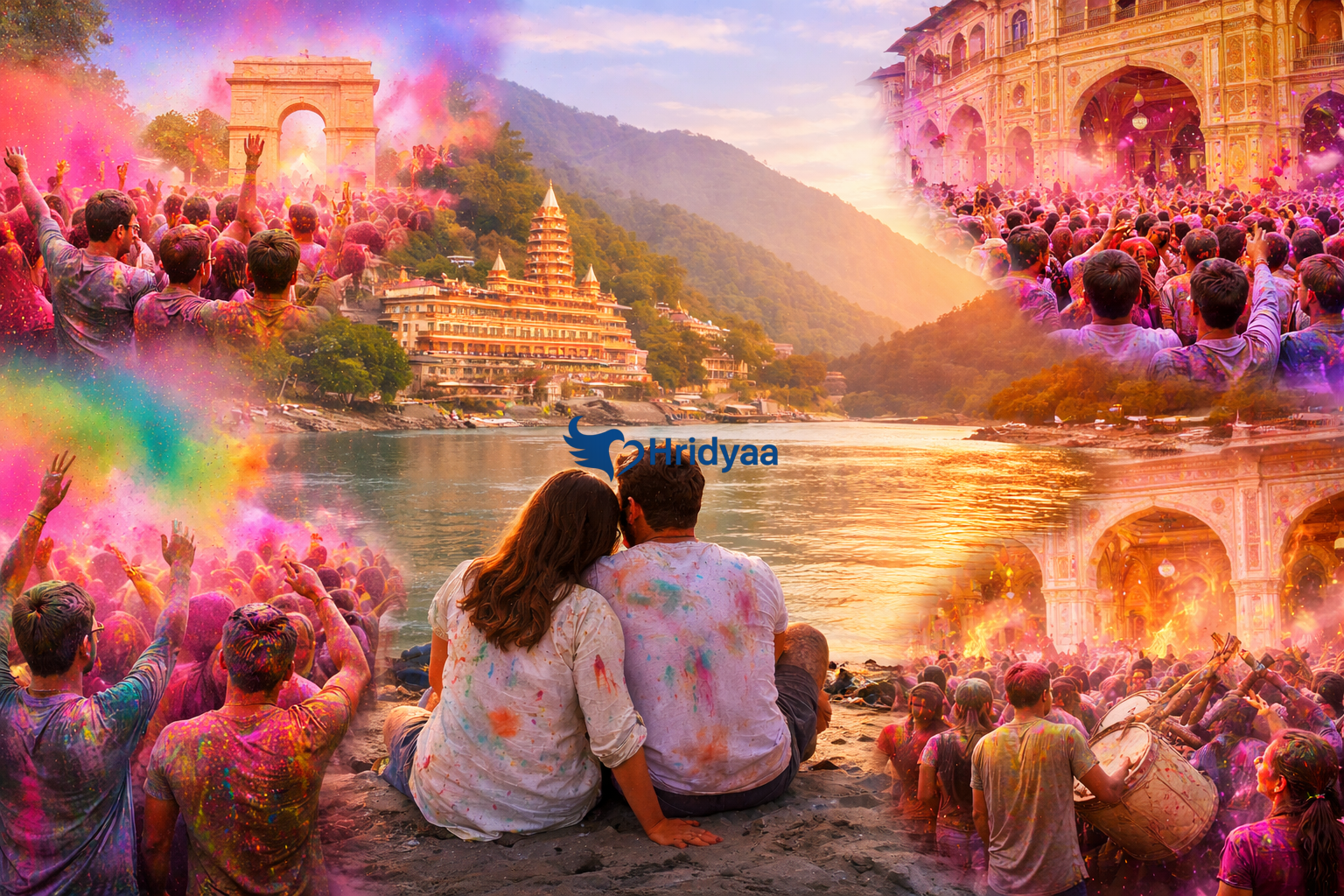
Holi in India is often described as one giant celebration of color, chaos, and joy. But anyone who has actually traveled during Holi knows this truth: Holi is not one experience — it changes completely depending on where you celebrate it.
The way people play with colors, the intensity of crowds, the emotional tone of the day, and even how you feel after Holi ends varies sharply between cities.
For travelers choosing between Rishikesh, Delhi, Vrindavan, and Jaipur, the real question is not “Where is Holi biggest?” but “How will Holi make me feel?”
This article looks beyond photos and reels to explain what Holi is actually like in each place — and why Holi Celebration in Rishikesh quietly stands apart.
Holi in Rishikesh: Celebration That Leaves You Calm, Not Drained
Holi in Rishikesh feels softer — not because people celebrate less, but because the city never fully loses its balance. Colors appear gradually, laughter flows easily, and celebrations feel contained rather than explosive.
The presence of the Ganga River plays a powerful role here. Even during Holi, mornings begin slowly, afternoons remain breathable, and evenings naturally wind down. You are never forced into celebration — you choose when to join and when to step away.
Most Holi activity in Rishikesh happens within neighborhoods, camps, hostels, and riverside stays. Streets don’t stay chaotic all day, and by late afternoon, calm begins to return. By night, the city feels surprisingly normal again.
The biggest difference?
You wake up the next day feeling light, not exhausted.
Holi in Delhi: Nonstop Energy With No Pause Button
Holi in Delhi is intense from the very start. Music begins early, streets fill quickly, and once you step outside, the festival surrounds you completely. There is very little middle ground — you are either inside or fully part of the chaos.
For many locals, this high-energy environment is familiar and exciting. For visitors, it can feel overwhelming within a few hours. The scale of the city amplifies everything — crowds are thicker, sounds are louder, and movement never really stops.
By the end of the day, most people are physically and mentally drained. Delhi’s Holi is about release and abandon, not balance. It creates strong memories, but rarely leaves space for rest.
Vrindavan’s Holi: Spiritually Powerful, Physically Demanding
Holi in Vrindavan is deeply tied to devotion and mythology, especially stories of Krishna. The celebration here is not just a festival; it is a ritual that begins days before Holi itself.
Temples, streets, and courtyards become emotionally charged spaces. Colors fly constantly, crowds grow extremely dense, and personal space almost disappears. Participation demands stamina, patience, and a willingness to surrender control.
For spiritually inclined travelers, the experience can feel profound and unforgettable. But it is not gentle. Vrindavan does not adapt to travelers — travelers must adapt to Vrindavan.
Many visitors leave with powerful memories, but also with fatigue and sensory overload.
Holi in Jaipur: Cultural, Organized, and Carefully Controlled
Jaipur presents Holi in a noticeably different way. Celebrations are often tied to specific events, venues, or cultural programs. There is music, color, and tradition, but everything feels planned and contained.
This structure offers comfort. Travelers know where celebrations will happen and when they will end. The experience is visually rich and easy to manage, making it ideal for those who prefer predictability.
However, Jaipur’s Holi can sometimes feel like something you attend rather than something you lose yourself in. It is enjoyable, polished, and memorable — but emotionally lighter than other destinations.
Why Rishikesh Feels Different From All of Them
What separates Rishikesh is not the absence of celebration, but the presence of restraint. The city never lets Holi overpower its spiritual rhythm. Yoga mornings, river walks, and quiet evenings continue alongside colors and laughter.
Celebrations usually happen in smaller groups — within camps, riverside stays, or communities — rather than spilling endlessly onto public streets. This creates a sense of safety, intention, and comfort.
Holi here feels personal, not performative.
You celebrate with people you choose, in spaces that feel grounded. And when the colors fade, peace returns naturally — not because the festival ended, but because calm was never lost.
Which Holi Experience Is Right for You?
If you want loud music, constant action, and a no-holds-barred festival, Delhi fits that energy.
If you seek spiritual intensity and cultural depth without worrying about comfort, Vrindavan offers something unmatched.
If you prefer organized celebrations with cultural elegance, Jaipur works beautifully.
But if you want Holi to feel joyful without being exhausting, meaningful without being overwhelming, and festive without sacrificing peace, Rishikesh offers a rare balance.
The Real Difference Shows Up the Day After Holi
The most honest comparison happens after Holi ends.
In Delhi and Vrindavan, recovery becomes necessary.
In Jaipur, the experience closes neatly.
In Rishikesh, the calm lingers.
That lingering calm is why so many travelers return year after year. Holi in Rishikesh doesn’t demand your energy — it respects it.
And for many, that makes all the difference.
Common Questions About Celebrating Holi in Rishikesh
Is Holi in Rishikesh quieter than in Delhi or Vrindavan?
Yes, Holi in Rishikesh is noticeably calmer compared to cities like Delhi or Vrindavan. Celebrations happen in smaller groups and usually wind down by evening, making the experience joyful without feeling overwhelming.
Is Holi in Rishikesh suitable for families and couples?
Rishikesh is often a better choice for families and couples because celebrations feel more controlled and intentional. Unlike high-crowd destinations, you can participate in Holi and still enjoy quiet moments by the river or at your stay.
Does Holi in Rishikesh still feel festive despite being calm?
Absolutely. Holi in Rishikesh is festive, colorful, and joyful — it’s just not chaotic. The celebration focuses more on shared moments, music, and nature rather than nonstop street crowds, which many travelers find more meaningful.
How is Holi in Jaipur different from Holi in Rishikesh?
Holi in Jaipur is more structured and event-based, often centered around cultural programs and organized venues. Rishikesh, on the other hand, offers a more organic experience where celebrations blend naturally with daily life and spiritual calm.
Which place is best if I want to feel relaxed the day after Holi?
If feeling refreshed after Holi matters to you, Rishikesh stands out. Many travelers say the biggest difference is how they feel the next morning — calm, rested, and still connected to the experience rather than needing recovery time.


Join The Discussion