
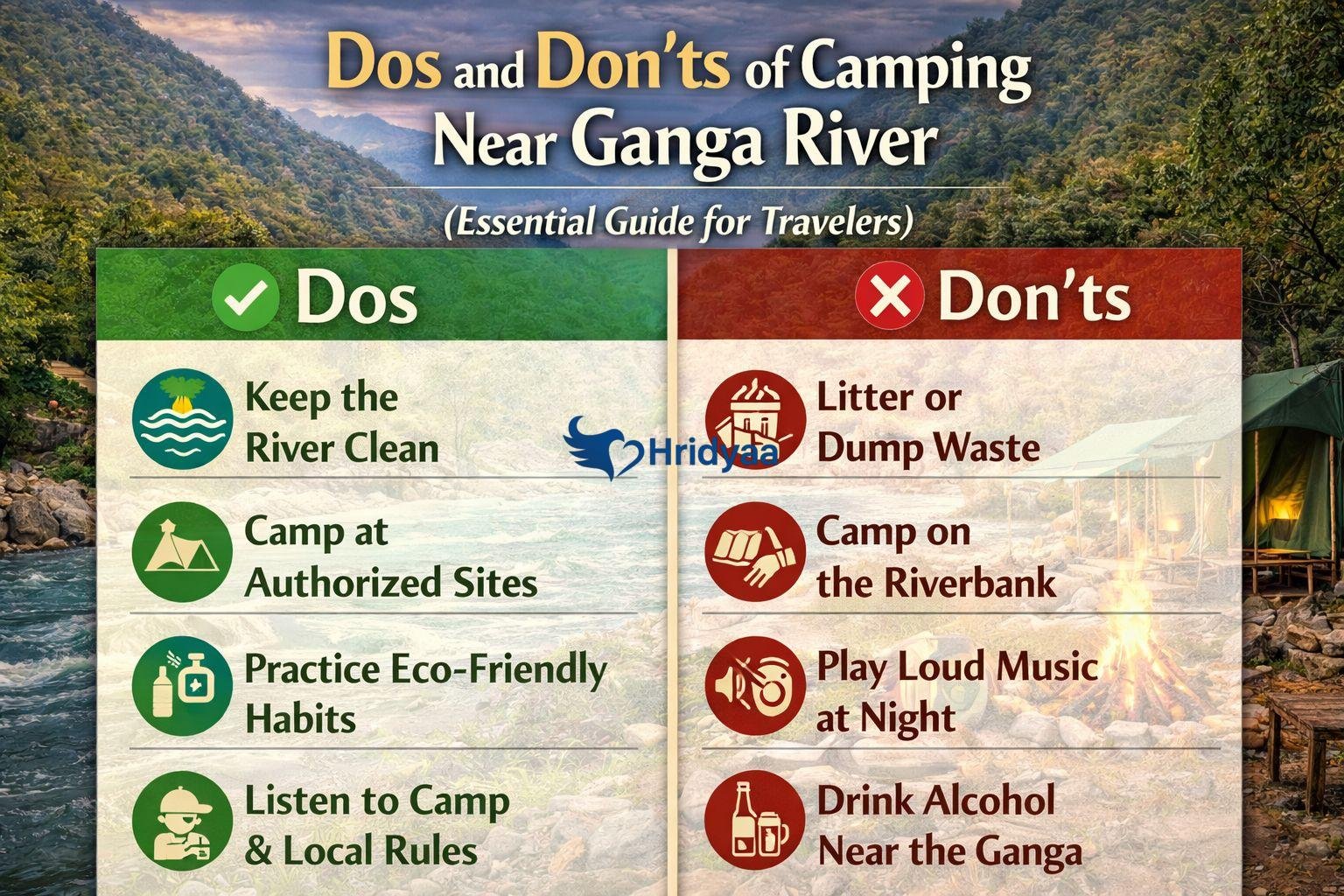
Camping near the Ganga River is one of the most memorable experiences in Rishikesh. The sound of flowing water, open skies, and spiritual calm make it deeply rewarding. But the Ganga is not just a scenic river—it is a living, sacred, and highly sensitive ecosystem.
Because of this, camping near the Ganga comes with clear responsibilities. Travelers who understand the dos and don’ts not only protect nature but also enjoy a safer, more meaningful stay. This guide explains what you should and should not do while camping near the Ganga River, based on real conditions, regulations, and on-ground practices.
Why Rules Matter When Camping Near the Ganga
The Ganga around Rishikesh flows through eco-sensitive and spiritually significant zones. Unregulated camping in the past caused pollution, noise disturbance, and safety risks—especially during sudden water level changes.
Today, authorities and responsible camps follow strict guidelines to ensure:
- River safety
- Environmental protection
- Respect for religious sentiments
- Sustainable tourism
As a traveler, following basic dos and don’ts is not optional—it’s essential.
✅ Dos of Camping Near the Ganga River
Respect the River as a Sacred & Natural Entity
The Ganga is worshipped by millions and also supports fragile aquatic life. Always treat the river with reverence. Simple actions like maintaining cleanliness and avoiding unnecessary disturbance go a long way.
Camp Only at Authorized Locations
Always stay at approved campsites that operate at a safe distance from the riverbank. These camps are set up considering flood lines, soil stability, and environmental norms. Unauthorized camping near the water edge is risky and often illegal.
Follow Eco-Friendly Practices
Use refillable water bottles, avoid plastic packaging, and dispose of waste only at designated points. Many good camps follow plastic-free policies—support them actively.
Maintain Safe Distance from the River
Water levels in the Ganga can rise suddenly due to upstream release. Reputed camps maintain a safe buffer zone. Respect this space and avoid moving tents or sitting areas closer to the water.
Listen to Camp Staff & Local Guidelines
Camp operators and local guides understand river behavior better than visitors. Whether it’s weather warnings, rafting schedules, or restricted zones—always follow their instructions.
❌ Don’ts of Camping Near the Ganga River
Do Not Litter—Even Biodegradable Waste
Throwing food waste, flowers, or biodegradable items into the river is still pollution. It affects water quality and aquatic life. The Ganga is not a disposal site—of any kind.
Avoid Loud Music and Party Behavior
Camping near the Ganga is not meant for loud DJ nights or excessive noise. Loud music disturbs wildlife, other campers, and the spiritual atmosphere of the area. Most riverside zones have strict noise limits after sunset.
Never Camp Directly on the Riverbank
Setting up tents right next to the water may look appealing but is extremely unsafe. Sudden water release, slippery rocks, and soil erosion make riverbanks dangerous—especially at night.
Do Not Use Soap, Shampoo, or Detergents in the River
Bathing or washing utensils with soap in the Ganga is strictly discouraged and often prohibited. Even “herbal” or “eco” soaps harm the river ecosystem.
Avoid Alcohol Near the River
Many camps and zones near the Ganga restrict or completely ban alcohol. Drinking near the river increases accident risk and shows disrespect to local cultural values.
Bonfire Rules You Should Know
Bonfires are allowed only in designated fire pits provided by camps. Collecting wood from forest areas or burning waste is a strict no. Camps that follow eco norms use controlled, minimal bonfires and ensure complete extinguishing after use.
Safety-Specific Dos & Don’ts
Swimming in the Ganga without permission or guidance is dangerous due to strong undercurrents. Cliff jumping or entering the river should only be done under professional supervision and where officially allowed.
Children should never be left unattended near the river, even in shallow-looking areas.
Cultural Sensitivity Matters Near the Ganga
Many locals and pilgrims consider the Ganga a living goddess. Wearing respectful clothing, avoiding offensive behavior, and maintaining decorum—especially during mornings and evenings—helps preserve harmony between travelers and local communities.
Best Time & Conditions for Safe Camping Near Ganga
Camping near the Ganga is safest between October and March, when water flow is stable and weather conditions are predictable. During monsoon months, camping near the river is either restricted or completely banned due to flood risks.
Always check seasonal advisories before planning your trip.
Why Responsible Camping Enhances Your Experience
Following these dos and don’ts doesn’t limit your fun—it actually improves it. Cleaner surroundings, quieter nights, safer locations, and respectful interactions create a deeper connection with the river and nature.
Travelers who camp responsibly near the Ganga often describe the experience as more peaceful, spiritual, and memorable compared to crowded or reckless setups.
Final Takeaway: Camp Near the Ganga the Right Way
Camping near the Ganga River is a privilege, not a right. When done responsibly, it offers one of the most rewarding nature experiences in India. By following simple dos and don’ts, travelers can protect the river, ensure their own safety, and contribute to sustainable tourism in Rishikesh.
Respect the river—and the river will reward you.


Join The Discussion