
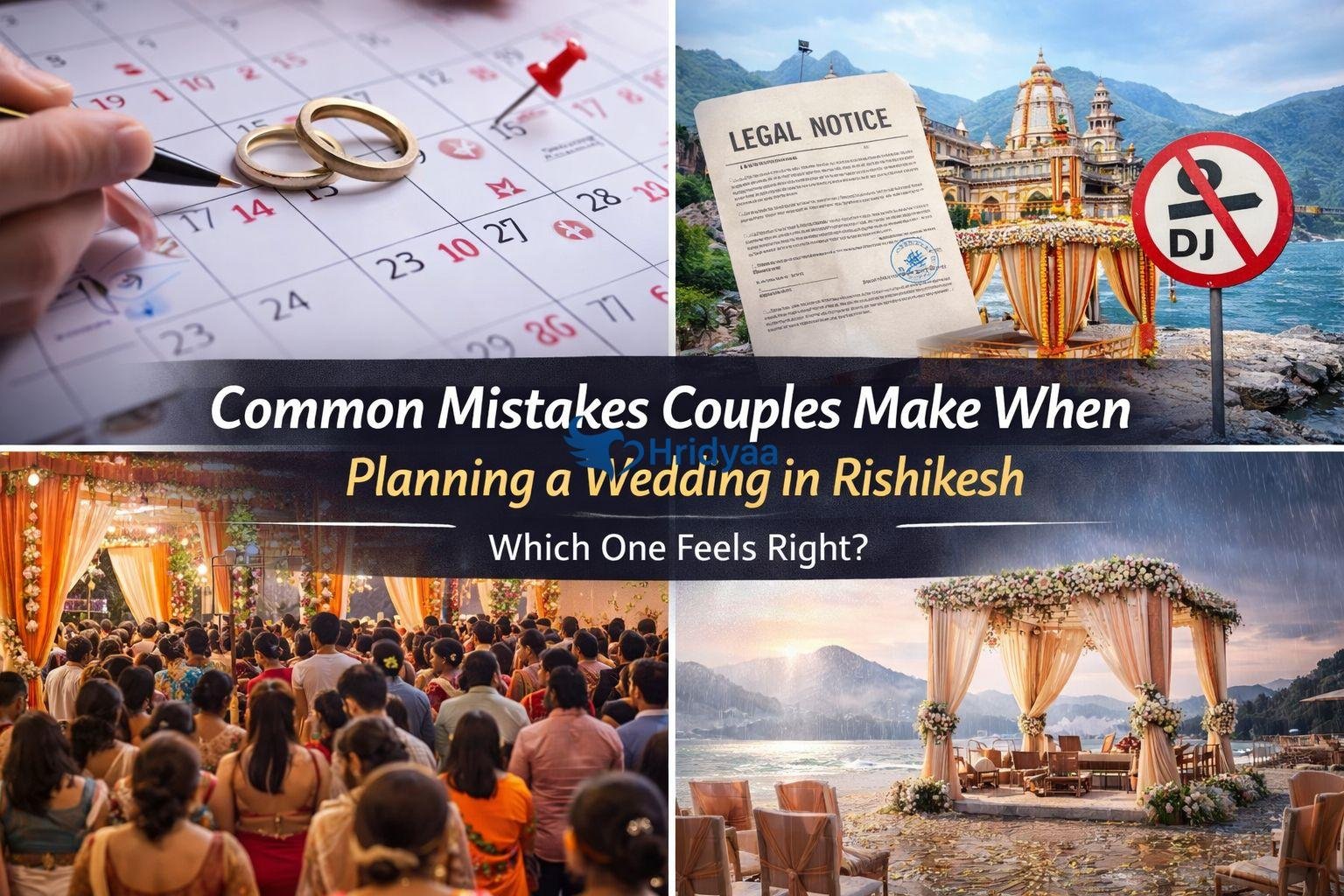
A wedding in Rishikesh can be deeply rewarding — but only when it’s planned with an understanding of how the city actually works. Many couples arrive with excitement and good intentions, yet still encounter stress due to avoidable planning mistakes.
These missteps don’t happen because couples are careless. They happen because Rishikesh is often treated like a conventional wedding destination, when in reality, it operates by a very different rhythm. Knowing what not to do is just as important as knowing what to plan.
Choosing Peak Dates Without Early Planning
One of the most common mistakes couples make is choosing popular wedding dates without securing venues and accommodations well in advance. Rishikesh has a limited number of suitable wedding venues, especially those near the river or in quieter zones.
Peak months attract multiple weddings, retreats, and seasonal tourism at the same time. When planning is delayed, couples often face limited availability, higher costs, or compromises on venue quality. Early planning is especially important here because last-minute alternatives are rarely comparable.
Couples who plan early tend to enjoy smoother coordination and greater flexibility.
Ignoring Local Regulations Until the Last Minute
Rishikesh has clear rules related to sound, timing, riverfront use, safety, and alcohol. A frequent mistake is assuming these rules can be adjusted later or managed informally.
When regulations are ignored during the planning stage, couples are often forced to change schedules, reduce event elements, or shift functions at short notice. This creates unnecessary stress for both families and guests.
Weddings in Rishikesh work best when events are designed around the rules, not against them. Venues and planners who understand local regulations help avoid these situations entirely.
Overcrowding the Guest List
Another common issue is trying to host a large, city-style guest list in a destination that is best suited for intimate to mid-size weddings. Rishikesh venues are designed for comfort and experience, not sheer numbers.
Overcrowding leads to strained accommodations, rushed events, and reduced guest comfort. It also increases logistical complexity, especially for transport and meal coordination.
Couples who consciously limit their guest list often find that their wedding feels more personal, relaxed, and meaningful — which is exactly what Rishikesh naturally supports.
Poor Weather and Season Planning
Weather plays a far bigger role in Rishikesh weddings than many couples anticipate. Planning outdoor ceremonies without considering seasonal conditions can lead to discomfort or last-minute changes.
For example, summer weddings require careful timing to avoid midday heat, while monsoon weddings need strong backup plans. Winter evenings may require warmth arrangements for guests.
Couples who plan their wedding style, schedule, and décor around seasonal realities tend to have a far better experience than those who rely on assumptions.
Why These Mistakes Are Easy to Avoid
The encouraging part is that none of these mistakes are unavoidable. Most occur due to unfamiliarity with how weddings function in Rishikesh, not because of poor planning intent.
Couples who:
- Plan early
- Choose venues wisely
- Respect local rules
- Keep guest lists realistic
- Align expectations with the environment
…almost always report smooth, memorable celebrations.
Final Thoughts
Rishikesh rewards thoughtful planning more than grand ambition. Weddings here are at their best when they feel aligned with the city’s pace, regulations, and natural setting.
By avoiding these common mistakes, couples not only reduce stress but also allow Rishikesh to offer what it does best — a wedding experience that feels calm, personal, and genuinely meaningful.


Join The Discussion