
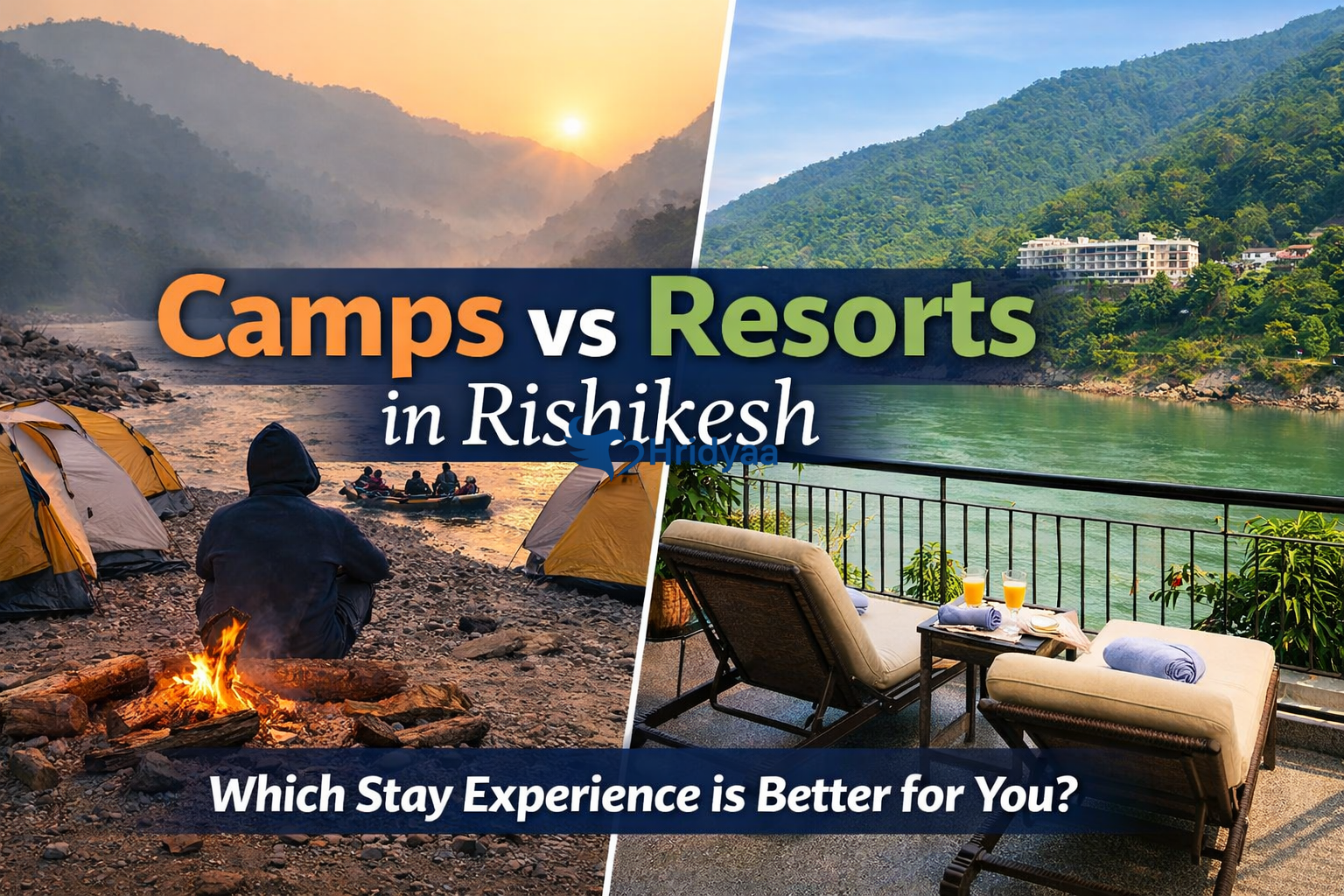
Why This Choice Matters More Than You Think
In Rishikesh, where the Ganga slows down and the hills begin to close in, your stay doesn’t just decide where you sleep.
It quietly shapes how your entire trip feels.
It decides whether your mornings begin with river mist near Shivpuri or quiet balconies in Tapovan.
Whether evenings end around a bonfire by the water or in silence after a long yoga session.
Whether your days feel energetic and shared — or slow and inward.
Choosing wrong doesn’t ruin your trip.
But it can quietly make it feel different than you imagined.
By the end of this guide, you’ll know exactly which stay matches the kind of trip you’re actually planning.
Camps and Resorts in Rishikesh Offer Very Different Experiences
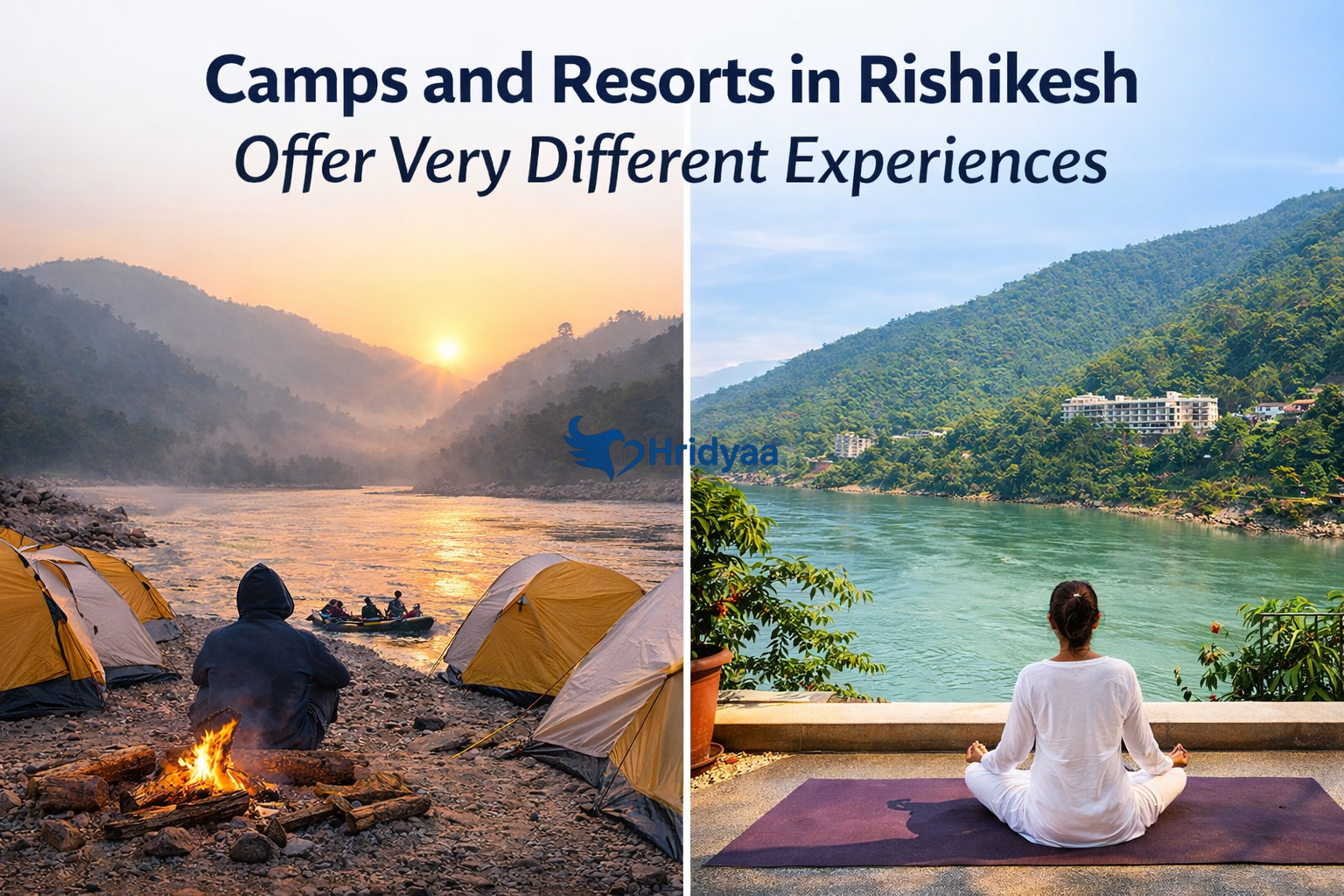
Camps and resorts in Rishikesh offer completely different stay experiences — especially if you’re visiting for river rafting, yoga retreats, or a short weekend getaway from Delhi.
Many travelers treat accommodation as a practical decision.
In Rishikesh, it becomes part of the journey.
Camps are usually located closer to the river belt and activity zones, particularly around Shivpuri.
Resorts are more commonly found in quieter pockets, designed to reduce noise and protect privacy.
Both are popular.
Both look appealing in photos.
But they create very different versions of the same destination.
When comparing camps vs resorts in Rishikesh, the real difference isn’t price — it’s pace, privacy, and proximity to the river.
Two Versions of Rishikesh, Two Very Different Energies
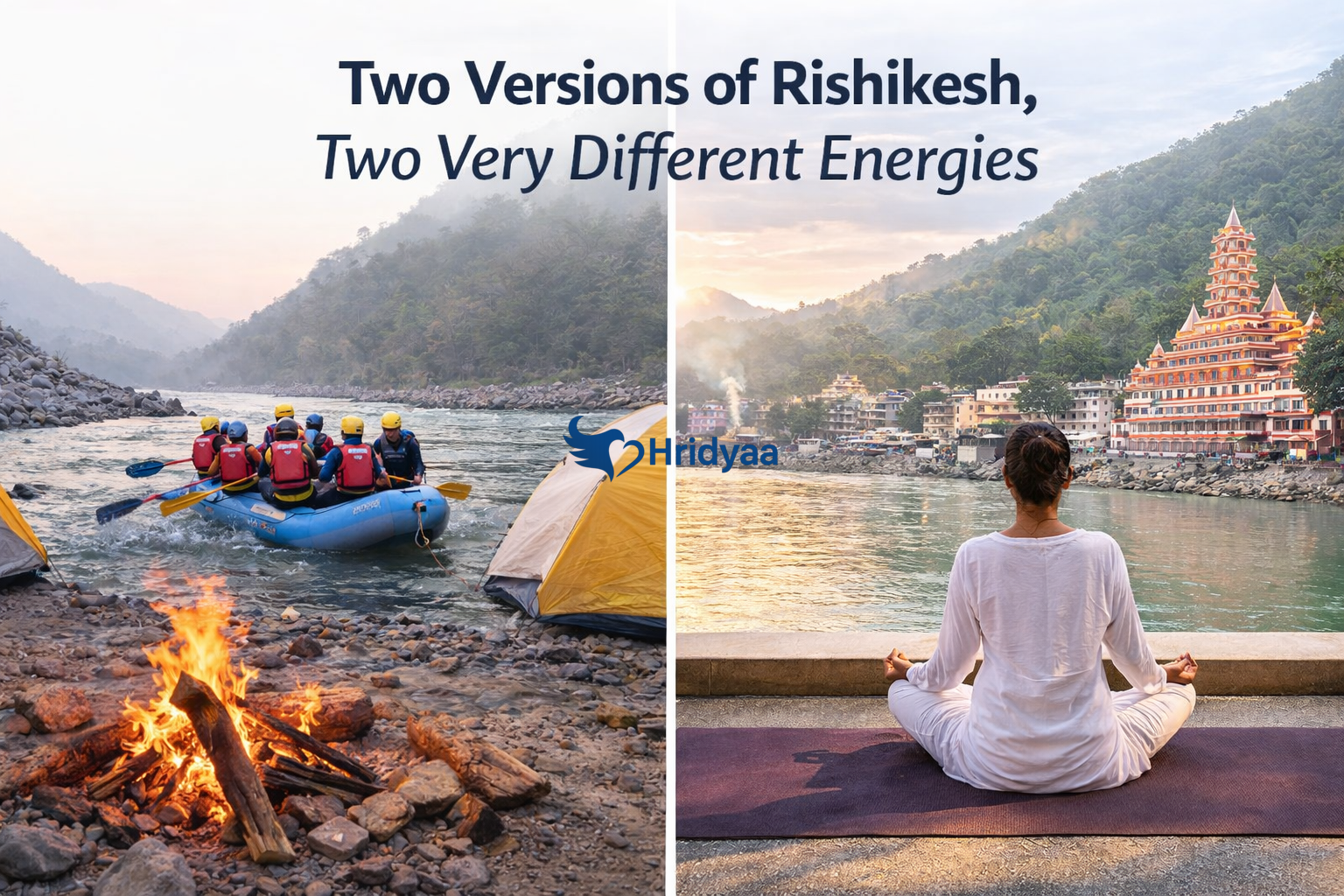
There isn’t just one Rishikesh.
There’s the adventurous version — rafting days, wet shoes drying in the sun, shared laughter, and long evenings outdoors near the river.
And then there’s the reflective version — early yoga sessions, slow walks along the Ganga, quiet meals, and long pauses between plans.
Camps usually reflect the first.
Resorts usually reflect the second.
Most travelers only understand this difference after checking in.
By then, the stay has already set the rhythm of the trip.
What Staying in a Camp in Rishikesh Actually Feels Like
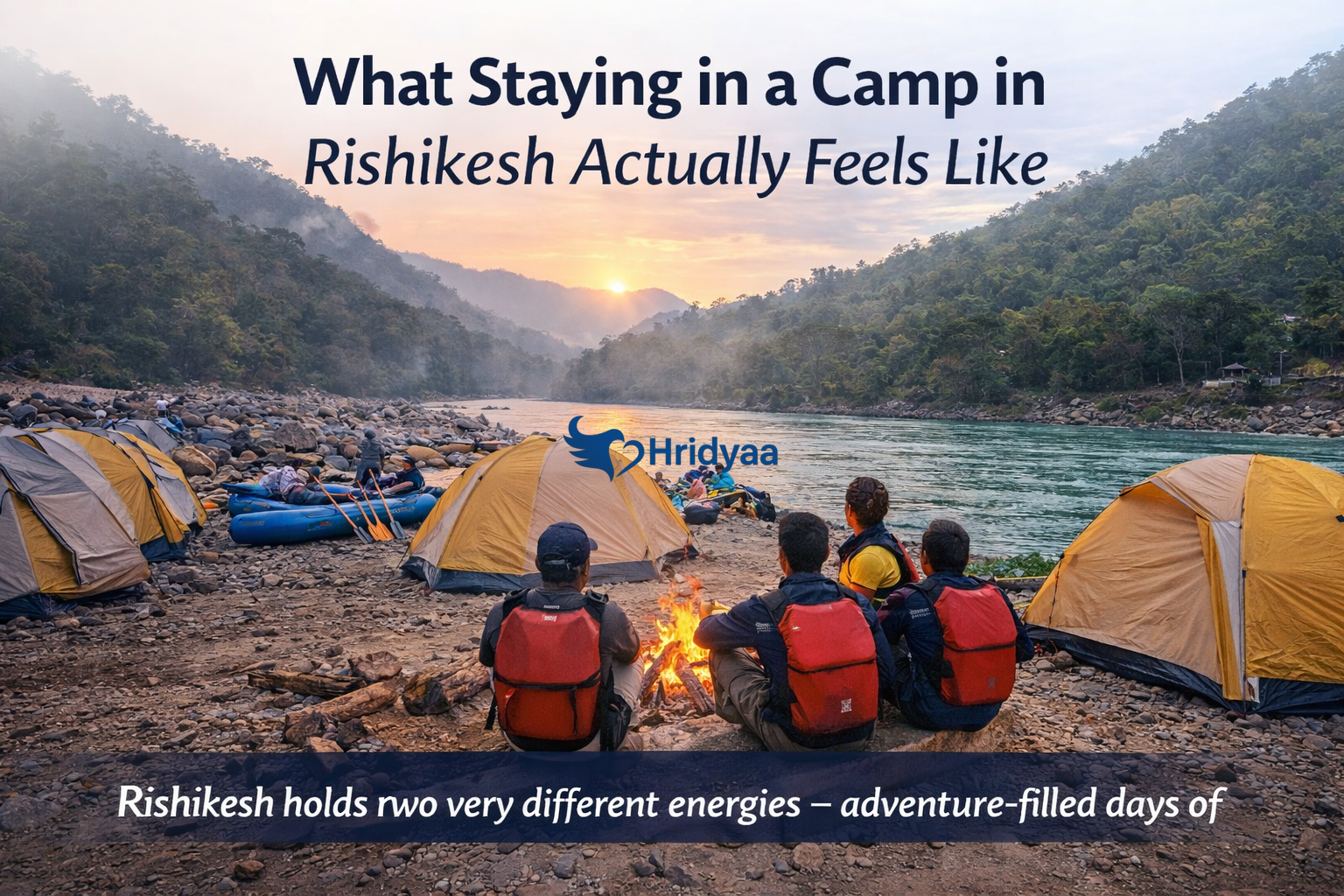
Staying in a camp is less about accommodation and more about participation.
Mornings begin with sound and movement — the river nearby, people waking up, plans forming around you.
Tents or rooms are simple and functional, designed to keep you connected to the outdoors rather than sealed away from it.
Days follow a shared rhythm.
Meals happen at fixed times.
Rafting schedules and group activities shape how the day unfolds.
Evenings are rarely quiet — and that’s intentional.
Bonfires, conversations, and shared stories are part of the experience.
Picture waking up around 6am, unzipping your tent, and seeing the first light hit the Ganga while other campers slowly stir awake. Someone’s already boiling tea. The river sounds closer than the road. The day hasn’t started yet, but it already feels full.
If you’re planning rafting, choosing the right stay location near Shivpuri makes a noticeable difference — especially when timing activities around the river. That’s why many travelers exploring River Rafting in Rishikesh naturally look toward options like Camping in Rishikesh.
Camps Usually Feel Right If:
- You’re visiting primarily for rafting in Shivpuri
- You’re traveling with friends or a small group
- You don’t mind fixed meal timings
- You enjoy structured, group-based plans
- You’re coming for a quick weekend from Delhi
For these travelers, camps don’t feel restrictive — they feel energizing.
For others, the same rhythm can feel busy by the second day.
That reaction usually tells you everything you need to know.
If camps feel energetic and shared, resorts feel intentional and private — and that contrast becomes clearer on the other side.
What Staying in a Resort in Rishikesh Feels Like
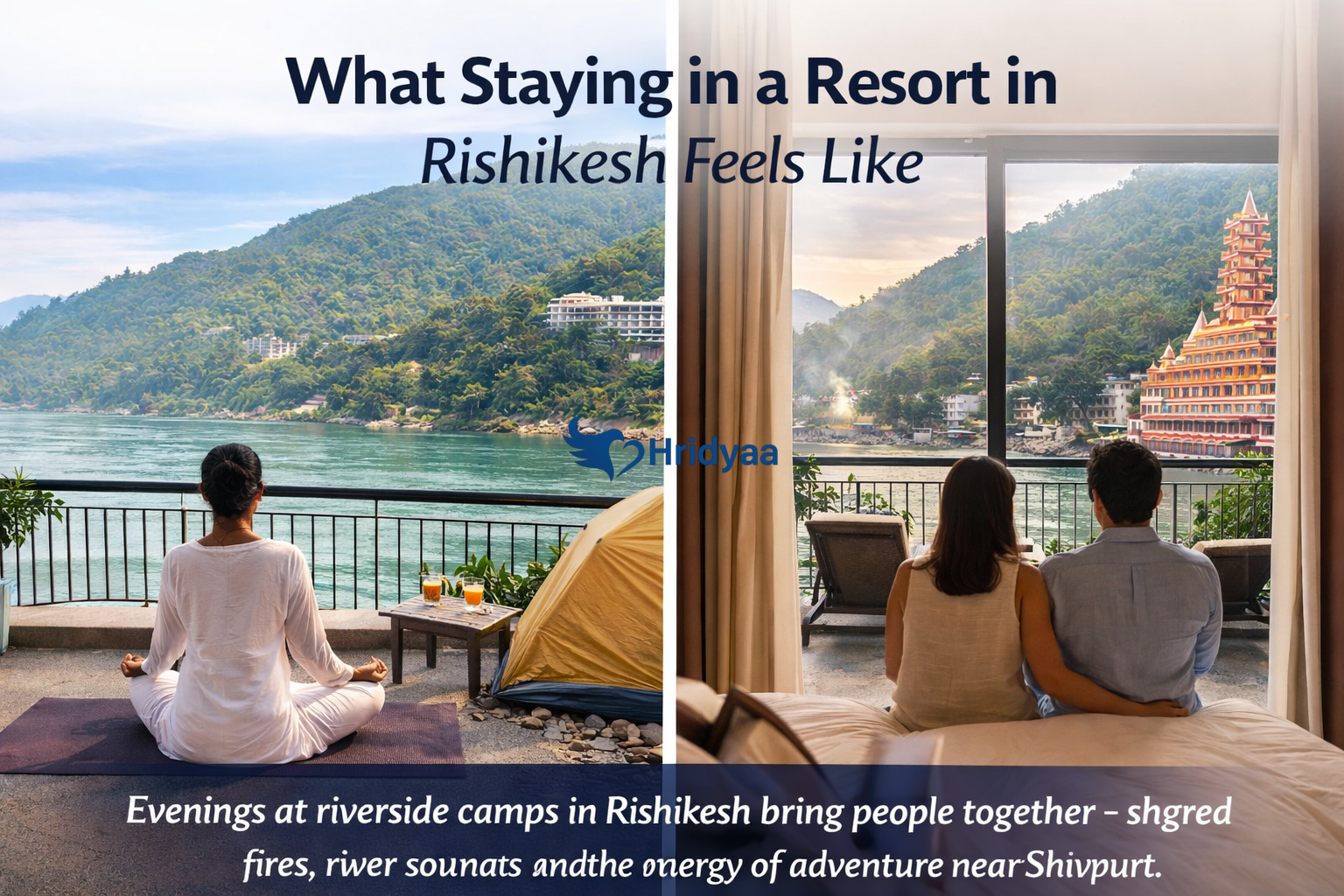
If camps feel energetic and shared, resorts feel intentional and private.
Staying in a resort in Rishikesh is about slowing the pace without disconnecting from the place itself. You’re still close to the river, the hills, and the spiritual atmosphere — but the experience is more contained.
Mornings begin quietly.
There’s no group schedule pulling you out of bed.
No fixed activity waiting outside your door.
Instead, you move at your own speed.
Many resorts are located in calmer neighborhoods like Tapovan, where traffic fades early and evenings settle into silence. Others sit slightly away from the main road, designed to reduce noise and visual clutter.
The goal isn’t to fill your day.
It’s to protect your energy.
How Resorts Change the Pace of Your Trip
Resorts don’t add experiences — they remove friction.
When your stay is quiet and predictable, your attention shifts inward. You notice smaller things: light on the river, your own energy levels, the rhythm of the day.
This change in pace matters more than most travelers expect.
Days feel open-ended.
You step out when you want — and return when you’re ready.
Many travelers staying in resorts build their days around walks near the Ganga, morning yoga, or visits to spiritual spaces like Parmarth Niketan, then return to a place that feels calm and familiar.
Evenings are quieter.
Meals feel unhurried.
Sleep comes easier.
Resorts don’t try to shape your experience.
They give you room to shape it yourself.
Resorts Usually Feel Right If:
- You’re visiting Rishikesh for yoga, meditation, or wellness retreats
- You value privacy more than social interaction
- You’re traveling as a couple or with family
- You prefer flexible meal timings
- You want consistency and comfort after long days
For these travelers, resorts don’t feel isolating — they feel grounding.
Picture waking up naturally, opening your balcony door, and watching the Ganga move quietly below while the town is still asleep. No announcements. No schedules. Just time stretching open in front of you.
That sense of control changes how the entire trip unfolds.
Comfort, Privacy, and Why They Matter More Than You Think

Resorts offer something subtle but powerful: predictability.
Hot water works when you expect it to.
Rooms stay warm in winter and cool in summer.
Noise levels remain low.
This consistency becomes especially important for:
- families traveling with children
- couples planning anniversaries or honeymoons
- solo travelers focused on yoga, meditation, or inner work
For many, this stability allows them to fully enjoy places like Triveni Ghat in the evening without feeling overstimulated or drained.
It’s not about luxury.
It’s about mental ease.
Camps and Resorts Start Feeling Different After Day One
On the first day, almost any stay feels fine.
The difference shows up later.
Camps amplify movement and shared energy.
Resorts protect quiet and personal rhythm.
If your days are filled with rafting, activity, and group plans, camps feel aligned.
If your days are inward, slow, or emotionally focused, resorts usually feel better by the second morning.
Most travelers don’t regret choosing a camp or a resort.
They regret choosing the wrong pace for the trip they wanted.
Camps vs Resorts in Rishikesh: Which One Fits Your Trip?
Most travelers don’t struggle because camps and resorts are confusing.
They struggle because they haven’t clearly defined why they’re coming.
Once the purpose is clear, the choice usually isn’t.
Here’s how camps and resorts feel across different kinds of trips.
If You’re Visiting Mainly for Rafting and Adventure
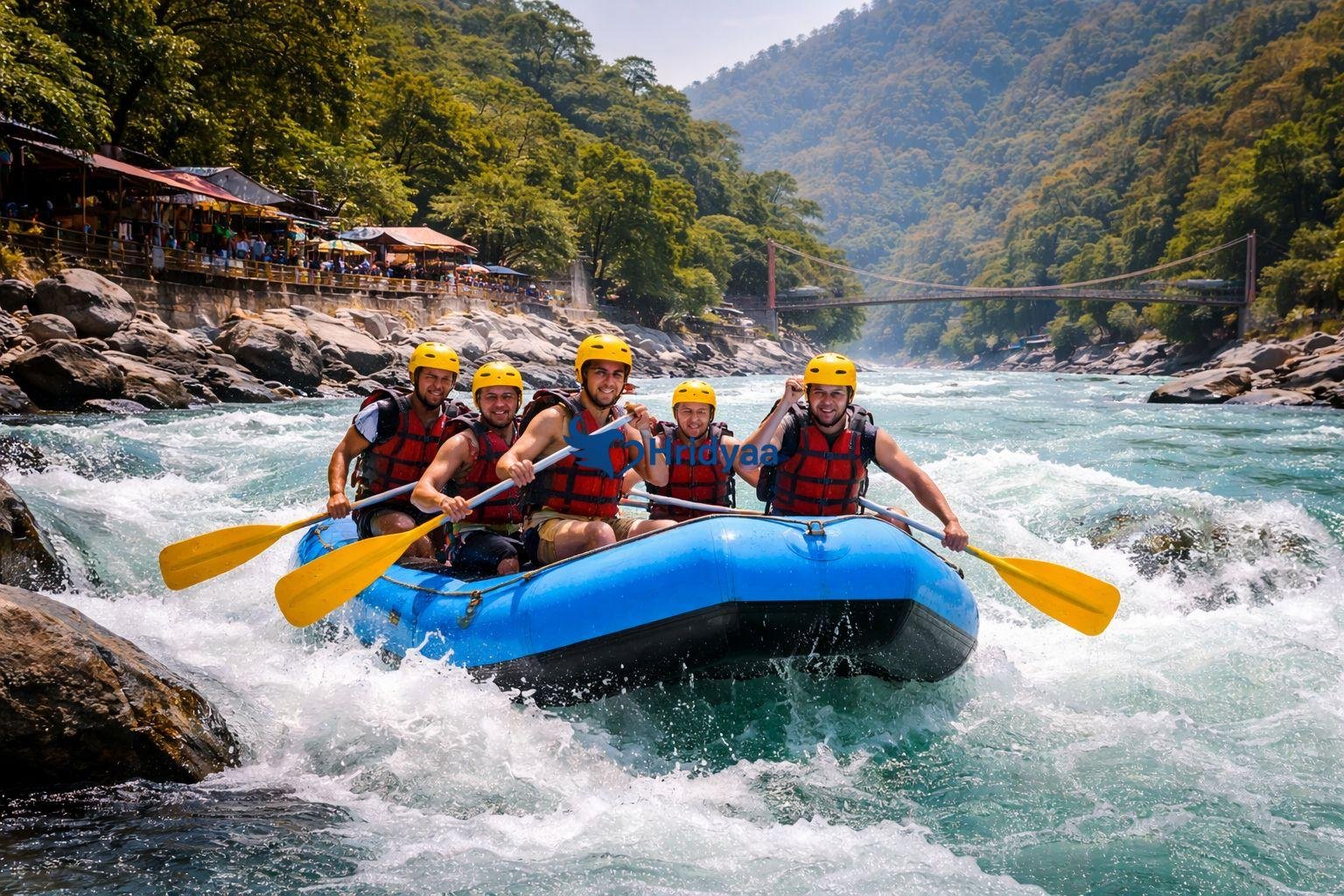
Camps usually feel like the natural choice.
Being closer to the river means:
- earlier starts without rushing
- less travel between activities
- more time outdoors, less time commuting
This matters most on short, activity-packed trips built around River Rafting in Rishikesh, where timing and proximity shape the experience more than room comfort.
Adventure trips are often fast and social.
Camps match that energy.
If You’re Here for Yoga, Meditation, or a Slow Reset
Resorts usually feel better — especially after the first day.
When the purpose is stillness, routine, or inner work, surroundings matter as much as the schedule. Quiet mornings, flexible pacing, and predictable comfort make it easier to stay present.
Travelers coming for yoga retreats or personal resets often prefer stays that support silence rather than stimulation, allowing the trip to unfold slowly instead of feeling full.
If This Is a Couple’s Trip
This is where the difference becomes emotional.
Camps tend to feel lively and memorable — shared fires, conversation, movement.
Resorts feel personal and unhurried — private time, quiet meals, uninterrupted space.
Couples planning anniversaries, honeymoons, or meaningful downtime often lean toward resorts, while couples looking for energy and shared experiences sometimes enjoy camps more.
The right choice depends on whether the trip is about connection outward or connection inward.
If You’re Traveling With Family
Resorts usually offer fewer friction points.
Families often need:
- flexible meal timings
- quieter nights
- predictable comfort
Camps can work well for short stays or older children, but on multi-day trips, resorts tend to feel easier — especially when rest matters as much as exploration.
Seasonal Differences That Quietly Change the Experience
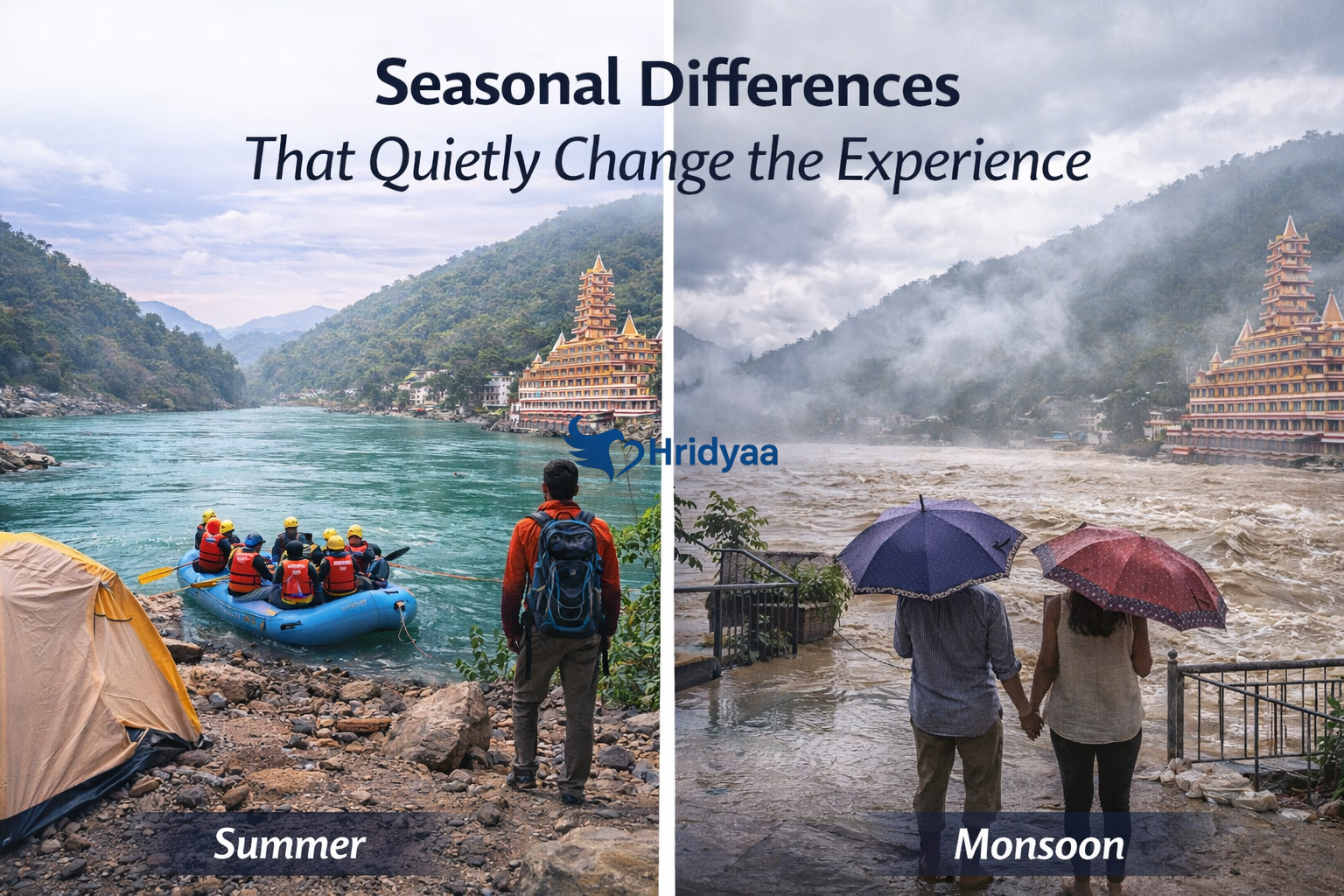
The time of year subtly shifts which option feels better.
In warmer months, open-air camps feel refreshing and lively.
During monsoon or winter, enclosed rooms and controlled comfort often become more important.
This doesn’t make one option right or wrong — it simply changes what feels comfortable over multiple days.
A Quick Way to Decide (At a Glance)
| If You’re Looking For | Choose |
|---|---|
| Close proximity to the river and group energy | Camps |
| Privacy and flexible daily pacing | Resorts |
| Short, high-energy adventure trip | Camps |
| Multi-day wellness or slow travel stay | Resorts |
This simple framing clears most confusion.
Final Thought: Rishikesh Reflects What You Bring
Rishikesh doesn’t force a single kind of experience.
It responds to what you’re seeking.
Some travelers leave with stories of rivers, bonfires, and friendships.
Others leave with silence, clarity, and rest.
Your stay doesn’t decide what Rishikesh is.
It decides how you experience it.
If you’re deciding based on location, proximity to rafting points, or need help comparing quiet resorts versus riverside camps, exploring options in advance makes the choice easier — especially during peak season when the most suitable stays tend to fill up early.


Join The Discussion