
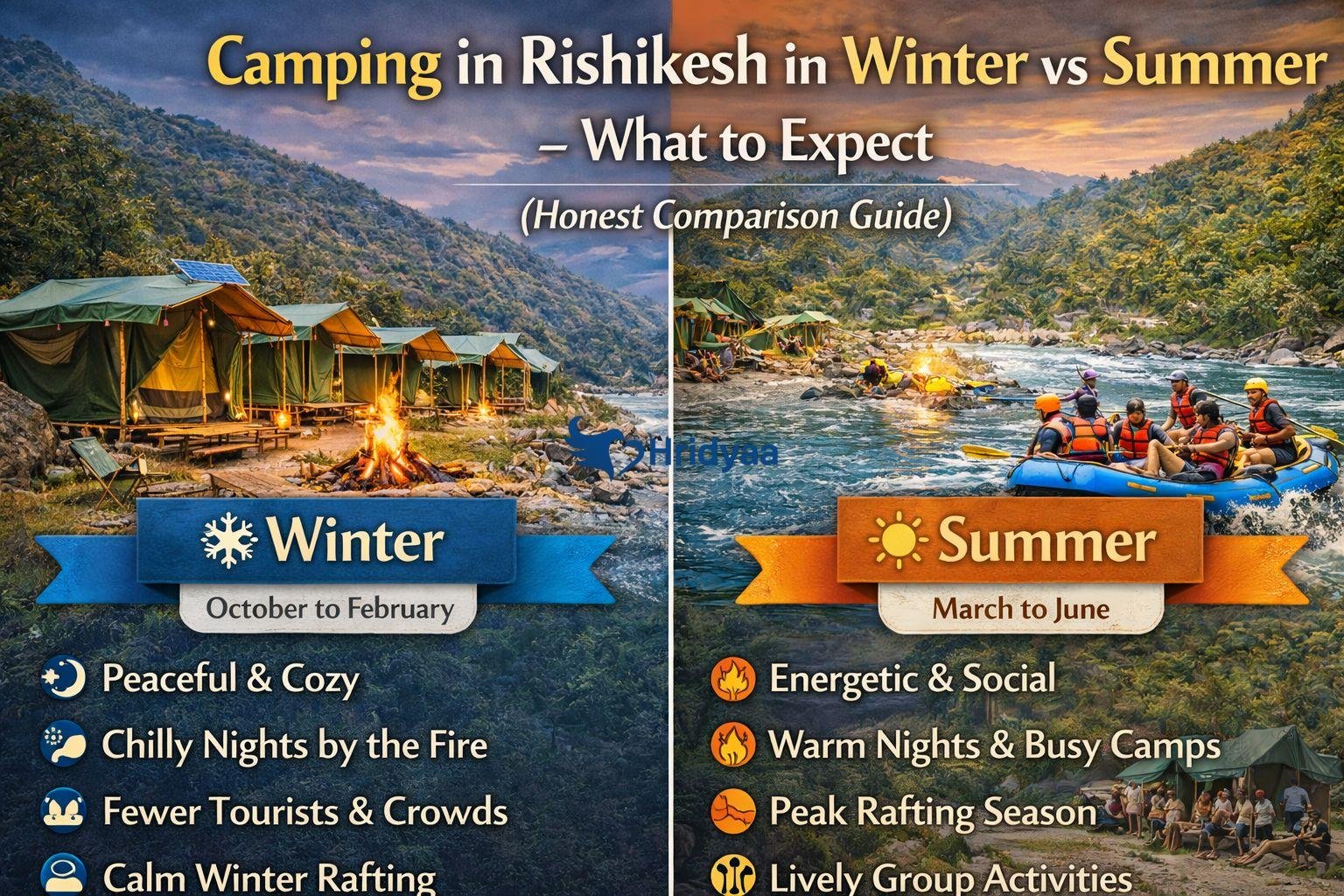
Camping in Rishikesh is popular throughout the year, but winter and summer camping feel like two completely different experiences. Many travelers search for a simple answer—which season is better?—but the reality is more nuanced.
This research-based guide breaks down winter vs summer camping in Rishikesh from every practical angle: weather, comfort, crowd levels, food, rafting compatibility, safety, and who each season is best for. If you want to choose the right season (not just the popular one), this article will help you decide.
Why Season Matters More Than Camp Category
In Rishikesh, the season impacts your camping experience more than whether the camp is budget or luxury. The same riverside camp can feel magical in January and exhausting in May.
Season affects:
- Night comfort
- Bonfire experience
- Daytime heat or cold
- Crowd density
- Overall vibe (peaceful vs energetic)
That’s why understanding winter vs summer differences is essential before booking.
Winter Camping in Rishikesh (October to February)
Winter camping is often described as the most soulful version of Rishikesh. Temperatures drop, crowds thin out, and nature becomes the focus rather than activity overload.
What Winter Camping Feels Like
Days are pleasant and sunny, while nights turn cold—especially near the river and forest areas. Camps feel quieter, calmer, and more immersive. Bonfires become central to the experience, not just an add-on.
The Ganga River flows steadily, creating perfect conditions for peaceful riverside stays.
Comfort & Stay Experience
Good camps provide thick blankets, insulated tents, and hot water arrangements. Sleeping feels cozy rather than uncomfortable, provided the camp is well-managed.
Winter camping favors:
- Couples
- Solo travelers
- Nature lovers
- Photography enthusiasts
Summer Camping in Rishikesh (March to June)
Summer camping in Rishikesh is high-energy, social, and adventure-driven. This is the peak season for rafting, group trips, and weekend getaways.
What Summer Camping Feels Like
Days can be hot, especially in May and June, but the river provides relief. Camps are lively, with groups, music, and activity-filled schedules. Nights are generally comfortable and do not require heavy bedding.
Summer camping is more about action than silence.
Comfort & Stay Experience
Camps rely on open ventilation, shaded areas, and proximity to the river. Afternoon rest becomes important, while mornings and evenings are the most enjoyable.
Summer camping favors:
- Groups of friends
- Corporate outings
- Adventure lovers
- First-time Rishikesh visitors
Winter vs Summer: Temperature & Weather Reality
Winter temperatures can drop significantly at night, especially in forest-based camps around Shivpuri. This makes bonfires essential and mornings slower.
Summer temperatures rise during the day, but evenings cool down naturally due to river breeze. Heat is manageable if the camp is riverside or forest-located.
Key takeaway:
- Winter challenges nights
- Summer challenges afternoons
Bonfire & Evening Experience Compared
Winter bonfires are long, meaningful, and central to the camping experience. Guests gather early, conversations last longer, and the cold enhances the atmosphere.
In summer, bonfires are shorter and more social. They’re enjoyable but not essential for warmth. Music and group interaction dominate more than silence.
If bonfire evenings matter to you, winter wins clearly.
Crowd Levels & Vibe Difference
Winter camps attract travelers seeking peace, reflection, and nature. Crowd density is lower except during long weekends and holidays.
Summer camps are busy, energetic, and sometimes noisy—especially on weekends. Availability becomes limited, and advance booking is essential.
Quiet vs lively is one of the biggest seasonal differences.
Food & Dining Experience
In winter, hot meals feel more satisfying. Camps focus on warm, freshly prepared food, soups, and tea breaks.
In summer, lighter meals, hydration, and timing matter more. Camps schedule meals to avoid peak heat hours.
Quality remains similar, but food feels more comforting in winter.
Compatibility with Rafting & Activities
Summer is the peak rafting season. Water feels refreshing, and energy levels are high. If rafting is your main goal, summer has an edge.
Winter rafting is calmer and more scenic. It suits travelers who want the experience without crowds or intense adrenaline.
Camping + rafting works well in both seasons, but the style differs.
Safety & Health Considerations
Winter requires:
- Proper bedding
- Warm clothing
- Awareness of cold-sensitive health conditions
Summer requires:
- Hydration
- Sun protection
- Midday rest
Neither season is unsafe if camps follow standard practices—but preparation matters.
Cost & Availability Comparison
Winter (excluding holidays) often offers better deals and flexibility. Camps have more availability and personalized service.
Summer prices rise due to high demand, especially during rafting peak months. Budget options fill quickly.
Travelers seeking value may prefer winter.
Who Should Choose Which Season?
Choose winter camping if you want:
- Peace and quiet
- Romantic or reflective travel
- Strong bonfire experience
- Fewer crowds
Choose summer camping if you want:
- Rafting-focused trips
- Group fun and social vibe
- Short weekend adventures
- High-energy atmosphere
Final Verdict: Winter vs Summer Camping in Rishikesh
There is no single “best” season—only the right season for the right traveler.
Winter offers depth, calm, and connection with nature.
Summer offers energy, adventure, and social excitement.
Understanding this difference is what separates a good trip from a great one.


Join The Discussion