
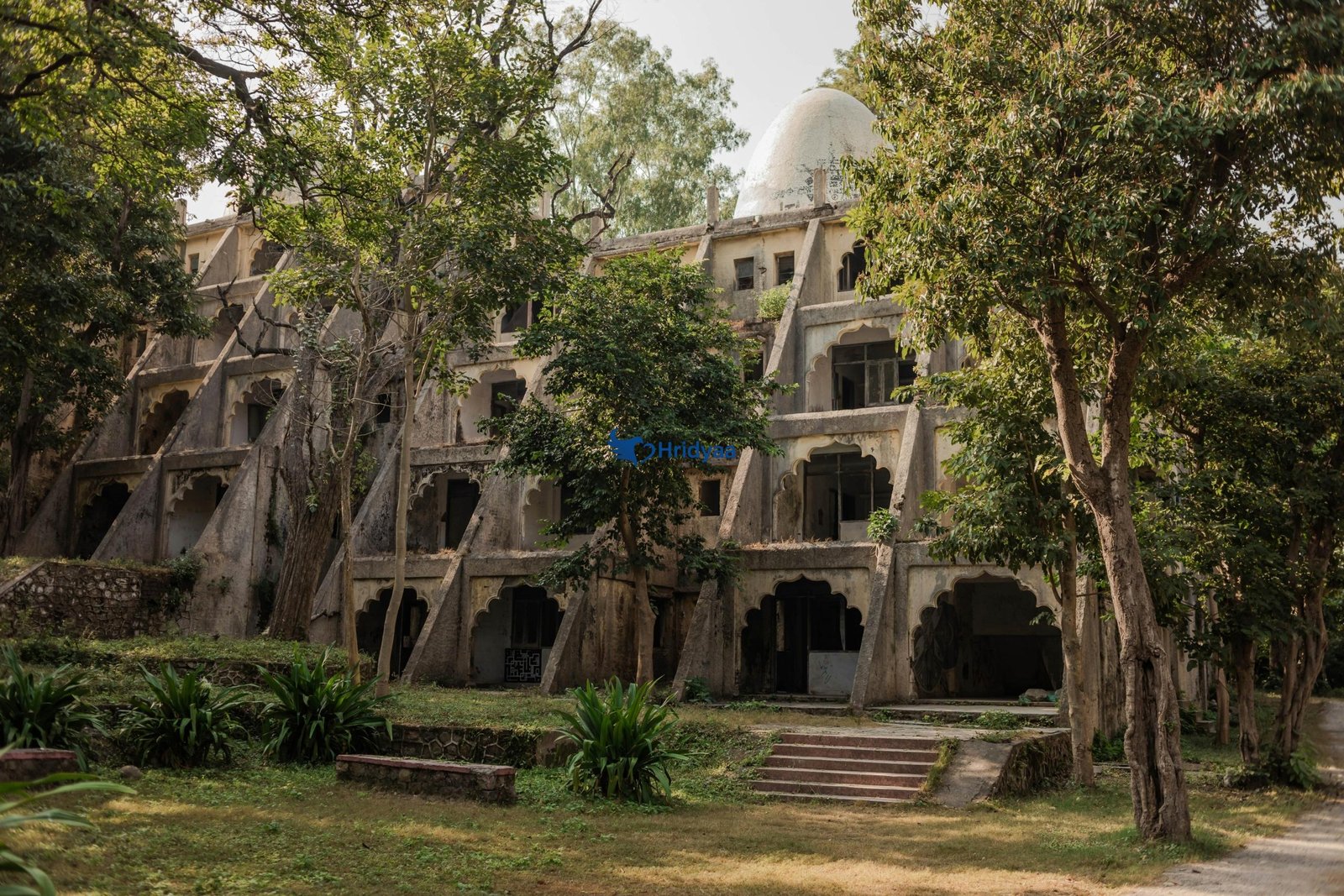
Beatles Ashram, officially known as Chaurasi Kutia, is one of the most quietly powerful places in Rishikesh. It is not a conventional tourist attraction, nor is it a functioning ashram anymore. What draws people here is not ritual or instruction, but atmosphere—a sense of pause, reflection, and historical depth that still lingers among its abandoned meditation huts and forest paths.
Located inside the Rajaji Tiger Reserve area, close to the eastern bank of the Ganga, the ashram gained global recognition in 1968 when The Beatles stayed here to learn Transcendental Meditation under Maharishi Mahesh Yogi. That short stay permanently linked Rishikesh with global counterculture, meditation, and spiritual seeking.
The Real Story Behind Beatles Ashram
Many visitors arrive expecting a preserved monument or museum. The reality is different. Beatles Ashram is largely a reclaimed ruin—quiet buildings overtaken by trees, walls covered in graffiti art, and meditation domes standing empty. After Maharishi Mahesh Yogi left Rishikesh, the ashram was abandoned for decades, inaccessible to the public until it was officially reopened as a heritage site.
This unfinished, slightly decayed state is not a flaw; it is part of the experience. The place does not attempt to recreate the past or commercialize the Beatles connection aggressively. Instead, it allows visitors to walk through silence, history, and nature at their own pace.
Why the Beatles Came to Rishikesh
In the late 1960s, Rishikesh was emerging as a global center for yoga and meditation. The Beatles arrived seeking mental clarity, creative renewal, and distance from fame. During their stay, they composed many songs that later appeared on the “White Album.”
However, their time here was also complicated. Misunderstandings, cultural gaps, and internal disagreements eventually led them to leave earlier than planned. This nuance is important—the ashram represents a moment of exploration, not a perfect spiritual story.
Best Time to Visit Beatles Ashram
The most comfortable months to visit are from October to March. Winter mornings and late afternoons are ideal, offering cool weather and soft light filtering through the forest canopy.
April to June can be extremely hot, and walking through the open grounds becomes tiring by midday. If visiting in summer, early morning entry is advisable.
During the monsoon season from July to September, the forest becomes lush and atmospheric, but paths may be slippery and humidity high. While beautiful, this season requires caution.
How to Visit Beatles Ashram
Beatles Ashram is located near Swarg Ashram on the eastern side of Rishikesh. From the main town, you can reach the area by auto-rickshaw or taxi, followed by a short walk through the forest gate. Entry requires a ticket, as the site is now managed by forest authorities.
The ashram is not accessible by vehicle beyond the gate. Comfortable walking shoes and water are essential, as the area is spread out and facilities inside are minimal.
What to Expect Inside
Expect silence more than spectacle. You will see the iconic meditation domes, simple residential quarters, lecture halls, and pathways winding through trees. Informational boards provide context, but much of the meaning comes from walking slowly and observing.
Photography is allowed, and the graffiti art—much of it spiritual or philosophical in nature—adds a contemporary layer to the site. However, this is still a place best approached with respect, not as a photo-only stop.
Common Misunderstandings
Beatles Ashram is not an active meditation center, and you cannot attend classes here. It is also not closely connected to the daily spiritual life of present-day Rishikesh, which now revolves more around yoga schools, ashrams, and riverfront practices elsewhere.
Understanding this helps visitors appreciate the place for what it truly is: a preserved pause in time.
Beatles Ashram and Rishikesh Today
The ashram symbolizes the moment when Rishikesh shifted from a regional spiritual town to a global spiritual destination. Long before social media and wellness tourism, this place quietly carried India’s meditative traditions to the world.
Today, it stands as a bridge between eras—between silence and sound, East and West, abandonment and rediscovery.
Conclusion
Beatles Ashram is not about nostalgia alone. It is about stillness, transition, and the search for meaning that transcends time and culture. For travelers who want to understand why Rishikesh holds such a unique place in the global spiritual imagination, a slow walk through Beatles Ashram is not optional—it is essential.


Join The Discussion