
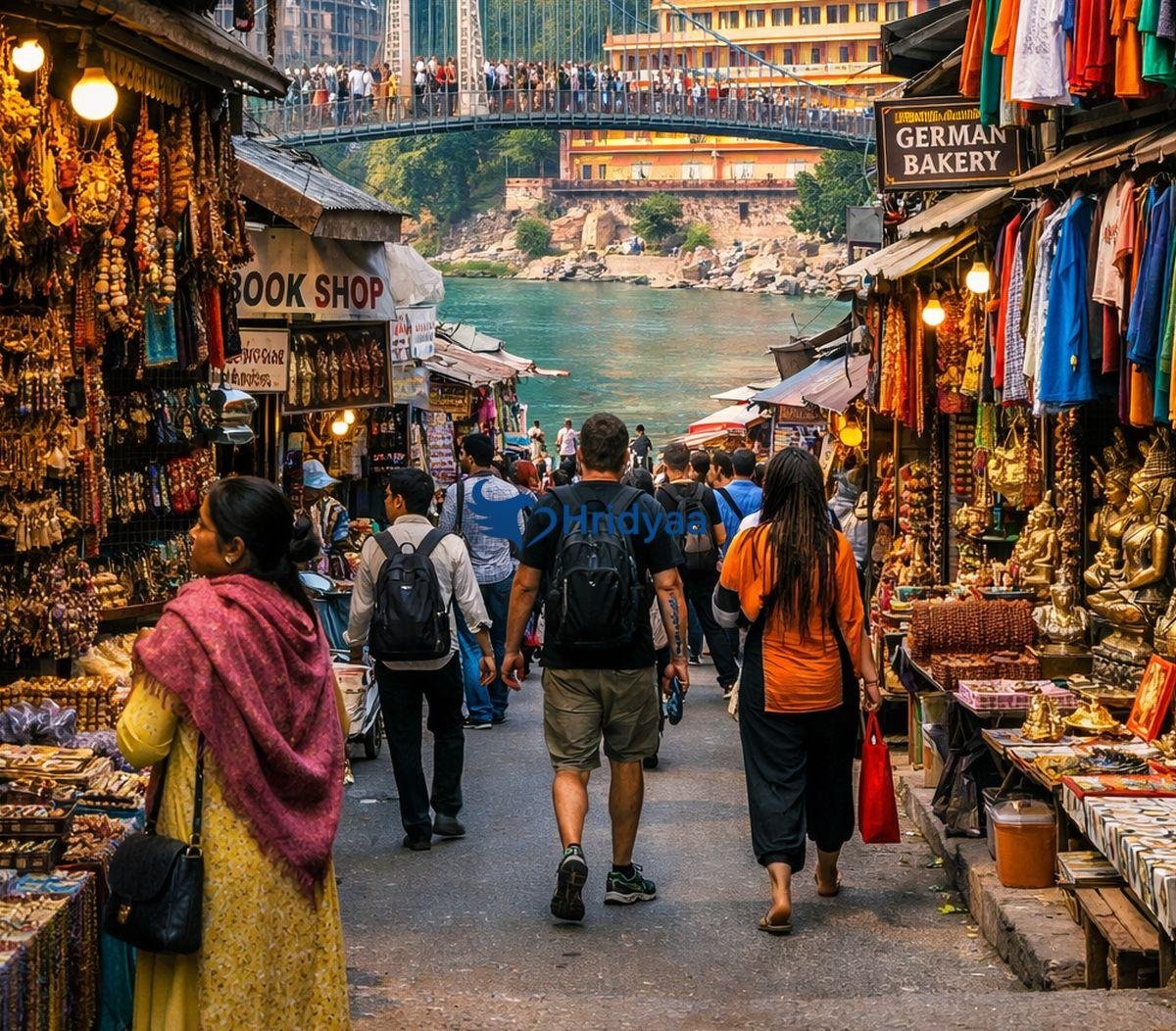
Lakshman Jhula Market is one of the most alive, walked-through, and talked-about places in Rishikesh. It is not a conventional bazaar with long rows of identical shops. Instead, it is a narrow, constantly moving market that blends spirituality, travel culture, local life, and global influence into one continuous experience.
Located right next to the iconic suspension bridge, Lakshman Jhula Market is where pilgrims, backpackers, yoga seekers, café-hoppers, and locals all cross paths. Some people come here to shop, some to eat, some just to walk—and many end up doing all three without planning to.
This guide explores Lakshman Jhula Market in detail: where it is, what kind of market it actually is, what you can buy, how shopping really works here, when to visit, and how it compares with other markets in Rishikesh. The aim is to help you experience the market as it is—not as a checklist, but as a place.
Where Is Lakshman Jhula Market Located?
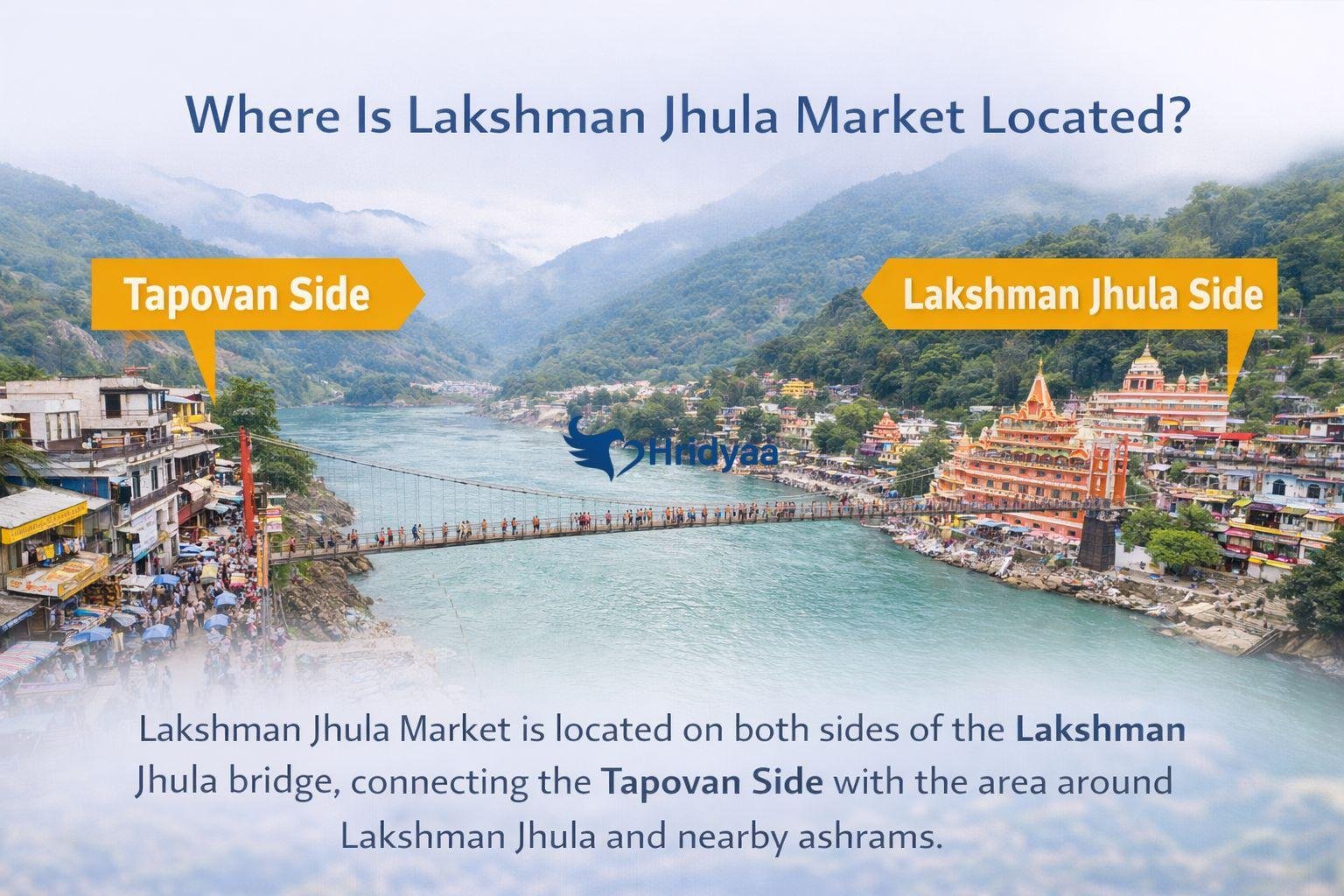
Lakshman Jhula Market is located on both sides of the Lakshman Jhula bridge, connecting the Tapovan side with the area around Lakshman Jhula and nearby ashrams. The market is not confined to a single street; it stretches organically along the approach roads, side lanes, and walking paths near the bridge.
What makes this market unique is that it is entirely walk-driven. No cars move through it. People walk slowly, stop frequently, browse casually, and continue on. This constant foot movement keeps the market alive throughout the day.
Because the bridge itself acts as a funnel, almost everyone crossing Lakshman Jhula passes through the market at some point. This makes it one of the most naturally visited areas in Rishikesh, without needing promotions or signage.
What Makes Lakshman Jhula Market Unique?
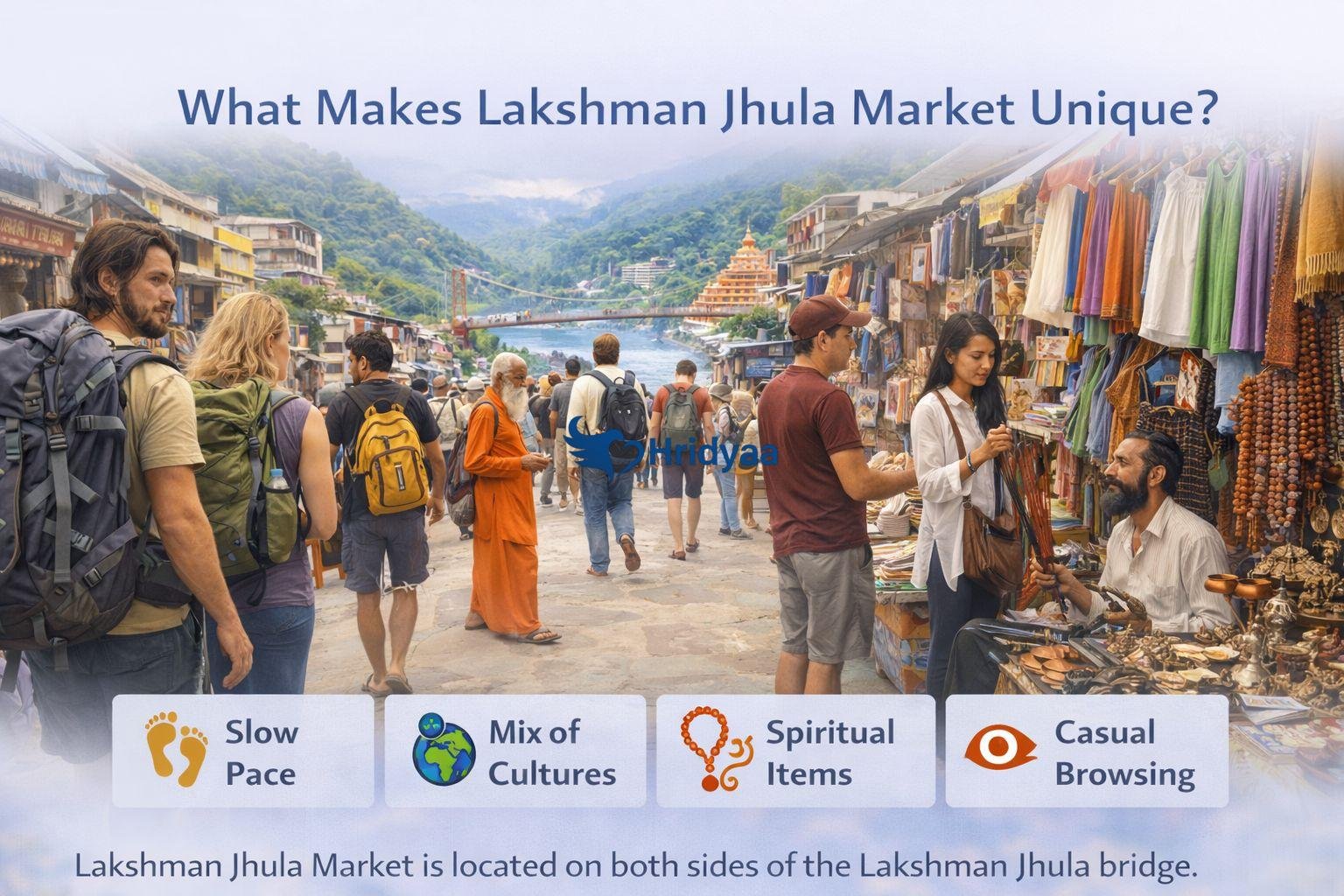
Lakshman Jhula Market is not just a shopping area—it is a transition space. People move through it on their way to temples, cafés, yoga schools, ashrams, riverside paths, and hostels. Shopping happens along the way rather than being the sole purpose.
Unlike traditional Indian markets that focus on speed and bargaining, this market moves at a slower rhythm. Many shopkeepers are used to international travelers and long-stay visitors. Conversations are unhurried. Browsing is encouraged. Pressure selling is rare.
Another defining feature is its global character. You’ll hear multiple languages, see clothes from different cultures, and find products that reflect a blend of Indian spirituality and international travel lifestyle. This mix is what gives Lakshman Jhula Market its distinct personality.
What Can You Buy in Lakshman Jhula Market?
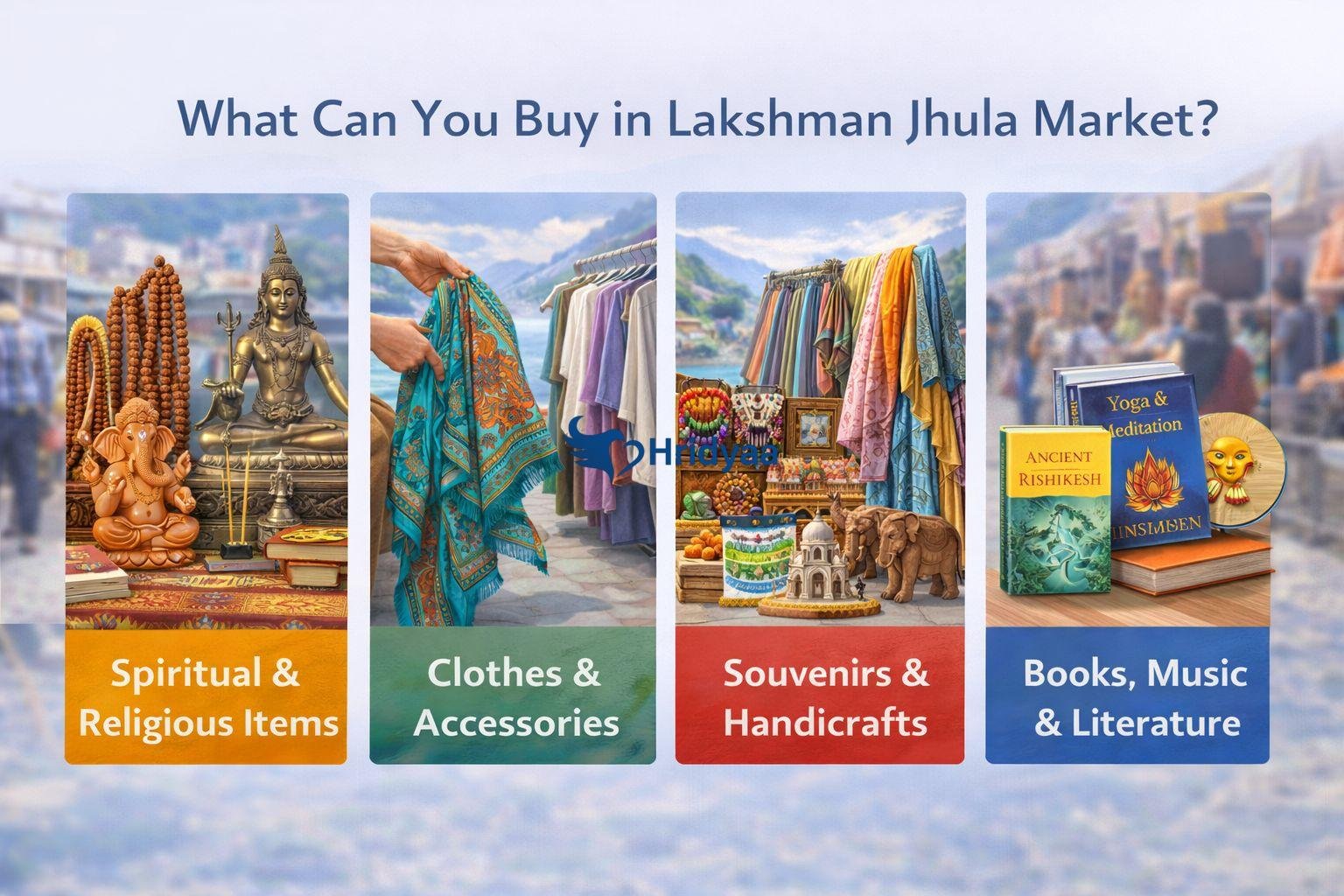
Shopping here is less about bulk buying and more about finding meaningful, usable items. The range is wide, but certain categories dominate.
Spiritual & Religious Items
Lakshman Jhula Market is closely tied to the spiritual identity of Rishikesh. Shops sell rudraksha malas, prayer beads, small idols, incense, copper items, spiritual books, and meditation accessories. Many visitors pick up these items as keepsakes or for daily practice rather than decoration.
The quality varies, and prices depend more on craftsmanship than brand value. This is not a luxury religious market, but a practical one.
Clothes & Accessories
Clothing is one of the biggest attractions here. You’ll find cotton kurtas, loose pants, yoga wear, shawls, scarves, and handmade bags. Most clothes are designed for comfort rather than fashion, reflecting the yoga and travel culture of the area.
These are the kind of clothes people buy to actually wear during their stay in Rishikesh—light, breathable, and functional.
Souvenirs & Handicrafts
For travelers looking to take something back home, the market offers small souvenirs like handmade jewelry, fridge magnets, wooden items, river-themed artifacts, and simple décor pieces. These items are usually compact and easy to carry.
Rather than mass-produced souvenirs, many items here feel personal and handmade, even when they are simple.
Books, Music & Spiritual Literature
Bookshops in Lakshman Jhula Market often focus on yoga, meditation, spirituality, philosophy, and Indian culture. You’ll also find music related to mantras and devotional practices.
These shops attract people who want to explore ideas, not just objects, making them an important part of the market’s identity.
Shopping Experience at Lakshman Jhula Market
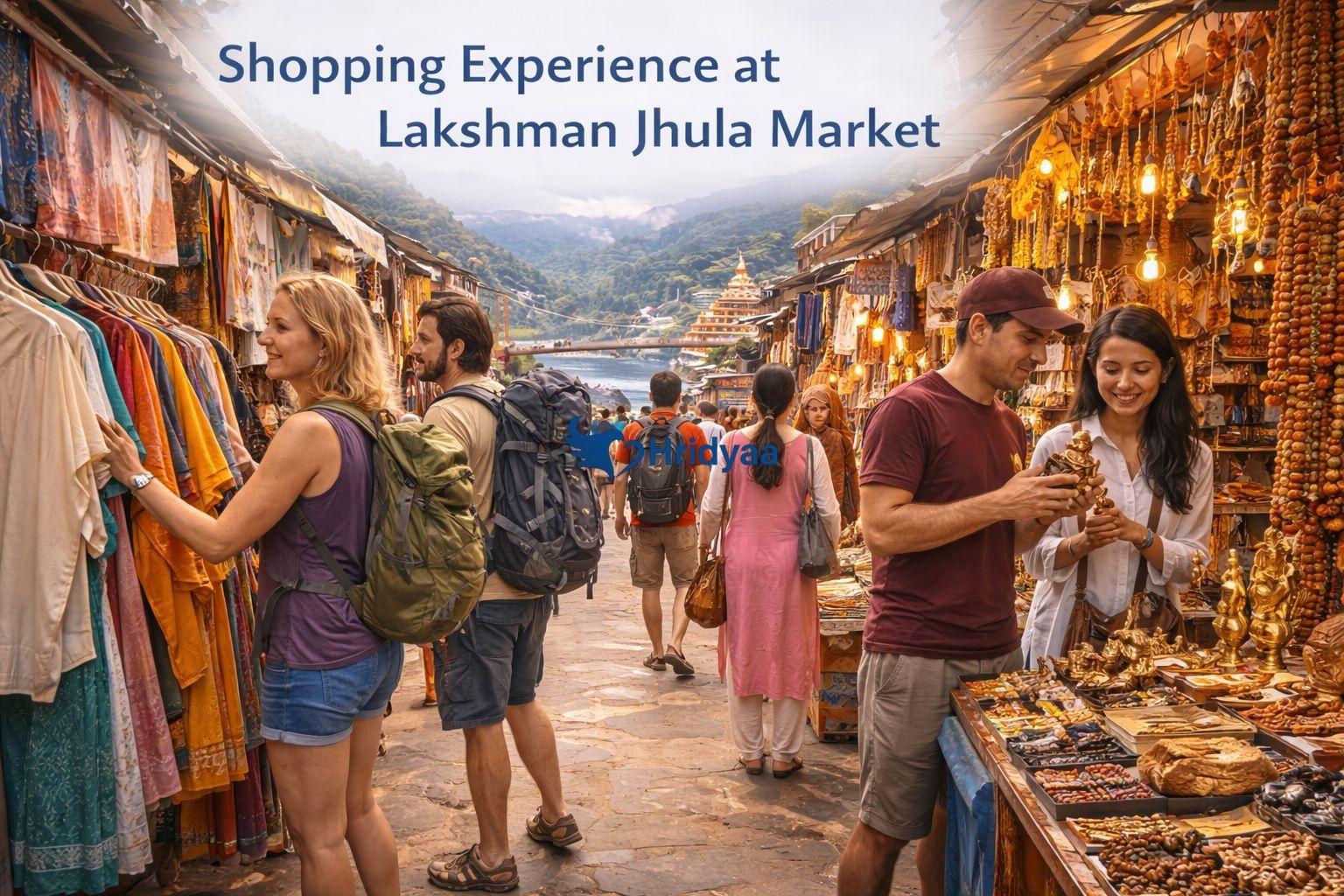
Walking through Lakshman Jhula Market feels like being inside a continuous flow. The lanes are narrow, shops are close together, and there is always movement. The smell of incense mixes with café aromas. Sounds of conversation, bells, and footsteps overlap.
Most people don’t come with a list. They walk, stop when something catches their eye, talk to shopkeepers, and move on. It’s common to enter a shop without buying anything—and that’s accepted.
This relaxed browsing culture is one of the reasons people enjoy this market even if they don’t plan to shop seriously.
Prices and Bargaining in Lakshman Jhula Market
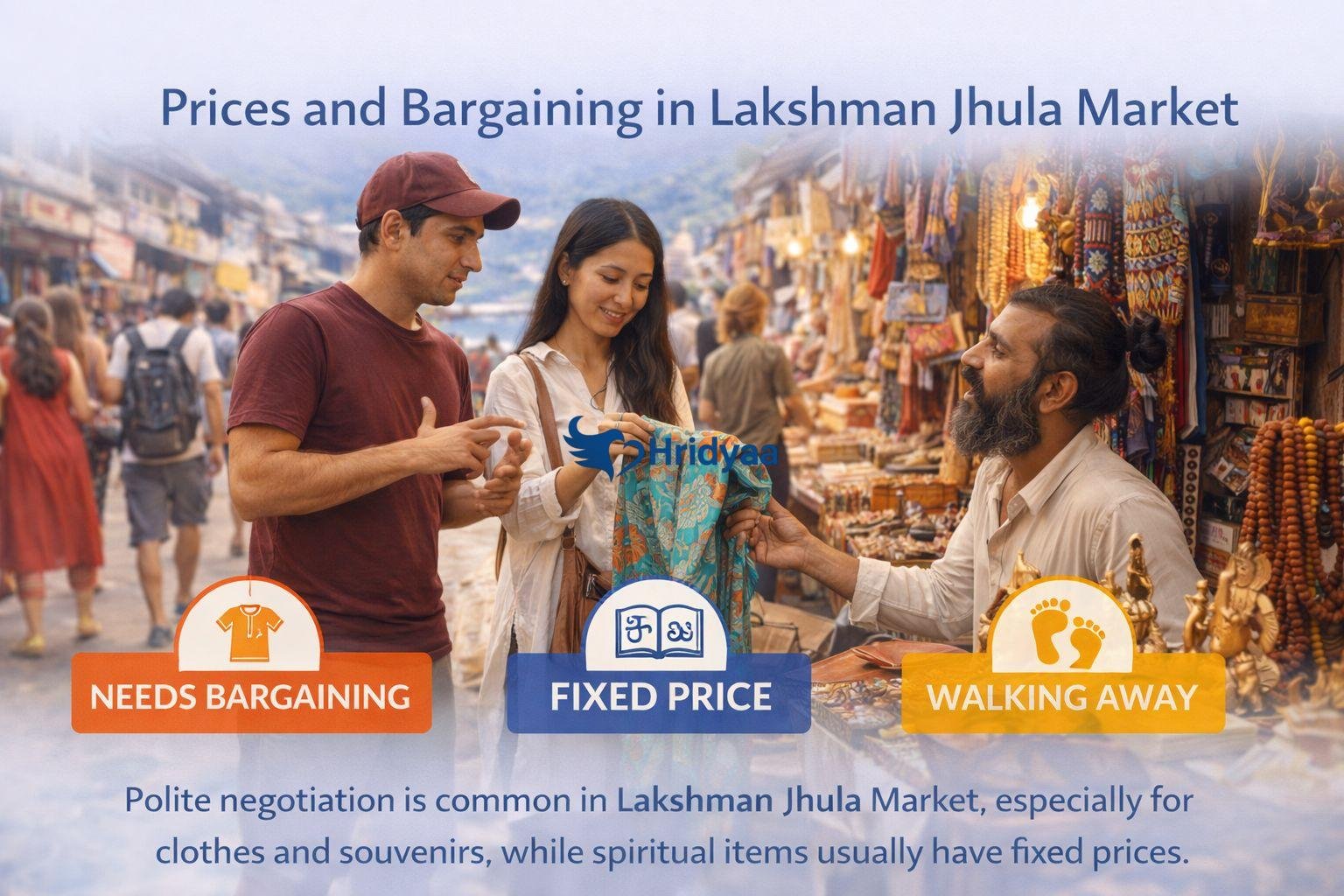
Prices in Lakshman Jhula Market are generally moderate, but they are not uniform. Some items are fairly priced with little room for negotiation, while others are clearly marked up for tourists.
As a rule of thumb, spiritual items, books, and incense usually have fixed or near-fixed prices. Bargaining in these shops is uncommon and often unnecessary. On the other hand, clothes, bags, scarves, jewelry, and souvenirs usually allow some room for negotiation.
Bargaining here is subtle, not aggressive. Shopkeepers expect polite conversation rather than hard tactics. A small reduction is common, especially if you’re buying more than one item, but deep discounts are rare. Walking away politely often works better than pushing.
One common mistake visitors make is assuming everything is overpriced. In reality, many products are handmade or sourced locally, and the prices reflect effort more than branding. Another mistake is impulse buying in the first shop—walking a little further often reveals similar items at slightly different prices.
Best Time to Visit Lakshman Jhula Market
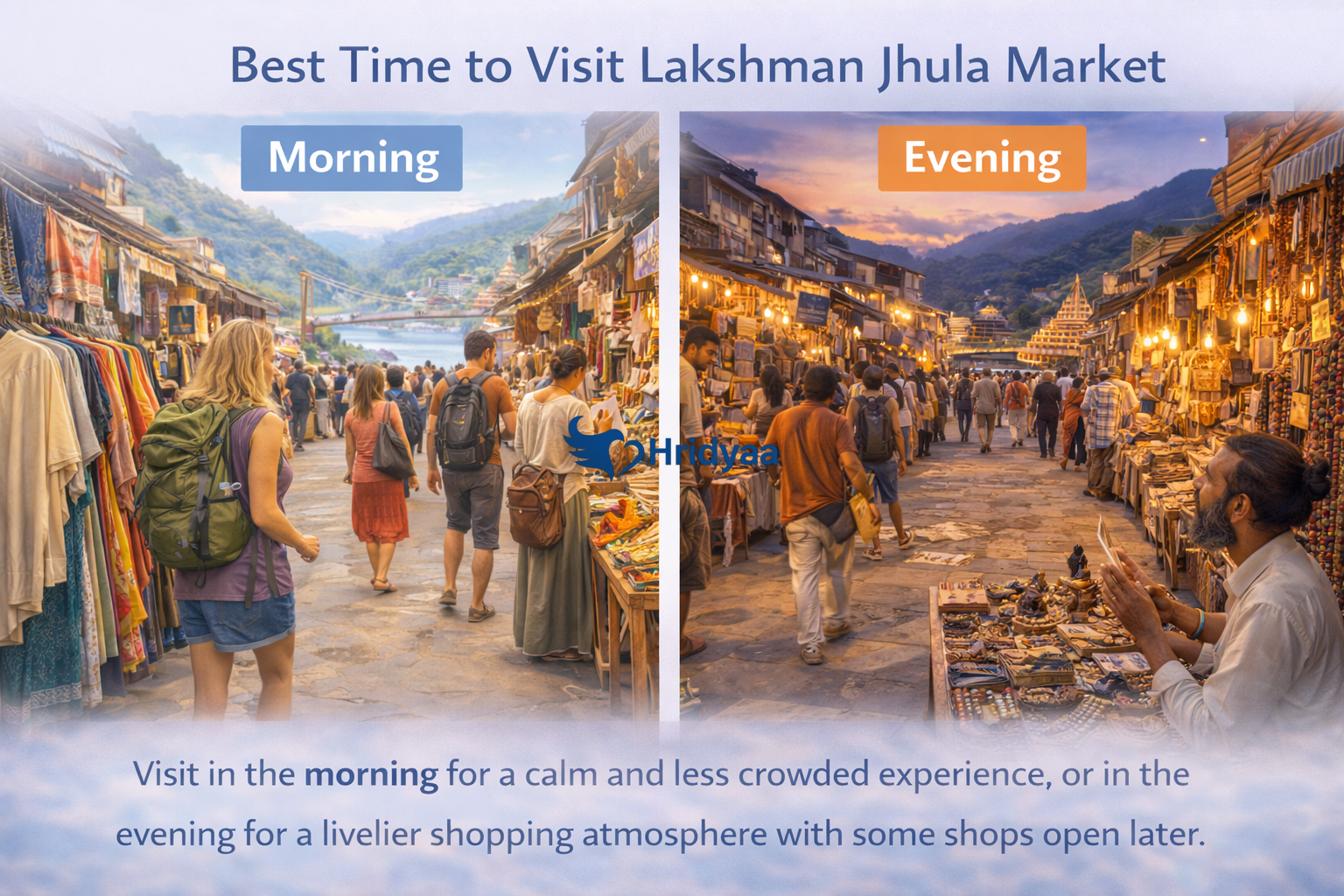
Lakshman Jhula Market changes character throughout the day, and timing can shape your experience.
Mornings are quieter and more relaxed. Shops open gradually, foot traffic is lighter, and walking through the market feels unhurried. This is the best time for people who want to browse calmly or take photographs.
Late afternoons and evenings are when the market feels most alive. Cafés fill up, walkers increase, and the lanes become busy with a mix of locals and travelers. This is when the market feels energetic, but it can also feel crowded.
Weekends and holiday seasons attract more visitors, while weekdays—especially outside peak travel months—offer a more balanced experience. Winter and early spring are generally the most comfortable seasons to explore the market on foot.
Lakshman Jhula Market vs Ram Jhula Market
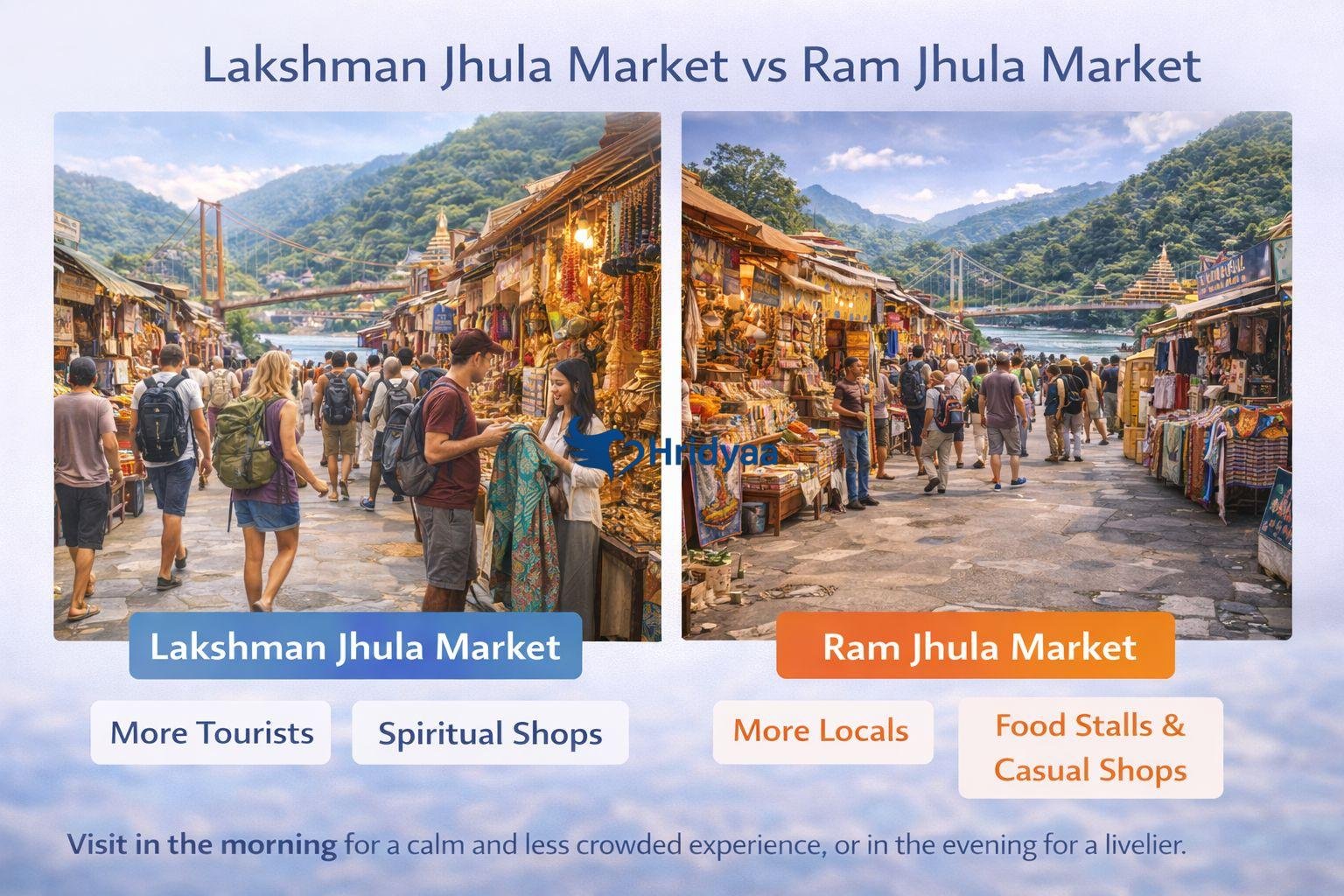
Many visitors compare Lakshman Jhula Market with Ram Jhula Market, and while both are important parts of Rishikesh, they offer noticeably different experiences.
Lakshman Jhula Market feels more international and traveler-oriented. It has a stronger presence of yoga wear, global cafés, spiritual books, and items suited for long-stay visitors. The walking culture is slower, and people tend to spend more time browsing.
Ram Jhula Market, by contrast, feels more local and devotional. It is closer to major ashrams and temples, and the shops reflect that—religious items, daily-use goods, and offerings dominate. The pace is faster, and many people pass through with a purpose rather than to browse.
Visitors interested in relaxed walking, café hopping, and mixed shopping usually prefer Lakshman Jhula Market. Those focused on temple visits and traditional shopping often find Ram Jhula Market more suitable.
Cafes and Food Around Lakshman Jhula Market

Food is an inseparable part of the Lakshman Jhula Market experience. The area is known for its wide range of vegetarian cafés that cater to both Indian and international tastes.
Rather than being hidden away, cafés are woven directly into the market lanes. Many travelers stop frequently—for a drink, a meal, or simply to sit and watch the movement outside.
The café culture here supports the slow pace of the market. People sit for long stretches, read, talk, or work quietly. This makes Lakshman Jhula Market feel less like a shopping zone and more like a shared living space.
Is Lakshman Jhula Market Worth Visiting?
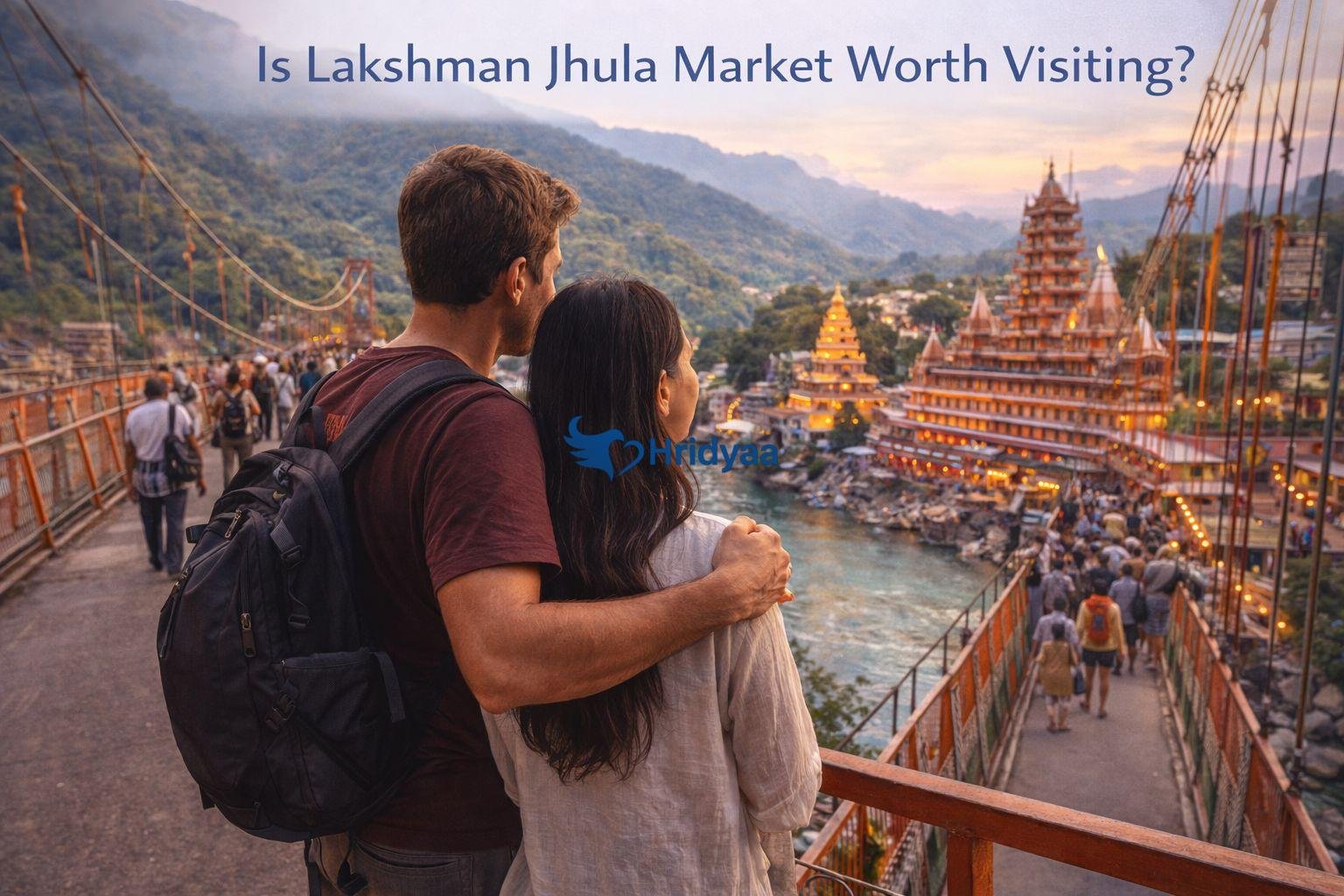
Lakshman Jhula Market is worth visiting if you enjoy walking-driven exploration rather than rushed shopping. It appeals most to people who like discovering places organically—without strict plans.
Travelers interested in yoga culture, spiritual items, comfortable clothing, and relaxed cafés usually connect with this market quickly. Even those who don’t buy anything often enjoy the atmosphere enough to return more than once.
People expecting wide roads, fast shopping, or large branded stores may find the market crowded or slow. Lakshman Jhula Market is not about efficiency—it is about experience.
Frequently Asked Questions About Lakshman Jhula Market
Is Lakshman Jhula Market open every day?
Yes, Lakshman Jhula Market is open every day. Most shops open by late morning and remain open until evening. Café timings may extend later, especially during peak tourist seasons.
Is Lakshman Jhula Market expensive for shopping?
Lakshman Jhula Market is not overly expensive, but prices are slightly higher than purely local markets. This is because many items are handmade, travel-oriented, or cater to long-stay visitors. With polite bargaining, prices usually feel reasonable.
Can I do shopping and sightseeing together at Lakshman Jhula Market?
Yes, this is one of the biggest advantages of Lakshman Jhula Market. People often combine shopping with walking across the bridge, visiting nearby temples, stopping at cafés, and exploring riverside paths—all in one continuous walk.
What kind of clothes are best to buy from Lakshman Jhula Market?
The market is best known for comfortable, breathable clothing like cotton kurtas, loose pants, yoga wear, shawls, and scarves. These are practical for Rishikesh’s climate and lifestyle rather than trend-driven fashion.
Is bargaining expected in Lakshman Jhula Market?
Bargaining is acceptable in many shops, especially those selling clothes, jewelry, and souvenirs. However, it should be done politely. Prices on books, incense, and spiritual items are often fixed.
Is Lakshman Jhula Market suitable for families?
Yes, families visit Lakshman Jhula Market regularly. The area is pedestrian-friendly, but it can get crowded in the evening. Visiting earlier in the day is usually more comfortable for families with children.
How much time should I keep for Lakshman Jhula Market?
Most visitors spend anywhere between one to three hours here, depending on how much they like walking, browsing, and sitting at cafés. Many people return multiple times during their stay.
What is the best time of day to explore Lakshman Jhula Market?
Morning hours are calmer and better for relaxed browsing. Evenings are lively and energetic but also more crowded. The best time depends on whether you prefer quiet exploration or a busy atmosphere.
Is Lakshman Jhula Market different from other markets in Rishikesh?
Yes. Compared to other markets, Lakshman Jhula Market feels more traveler-oriented and globally influenced. It blends spiritual culture with café life and slow walking, rather than functioning like a traditional bazaar.
Do people visit Lakshman Jhula Market even if they don’t want to shop?
Absolutely. Many people walk through the market just to experience the atmosphere, cross the bridge, sit at cafés, or observe daily life. Shopping is optional; the experience itself is the attraction.
Final Thoughts on Lakshman Jhula Market
Lakshman Jhula Market is not defined by what you buy—it is defined by how you move through it. The narrow lanes, steady foot traffic, mix of cultures, and constant transitions give it a rhythm that feels uniquely Rishikesh.
It is a place where shopping blends naturally with walking, eating, observing, and pausing. Some visitors come here with lists, others with curiosity—but almost everyone leaves having experienced more than they planned.
For anyone wanting to understand Rishikesh beyond temples and viewpoints, Lakshman Jhula Market offers something simple yet rare: a place that feels lived in, not staged.


Join The Discussion