
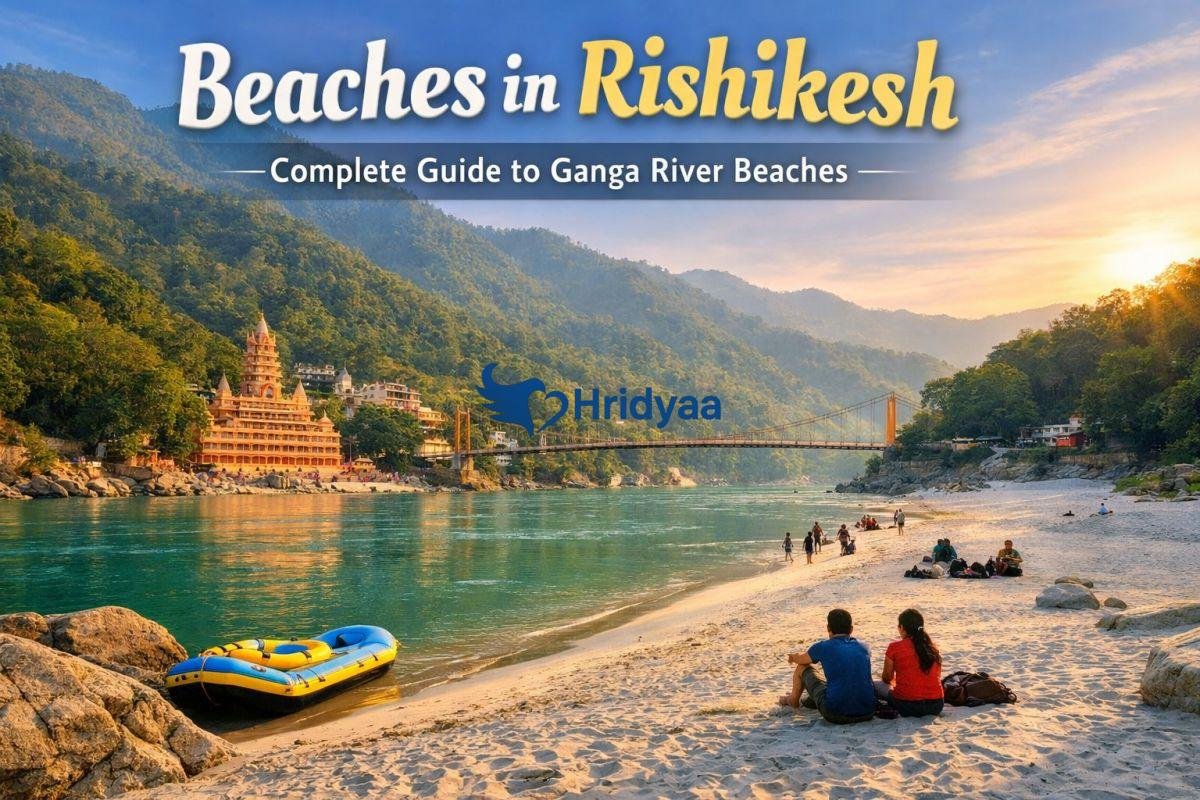
Rishikesh is one of the rare places in India where a holy river transforms into natural beaches. Along the course of the Ganga, wide sandy riverbanks emerge every year, creating calm, open spaces where people sit, walk, meditate, camp, and simply observe the flow of life.
When people search for beaches in Rishikesh, they are not looking for the sea. They are looking for these natural Ganga beaches—quiet sandbanks shaped by the river itself. Some lie within walking distance of the city, while others appear upstream in rafting and camping zones.
This guide presents the most accurate, locally verified list of Ganga beaches in Rishikesh, written as a pillar resource. It covers beaches inside the city, near the city, and in rafting zones, helping travelers understand which beach fits their purpose—whether that is peace, photography, family time, or nature immersion.
All locations mentioned here are based on real local usage, not invented tourist labels.
What Does “Beach” Mean in Rishikesh?
In Rishikesh, the word beach refers to natural sandy stretches formed along the River Ganga, not constructed promenades or ghats. These beaches appear where the river widens and slows down, depositing sand over time.
Unlike coastal beaches, Ganga beaches are seasonal and fluid. Their size, shape, and even exact position can change after monsoon. Some beaches grow wide in winter and summer, while others shrink or temporarily disappear when water levels rise.
Most of these beaches do not have official signage. Their names come from local tradition, nearby landmarks, rafting routes, and common usage among residents, campers, and guides. This is why different travelers sometimes hear different names for the same stretch of sand.
Understanding this is essential to truly understand the beaches of Rishikesh.
Types of Ganga Beaches in Rishikesh
To make sense of the geography and avoid confusion, Ganga beaches in Rishikesh can be clearly divided into three practical categories. This classification reflects how locals and travelers actually experience them.
Some beaches are woven into daily city life, others offer quieter escapes just outside town, and a few belong to the rafting and camping belt upstream where the river flows wider and stronger.
This guide follows the same structure so you can easily decide where to go and why.
Ganga Beaches Inside Rishikesh City
These beaches are located within the main city limits and can usually be reached on foot from popular areas like Ram Jhula, Lakshman Jhula, and Swarg Ashram. They are smaller in size but deeply connected to the rhythm of everyday life in Rishikesh.
Goa Beach, Rishikesh
Goa Beach is one of the most well-known city-side Ganga beaches, especially among younger travelers and long-term visitors. Despite its name, it has no connection to coastal Goa; the name comes from its relaxed, open vibe and wide sandy stretch during dry months.
Located close to the Lakshman Jhula area, Goa Beach is often visited for evening walks, sitting quietly by the water, and watching the sky change colors over the river. During peak season, it becomes a social space, while early mornings remain calm and meditative.
Neem Beach, Rishikesh
Neem Beach lies along the Marine Drive stretch and is known for its quiet atmosphere and cleaner sand compared to central ghats. It gets its name from nearby neem trees that provide shade and a cooler environment during summer.
This beach is often preferred by locals, morning walkers, and people looking to spend time near the river without crowds. It is not a commercial spot, which helps preserve its peaceful character.
Gita Bhawan Riverside Beach
Near the Gita Bhawan area, small sandy stretches appear along the river depending on water levels. These are not large beaches but serve as resting and sitting spaces for pilgrims and residents.
The presence of ashrams and spiritual activity nearby gives this beach a devotional atmosphere. Visitors usually come here for quiet reflection rather than recreation.
Ram Jhula Riverside Beach
Below and around Ram Jhula, narrow riverbanks become visible during non-monsoon months. These sandy patches are part of the daily visual landscape of Rishikesh and are often used briefly by locals rather than tourists.
Because of the foot traffic and proximity to the bridge, this area feels alive and connected to city movement rather than secluded.
Lakshman Jhula Riverside Beach
Similar to Ram Jhula, the Lakshman Jhula side also has seasonal sandy banks that appear near the river edges. These beaches are smaller but offer striking views of the bridge, river flow, and surrounding hills.
They are best experienced early in the morning before the area becomes busy.
Kailash Ashram Beach
Located near Kailash Ashram, this beach is lesser known to tourists but familiar to locals. It remains relatively calm and is often used for sitting, reading, or simply observing the river.
Its proximity to spiritual spaces keeps the environment quiet and respectful.
Ganga Beaches Near Rishikesh (0–10 km Range)
These beaches lie just outside the core city area and offer a noticeable shift in atmosphere. Compared to city-side beaches, they are wider, quieter, and less influenced by daily urban movement. Reaching them usually requires a short drive, but the experience feels more open and closer to nature.
This zone is ideal for travelers who want space, clearer sandbanks, and a slower pace while still staying close to Rishikesh.
Phool Chatti Ganga Beach
Phool Chatti is one of the earliest points upstream where the Ganga begins to form broader sandy stretches. Phool Chatti Ganga Beach is known for its calm setting, spiritual surroundings, and proximity to forested hills.
The beach here is often used by ashram visitors and travelers staying nearby. During non-monsoon months, the sandbank becomes clearly visible and suitable for sitting, walking, and quiet contemplation. The environment remains largely undisturbed, making it a good transition point between the city and the rafting zones further ahead.
Marine Drive Ganga Beach
Marine Drive Ganga Beach runs parallel to the scenic road popularly known as Marine Drive in Rishikesh. This stretch has multiple small beaches rather than one single defined spot, and their size varies with the season.
It is among the most accessible river beaches near the city and is commonly visited during mornings and late afternoons. The gentle road-side access makes it suitable for people who want to enjoy the river without trekking or long travel.
Because of its openness and road connectivity, Marine Drive Ganga Beach is also a favorite among photographers and walkers.
Yosuf Beach
Yosuf Beach is a locally known name for a natural sandbank that appears along the Ganga in the near-Rishikesh zone. It is not officially marked on maps, but it is widely recognized by locals, rafting guides, and camp operators.
This beach is seasonal and may shift slightly from year to year due to river flow. When visible, it offers a quiet and uncrowded space, mostly visited by people who already know about it rather than first-time tourists. Its low-profile nature is exactly what draws people seeking privacy and calm.
Brahampuri Ganga Beach
Located near Brahampuri, this beach marks the beginning of the popular rafting stretch toward Rishikesh. The Ganga widens here, and the sandy banks become more pronounced.
Brahampuri Ganga Beach is often active, especially during rafting season, but it still retains a natural feel. Early mornings and off-peak hours are the best times to experience it quietly. Because of its position, the water flow here is stronger than in city beaches, and visitors usually stay close to the shore.
How Near-City Beaches Differ from City Beaches
Beaches near Rishikesh feel less transitional and more settled. While city beaches are woven into daily movement, near-city beaches exist more for purpose—rest, pause, and connection with nature.
The sand here is usually cleaner and wider, the soundscape quieter, and the river more visually dominant. For many visitors, these beaches offer the best balance between accessibility and natural beauty.
Ganga Beaches in Rafting and Camping Zones
As the Ganga moves upstream from Rishikesh, the river widens, the sandbanks grow larger, and the surroundings become more forested. This stretch is widely known as the rafting and camping zone, and it is here that some of the largest and most scenic Ganga beaches are found.
These beaches are less about city life and more about open landscapes, river energy, and extended time by the water. Many of them are used as rafting start or end points and as base locations for riverside camps.
Shivpuri Ganga Beach
Shivpuri is one of the most famous areas near Rishikesh, and its Ganga beaches are among the widest and most visually striking in the region.
Shivpuri Ganga Beach typically appears as a long stretch of white sand bordered by forested hills. During rafting season, the area feels lively, but outside peak hours it becomes calm and expansive. Many visitors experience Shivpuri Beach during rafting breaks, while campers often spend entire evenings here watching the river flow and the sky change.
Because of its size, this beach never feels confined, even when multiple groups are present.
Byasi Ganga Beach
Further upstream lies Byasi, a place known for its raw natural setting. Byasi Ganga Beach feels more open and less developed compared to Shivpuri.
The sandbanks here are broad and uninterrupted, and the surrounding area has minimal construction. This makes Byasi especially appealing to travelers who want a quieter experience without city influence. It is commonly used by rafting groups as a pause point, but when rafting activity is low, the beach feels almost untouched.
The river current here is stronger, which naturally discourages casual swimming and helps preserve the peaceful atmosphere.
Kyar Ganga Beach
Kyar Ganga Beach is located near Kyar and is lesser known to first-time visitors. It is mostly recognized by locals, campers, and rafting professionals.
This beach appears wide and open during dry months and offers uninterrupted views of the river’s natural curves. Because it lies away from heavy tourist routes, Kyar Beach feels isolated and quiet. Visitors who reach this area usually do so intentionally, seeking space rather than convenience.
Its remoteness adds to its appeal, especially for those who want to spend time away from crowds.
Kaudiyala Ganga Beach
At the far end of the rafting belt lies Kaudiyala, where the Ganga flows powerfully through a wide valley. Kaudiyala Ganga Beach is one of the largest and most dramatic river beaches near Rishikesh.
The sandbanks here are extensive, and the surrounding landscape feels more Himalayan than urban. Because of the stronger current and distance from the city, Kaudiyala is primarily visited by campers, rafters, and long-stay nature travelers.
This beach represents the most untamed form of a Ganga beach in the Rishikesh region.
How Rafting-Zone Beaches Differ from Other Ganga Beaches
Unlike city or near-city beaches, rafting-zone beaches are defined by scale and isolation. The river is wider, the sandbanks larger, and the environment more immersive.
These beaches are not designed for short visits. People usually come here with intention—either as part of rafting journeys or for extended time near the river. The sense of space and distance from the city makes these beaches feel deeply restorative.
Best Time to Visit Ganga Beaches in Rishikesh
The appearance and experience of Ganga beaches in Rishikesh are closely tied to the river’s seasonal flow. Unlike permanent coastal beaches, these riverbanks change throughout the year.
The most reliable time to see wide, walkable sandy beaches is from October to June. During this period, water levels are lower, sandbanks are clearly visible, and access is easier.
Winter months offer calm surroundings and cooler temperatures, making them ideal for long walks and quiet time by the river. Summer months bring warmer weather, but the water remains refreshing, and mornings and evenings are especially pleasant.
During the monsoon season (July to September), many beaches shrink or disappear as the river rises. Currents become stronger, and access can be unsafe. While the river looks powerful and dramatic at this time, beach visits are generally not recommended.
Are Ganga Beaches in Rishikesh Safe?
Ganga beaches may look calm, but the river should always be treated with respect. Even where the surface appears gentle, underwater currents can be strong and unpredictable.
Most accidents happen when visitors underestimate the river’s depth or flow. Standing close to the shore is generally safe, but entering deep water or swimming across channels is risky, especially in rafting zones.
City beaches tend to have calmer edges, while beaches upstream have stronger currents. Families and first-time visitors should always choose spots where the river spreads wide and flows slowly.
The safest way to enjoy these beaches is to treat them as places for sitting, walking, observing, and relaxing, rather than swimming destinations.
Must Read: Holi Celebration in Rishikesh: Inside India’s Most Colorful Riverside Holi Parties & Camps
Which Ganga Beach Is Best for You?
Different beaches serve different purposes, and choosing the right one depends on what kind of experience you want.
If you are looking for easy access and short visits, city beaches like Goa Beach or Neem Beach work well. They are close to main areas and fit naturally into a day of sightseeing.
For those seeking quiet space without going too far, near-city beaches such as Phool Chatti or Marine Drive offer a balance between accessibility and calm surroundings.
Travelers interested in wide landscapes, camping vibes, or rafting culture will feel most at home at beaches in Shivpuri, Byasi, Kyar, or Kaudiyala. These areas feel open and immersive, but they require more planning and caution.
Understanding this distinction helps visitors enjoy the river responsibly while finding a beach that truly suits their pace.
Frequently Asked Questions About Ganga Beaches in Rishikesh
Does Rishikesh really have beaches or is it just a myth?
Yes, Rishikesh does have beaches, but they are river beaches, not sea beaches. These are natural sandy stretches formed along the banks of the Ganga, and they appear clearly during most of the year except monsoon.
Why are Ganga beaches in Rishikesh not visible on Google Maps?
Most Ganga beaches are seasonal sandbanks, not permanent locations. They shift or disappear after monsoon, so they are known by local names rather than official map labels, which is why Google Maps often doesn’t show them clearly.
Which is the best beach in Rishikesh for spending a quiet evening?
For a calm evening close to the city, beaches like Goa Beach, Neem Beach, or Marine Drive Ganga Beach are preferred. They are peaceful during sunset hours and easy to access without long travel.
Are Ganga beaches safe for swimming?
Swimming is not recommended at most Ganga beaches due to strong and unpredictable currents. Even shallow-looking areas can be dangerous. Most people enjoy these beaches for sitting, walking, and relaxing rather than entering deep water.
Which Ganga beach in Rishikesh is best for families?
City-side and near-city beaches are generally better for families because the water flow is calmer near the edges. Families usually prefer places like Neem Beach or Phool Chatti, while still maintaining distance from the river.
Do these beaches stay the same throughout the year?
No, Ganga beaches change with seasons. They are largest and most visible from October to June. During monsoon months, many beaches shrink or completely disappear due to rising water levels.
Is Goa Beach in Rishikesh related to Goa?
No, Goa Beach in Rishikesh has no connection to coastal Goa. The name comes from local usage, mainly because the wide sand and relaxed vibe reminded travelers of beach-like spaces.
Which Ganga beach is best for camping near Rishikesh?
Camping is most common in rafting and upstream zones such as Shivpuri, Byasi, and Kaudiyala. These areas have wide sandbanks and are usually managed by organized camps rather than independent camping.
Can I visit multiple Ganga beaches in one day?
Yes, it is possible to visit multiple city and near-city beaches in one day since they are close to each other. Rafting-zone beaches, however, usually require more time and planning.
What is the biggest mistake visitors make while visiting Ganga beaches?
The biggest mistake is underestimating the river. Many visitors assume calm-looking water is safe, which leads to accidents. Respecting the river and enjoying the beaches from the shore is the safest approach.
Final Thoughts on Ganga Beaches in Rishikesh
The beaches of Rishikesh are not about leisure in the usual sense. They are about space, flow, and presence. These natural sandbanks allow people to sit quietly by a living river, observe its movement, and experience a side of Rishikesh that feels slower and more grounded.
From small city-side stretches to vast rafting-zone beaches, each location reflects a different relationship between the river and the land. Understanding these differences helps travelers choose wisely and experience the Ganga with respect.
As a pillar resource, this guide is designed to remain accurate, timeless, and grounded in local reality—exactly what both users and search engines look for.


Join The Discussion