
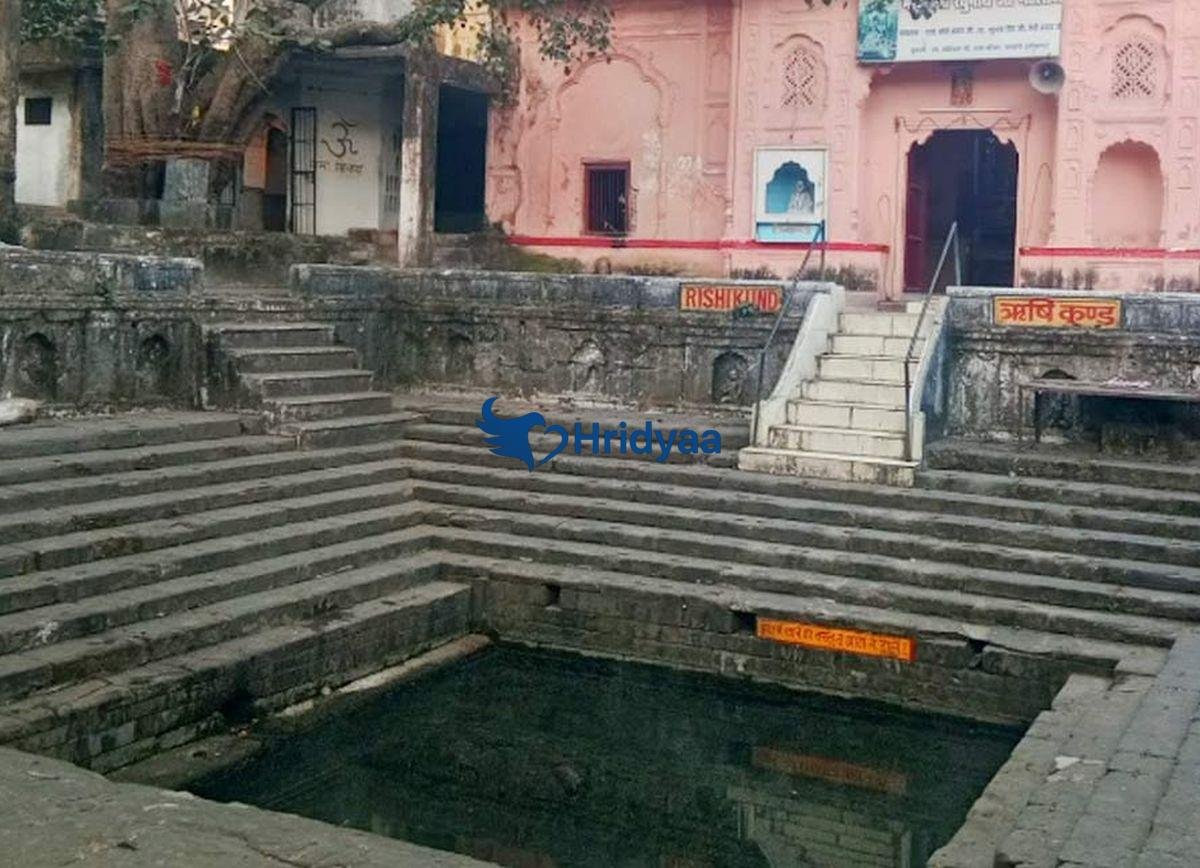
Rishikund is one of the most overlooked yet historically significant sacred water sites in Rishikesh. Tucked away near busy temples and residential lanes, it rarely features in mainstream travel itineraries. Unlike the open expanse of river ghats, Rishikund is enclosed, intimate, and deeply tied to ancient legends of penance and purification. For travelers interested in Rishikesh beyond the Ganga’s main flow, this small kund offers important context.
Where Exactly Is Rishikund Located?
Rishikund is located in the old town area of Rishikesh, close to Triveni Ghat and adjacent to Raghunath Temple. It sits slightly below street level, surrounded by narrow lanes, shops, and residential buildings. The kund is fed by a natural underground water source and remains separate from the main Ganga channel, even though the river flows nearby. Its central location makes it easy to reach, but also easy to miss.
History of Rishikund
According to tradition, Rishikund is associated with Sage Kubz, a revered ascetic who is believed to have performed intense penance at this spot. It is said that Lord Vishnu blessed the sage here, causing a sacred water source to emerge. Over time, the kund became an important ritual bathing site for saints and pilgrims before visiting nearby temples and the Ganga. Historically, such kunds served both spiritual and practical roles, providing clean water for ritual use within temple zones.
Why This Place Matters Today
Today, Rishikund continues to function as a ritual bathing space, especially for local devotees. Unlike tourist-heavy sites, it remains closely tied to daily religious life rather than sightseeing. The water here is considered sacred, and some devotees bathe before offering prayers at Raghunath Temple or proceeding to Triveni Ghat. Its importance lies in continuity — it has retained its original purpose even as the surrounding town has changed.
What Travelers Often Get Wrong
Many travelers assume Rishikund is a hot spring similar to Himalayan thermal kunds. In reality, while the water may feel slightly warmer at times, it is not a geothermal spring. Another common misunderstanding is expecting a scenic or spacious area. This is a compact, enclosed kund meant for ritual use, not leisure. Visitors also often confuse it with other kunds or ghats due to limited signage.
Best Time to Visit and Seasonal Reality
Rishikund can be visited throughout the year, as it is not directly affected by river flooding like open ghats. The most comfortable period is from October to March, when temperatures are mild and crowds are manageable. During summer afternoons, the enclosed area can feel warm and congested. The monsoon season brings higher humidity, but access generally remains uninterrupted due to the kund’s protected structure.
How to Visit Rishikund
Visiting Rishikund is simple due to its central location. From Triveni Ghat, it is a short walk through local lanes. Auto-rickshaws and taxis can drop visitors nearby, but the final approach must be done on foot. There is no entry fee, and no formal ticketing system. Visitors should be mindful that this is an active religious space rather than a tourist attraction.
Safety, Rules, and Local Guidelines
Bathing is allowed, but visitors should be cautious on wet stone steps, which can be slippery. Maintaining cleanliness is essential, and use of soaps or shampoos is discouraged. Photography should be done discreetly, especially when locals are bathing. Modest clothing is expected, and loud behavior is considered disrespectful. During peak hours, waiting patiently is part of the experience.
What to Expect When You Actually Visit
The atmosphere at Rishikund is quiet but functional. Devotees bathe briefly, offer prayers, and move on. There is no ceremony or announcement — the rhythm is steady and personal. The surrounding walls, temple bells, and echoes of nearby streets create a sense of layered history rather than visual grandeur. Most visitors spend only a short time here, but the experience adds depth to understanding old Rishikesh.
Final Take: Is It Worth Visiting?
Rishikund is worth visiting if you are interested in the historical and ritual fabric of Rishikesh, not just its riverfront highlights. It is not visually dramatic, but it carries quiet significance rooted in centuries of practice. For travelers who enjoy discovering lesser-known sacred spaces, it offers insight that larger, more famous sites often cannot.


Join The Discussion