
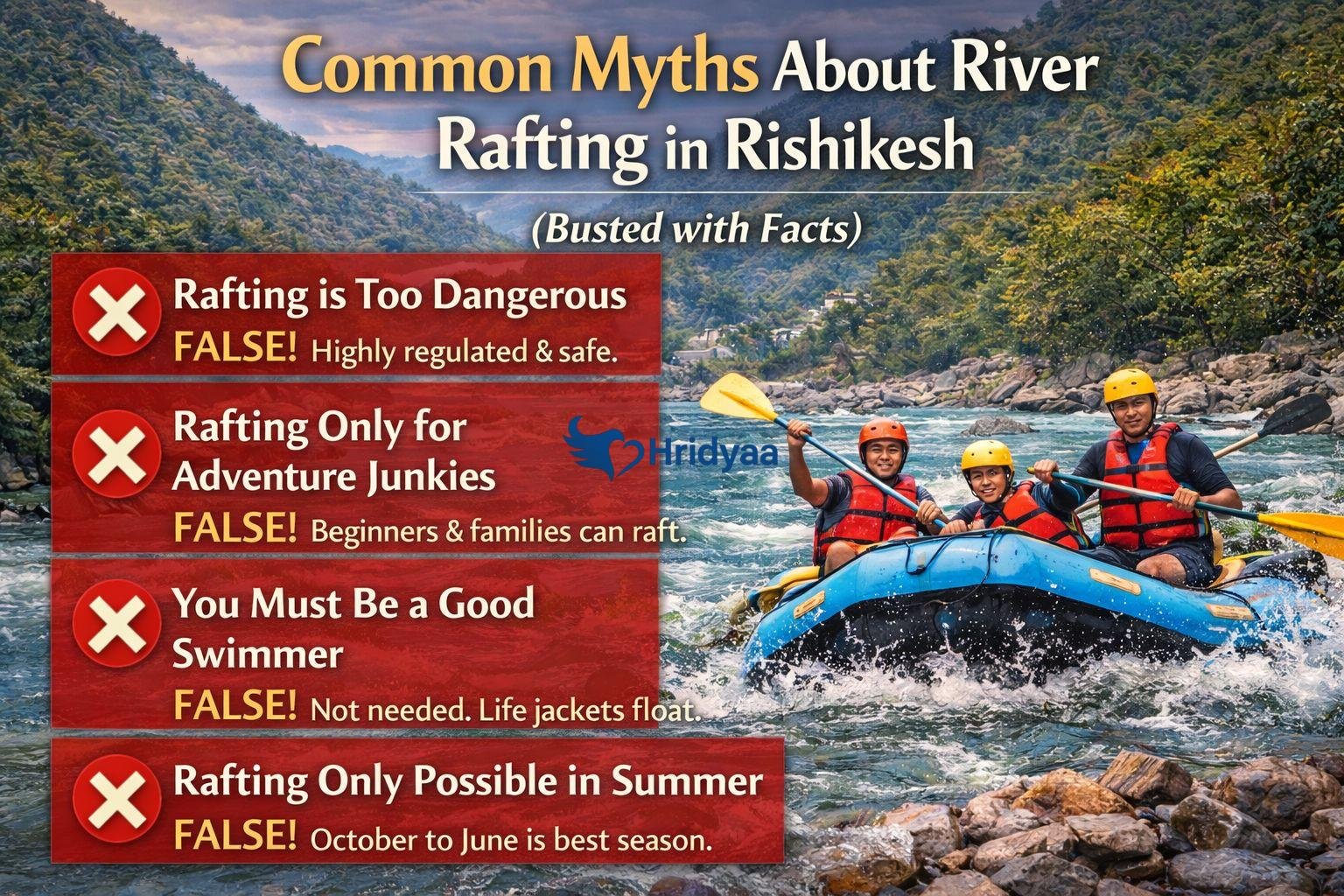
River rafting in Rishikesh is one of the most talked-about adventure activities in India—and also one of the most misunderstood. Despite its popularity, many travelers hesitate to try rafting because of half-truths, outdated beliefs, and exaggerated fears passed around online or by word of mouth.
This article takes a myth-vs-reality approach, backed by real rafting conditions, safety practices, and on-ground experience, to bust the most common myths about river rafting in Rishikesh. If rafting is on your mind but doubts are holding you back, this guide is for you.
Myth 1: River Rafting in Rishikesh Is Only for Adventure Junkies
Reality:
One of the biggest misconceptions is that rafting in Rishikesh is only meant for thrill seekers. In reality, Rishikesh offers multiple rafting stretches designed for different comfort levels.
Beginners, families, and even first-timers regularly do rafting on calm-to-moderate stretches like Brahmpuri and Shivpuri. Rapids are graded, and routes are selected based on weather, water flow, and participant experience.
Rafting here is customizable, not extreme by default.
Myth 2: Rafting in the Ganga Is Dangerous
Reality:
The Ganga River near Rishikesh is one of the most regulated rafting rivers in India. Licensed operators, certified guides, safety briefings, and mandatory gear (helmets and life jackets) are standard practice.
Rafting routes are closed during unsafe conditions, especially during monsoon. Compared to many other rivers, the Ganga offers predictable water behavior, making it safer for commercial rafting.
Like any adventure activity, risks exist—but controlled, not reckless.
Myth 3: You Need to Be a Good Swimmer to Go Rafting
Reality:
Swimming skills are not mandatory for rafting in Rishikesh. Life jackets used here are designed to keep participants afloat even in strong currents.
Guides also train participants on how to float safely if they fall into the water. Calm stretches are used for practice sessions, making first-timers comfortable before hitting rapids.
Confidence matters more than swimming ability.
Myth 4: Rafting Is Only Possible in Summer
Reality:
Many people believe rafting in Rishikesh works only during peak summer. In truth, the best rafting season runs from October to early June.
Winter rafting is especially popular because:
- Water flow is stable
- Crowds are lower
- Scenic beauty is at its best
Rafting is paused only during monsoon months for safety reasons, not because the river becomes unsuitable otherwise.
Myth 5: Rafting in Rishikesh Is Overcrowded and Commercial
Reality:
While Rishikesh is popular, rafting experiences vary greatly based on time, stretch, and starting point. Early morning rafting sessions and upstream routes offer peaceful, uncrowded experiences.
Areas like Shivpuri and Marine Drive allow rafters to enjoy long scenic stretches away from city chaos. Choosing the right operator and time makes a huge difference.
Crowds are optional—not unavoidable.
Myth 6: Rafting Is Unsafe for Women or Solo Travelers
Reality:
Rishikesh is one of the most female-friendly and solo-traveler-friendly adventure destinations in India. Mixed groups, professional guides, and strict safety protocols make rafting accessible and safe for women.
Many solo travelers and women-led groups raft regularly, often citing Rishikesh as more organized and respectful than other adventure destinations.
Myth 7: Rafting Packages Are Expensive
Reality:
Another common myth is that rafting in Rishikesh is costly. In reality, it’s one of the most affordable adventure sports in India, especially when combined with camping packages.
Shared rafting, standardized pricing, and high competition among operators keep costs reasonable. Travelers can choose budget-friendly options without compromising on safety.
Myth 8: Rafting Harms the Ganga and the Environment
Reality:
When done responsibly, rafting has minimal environmental impact. Licensed operators follow strict guidelines regarding waste, fuel usage, and river access points.
Many rafting camps now promote eco-friendly practices, plastic-free zones, and river-cleaning initiatives. The real threat to the Ganga comes from unregulated tourism—not controlled adventure activities.
Myth 9: Rafting Is Just About Rapids—Nothing Else
Reality:
Rafting in Rishikesh is a complete experience, not just a sport. Along the way, rafters enjoy:
- Scenic Himalayan views
- Calm floating sections
- Cliff jumping (optional)
- Body surfing under guidance
It’s as much about nature and flow as it is about adrenaline.
Why These Myths Still Exist
Most rafting myths come from:
- Outdated information
- One-off bad experiences
- Confusion with extreme rafting destinations
- Social media exaggeration
Rishikesh rafting has evolved significantly over the years, but myths haven’t caught up with reality.
Final Verdict: Don’t Let Myths Stop You from Experiencing Rishikesh Rafting
River rafting in Rishikesh is safe, accessible, affordable, and beginner-friendly when done through the right operators and at the right time. Most fears surrounding rafting are based on myths—not facts.
Understanding reality not only removes fear but helps travelers enjoy one of the best adventure experiences India has to offer.


Join The Discussion