
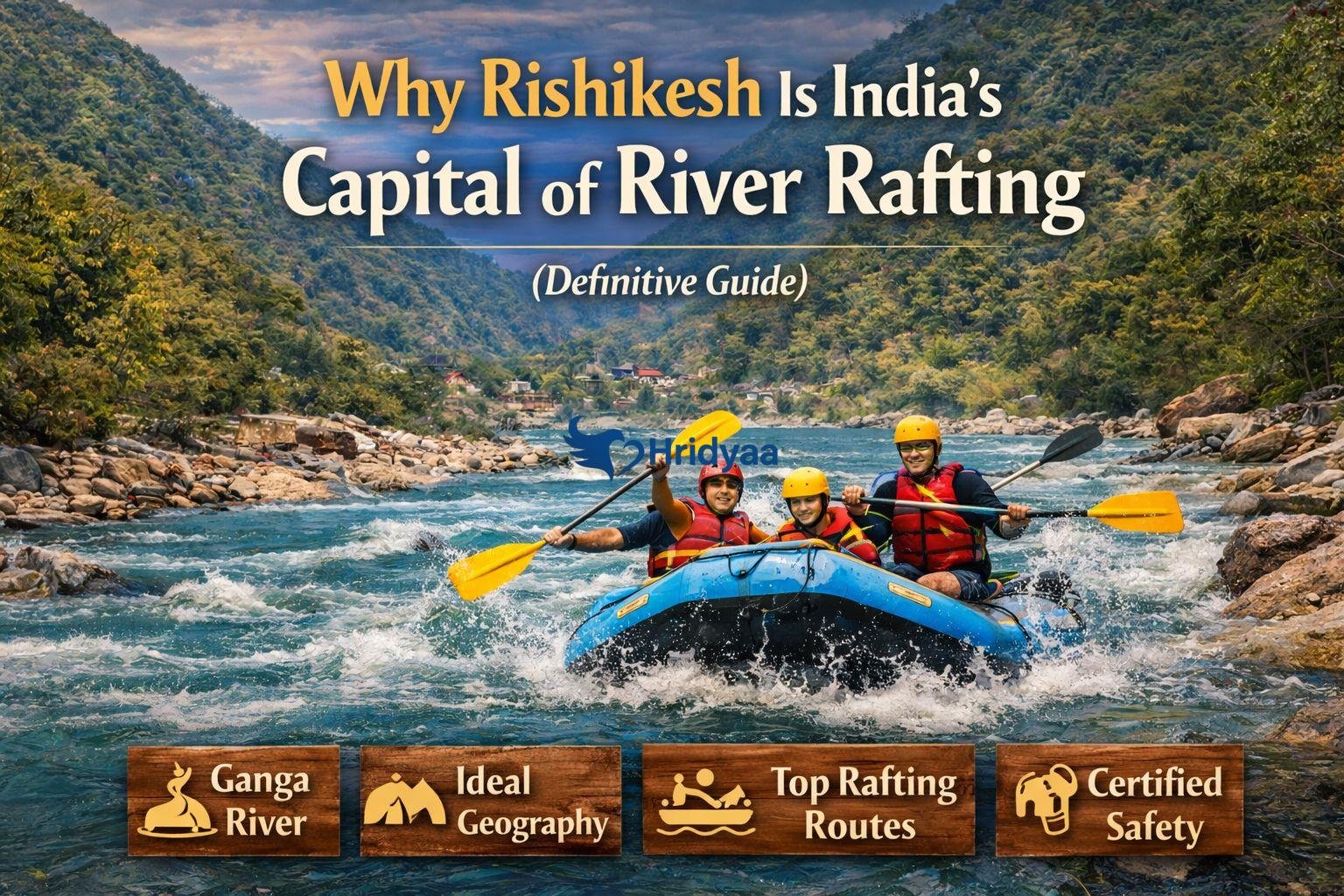
When people talk about river rafting in India, one destination dominates every conversation—Rishikesh. From first-time rafters to hardcore adventure seekers, Rishikesh has earned the title of India’s Capital of River Rafting not through marketing hype, but through geography, river dynamics, safety systems, and decades of adventure culture.
This in-depth, research-driven article explains why Rishikesh holds this unique position, what makes it superior to other rafting destinations in India, and how it became the undisputed hub of white-water rafting.
The Ganga River: The Foundation of Rishikesh Rafting
At the heart of Rishikesh’s rafting dominance flows the Ganga River—a river unlike any other used for commercial rafting in India. Originating from the Himalayas, the Ganga around Rishikesh offers a rare combination of steady gradient, clean water, and predictable rapids.
Unlike snow-fed rivers that fluctuate wildly or rain-fed rivers that become dangerous quickly, the Ganga provides consistent rafting conditions for most of the year. This reliability allows rafting to operate safely across multiple months, making Rishikesh a dependable destination for travelers and operators alike.
Perfect Natural Geography for White-Water Rafting
Rishikesh sits at the exact point where the Himalayas meet the plains. This transition zone creates ideal river gradients—neither too steep nor too flat. The result is a sequence of rapids interspersed with calm stretches, making rafting thrilling yet manageable.
The river here naturally forms:
- Continuous rapids of varying intensity
- Wide recovery zones between rapids
- Natural cliff-jumping and body-surfing points
- Safe exit points near populated areas
This natural balance is extremely rare and is one of the strongest reasons why Rishikesh outperforms other rafting destinations in India.
Home to India’s Most Popular Rafting Stretches
Rishikesh offers multiple rafting stretches, each suited to different experience levels. This diversity allows the destination to cater to everyone—from beginners to seasoned rafters.
The most famous rafting stretches include:
- Phoolchatti to Rishikesh (10 km) – Beginner-friendly
- Shivpuri to Rishikesh (16 km) – India’s most popular rafting route
- Marine Drive to Rishikesh (24 km) – Adventure-focused stretch
- Kaudiyala to Rishikesh (36 Km) – Advanced level
The Shivpuri stretch alone has become iconic, offering the perfect mix of rapids, scenic beauty, and safety—something no single stretch in India has managed to replicate at this scale.
Shivpuri: The Operational Heart of Indian Rafting
A major reason Rishikesh dominates rafting in India is Shivpuri, which functions as the operational backbone of rafting activities. Shivpuri hosts the highest concentration of licensed rafting operators, trained guides, and riverside camps.
Because of this clustering:
- Rafting schedules are efficient
- Safety standards are easier to enforce
- Rescue and emergency response is faster
- Equipment quality is consistently maintained
This organized ecosystem gives Rishikesh a structural advantage that scattered rafting locations across India simply don’t have.
Strong Safety Framework and Licensed Operations
Rishikesh stands apart because rafting here is regulated, licensed, and standardized. Most operators follow strict safety norms, including certified guides, pre-rafting briefings, and mandatory use of helmets and life jackets.
Over the years, this safety-focused approach has built trust among travelers, families, schools, and corporate groups. Many other rafting destinations in India lack this level of centralized safety oversight, which limits their long-term growth.
Accessibility: Easy to Reach, Easy to Plan
Another reason Rishikesh became India’s rafting capital is accessibility. It is well connected by road and rail from major cities like Delhi, Dehradun, and Haridwar. Travelers can reach Rishikesh overnight and start rafting the very next morning.
This ease of access supports:
- Weekend travel
- Corporate outings
- Budget travelers
- First-time adventure tourists
No other rafting destination in India offers this level of convenience at such scale.
Combination of Rafting with Camping & Adventure Tourism
Rishikesh didn’t limit itself to rafting alone. Over time, rafting evolved into a complete adventure ecosystem that includes riverside camping, trekking, cliff jumping, yoga retreats, and wellness tourism.
This multi-experience model keeps travelers longer, increases repeat visits, and strengthens Rishikesh’s image as a holistic adventure destination rather than a one-activity spot.
Cultural & Spiritual Contrast That Enhances the Experience
One unique aspect that sets Rishikesh apart globally is the contrast it offers. In the same destination, travelers experience intense river rapids by day and spiritual calm by evening. The presence of ashrams, temples, and the famous Ganga Aarti adds emotional depth to the adventure.
This contrast has turned rafting in Rishikesh into a story-driven experience, not just a sport.
Long Rafting Season Compared to Other Destinations
Rishikesh enjoys one of the longest rafting seasons in India, typically running from October to early June. This extended season helps operators improve quality, invest in training, and build long-term credibility.
Other rafting destinations often depend heavily on monsoon flows or short seasonal windows, making them less reliable for travelers.
Why Other Indian Rafting Destinations Can’t Compete
While places like Kullu, Spiti, or Arunachal Pradesh offer rafting, they face limitations such as extreme weather, remote access, short seasons, or lack of infrastructure. Rishikesh uniquely combines safety, accessibility, scale, and experience diversity—a combination unmatched anywhere else in India.
Final Verdict: Why Rishikesh Truly Deserves the Title
Rishikesh is not India’s capital of river rafting because it claims to be—it earned the title through decades of consistent performance. The Ganga’s flow, ideal geography, organized safety systems, accessible location, and integrated adventure culture collectively place Rishikesh at the top.
For anyone seeking the best river rafting experience in India, Rishikesh remains the benchmark against which all other destinations are measured.


Join The Discussion