
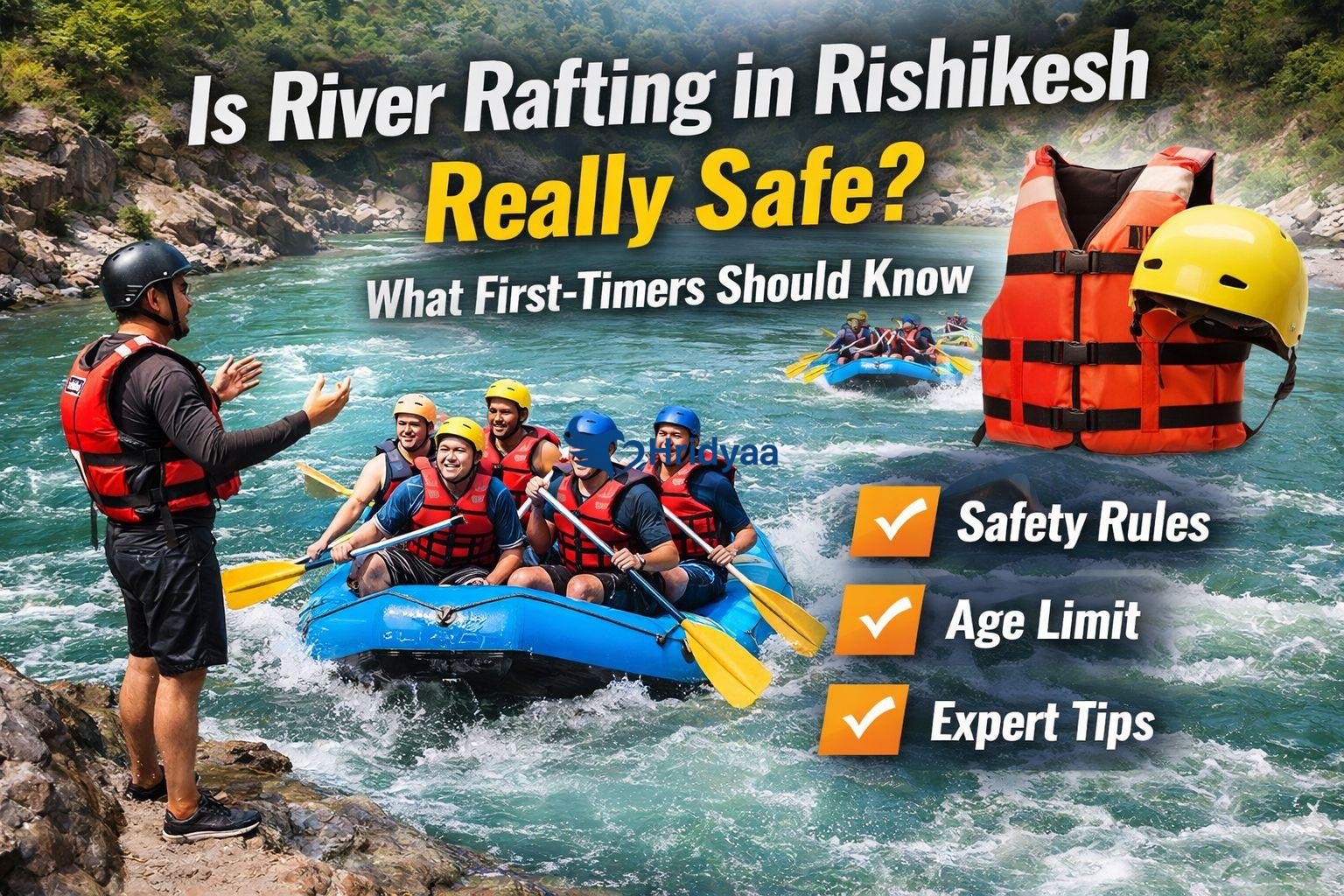
If you’re planning river rafting in Rishikesh for the first time, safety is probably your biggest concern—and rightly so. While rafting looks thrilling, many first-timers wonder whether it’s actually safe, especially on a natural river like the Ganga.
The short answer is: yes, river rafting in Rishikesh is safe—when done legally, with trained guides, and on approved routes.
The long answer (which actually matters) is explained below.
This guide breaks down real safety conditions, official rules, age limits, seasonal risks, and practical tips so you can make an informed decision—not just rely on marketing claims.
Also read, Best Time for River Rafting in Rishikesh
Why Rishikesh Is Considered Safe for River Rafting
Rishikesh is not a random rafting destination. It is one of the most regulated river rafting zones in India.
Rafting here is governed by:
- Fixed river stretches
- Certified rafting operators
- Mandatory safety equipment
- Seasonal restrictions
Unlike unregulated rivers, the Ganga in Rishikesh has predictable gradients, well-mapped rapids, and decades of operational experience. This makes it ideal for beginners as well as experienced rafters.
How Safe Is River Rafting for First-Timers?
For first-timers, rafting safety depends on three critical factors:
- Route selection
- Season and water level
- Operator compliance
Most beginner rafting routes in Rishikesh feature Grade I to Grade II rapids, which are exciting but not dangerous. Every rafting trip starts with a mandatory safety briefing, where guides explain paddling techniques, rescue positions, and what to do if you fall into the water.
Millions of first-time rafters safely raft in Rishikesh every year, including non-swimmers.
Also Read, River Rafting in Rishikesh – Complete Guide
Official Safety Rules for River Rafting in Rishikesh
To ensure safety, rafting operators must follow strict rules:
- Certified river guides are compulsory
- Life jackets and helmets must be worn at all times
- Rafting is allowed only on approved stretches
- Alcohol or drugs are strictly prohibited before rafting
- Weather and water levels are checked daily
- Rafting is stopped immediately if conditions become unsafe
If any operator ignores these rules, do not raft with them, even if the price is lower.
Minimum Age Limit for River Rafting in Rishikesh
Age limits exist to ensure physical and mental readiness.
- Minimum age: Usually 14 years for beginner routes
- Children: Allowed only on short, calm stretches
- Upper age limit: Depends on fitness, not age alone
People with heart conditions, recent surgeries, or serious medical issues should avoid rafting unless cleared by a doctor.
Is River Rafting Safe for Non-Swimmers?
Yes, non-swimmers can safely do river rafting in Rishikesh.
Life jackets used in rafting are designed to keep your body floating face-up in the water. Additionally:
- Guides explain floating positions
- Rescue kayaks are present on tougher stretches
- Guides are trained in swift-water rescue
The key is to stay calm and follow instructions.
Seasonal Safety: When Is Rafting Most Secure?
Safest Months
- October to March: Stable water levels, controlled flow, ideal for beginners
Moderate Risk (Still Safe)
- April to early June: Stronger rapids due to snowmelt, better for thrill seekers
Unsafe Period
- July to mid-September: Rafting is officially closed due to monsoon
If someone offers rafting during the monsoon, it’s unsafe and illegal.
Safety Difference: Shivpuri vs Marine Drive
Routes starting near Shivpuri are longer and slightly more demanding, while Marine Drive routes are shorter and more controlled.
- Marine Drive Rafting: Safer for first-timers and families
- Shivpuri Rafting: Safe but better for people comfortable with water
Route selection plays a big role in safety.
Also Read, Shivpuri vs Marine Drive Rafting
Common Safety Myths
Many people believe rafting is extremely dangerous or only for expert swimmers. In reality, rafting in Rishikesh is statistically safer than many road journeys, when done with licensed operators.
Another myth is that falling into water is fatal. In truth, falling out is rare, and even when it happens, safety systems are designed to handle it.
Practical Safety Tips for First-Time Rafters
- Always choose a licensed rafting operator
- Do not ignore the safety briefing
- Wear proper footwear with grip
- Avoid rafting if you feel unwell
- Never carry valuables on the raft
- Paddle only when instructed
Following these simple tips dramatically reduces risk.
Can Rafting Accidents Happen?
Like any adventure activity, zero risk does not exist. However, most incidents in Rishikesh occur due to:
- Ignoring rules
- Rafting with unlicensed operators
- Attempting rafting during restricted seasons
When rules are followed, rafting remains extremely safe.
Final Verdict: Is River Rafting in Rishikesh Safe or Not?
Yes—river rafting in Rishikesh is safe for beginners, non-swimmers, and families, provided:
- You choose the right season
- You select a beginner-friendly route
- You raft with certified operators
Safety in rafting is not about luck—it’s about preparation and choices.


Join The Discussion