
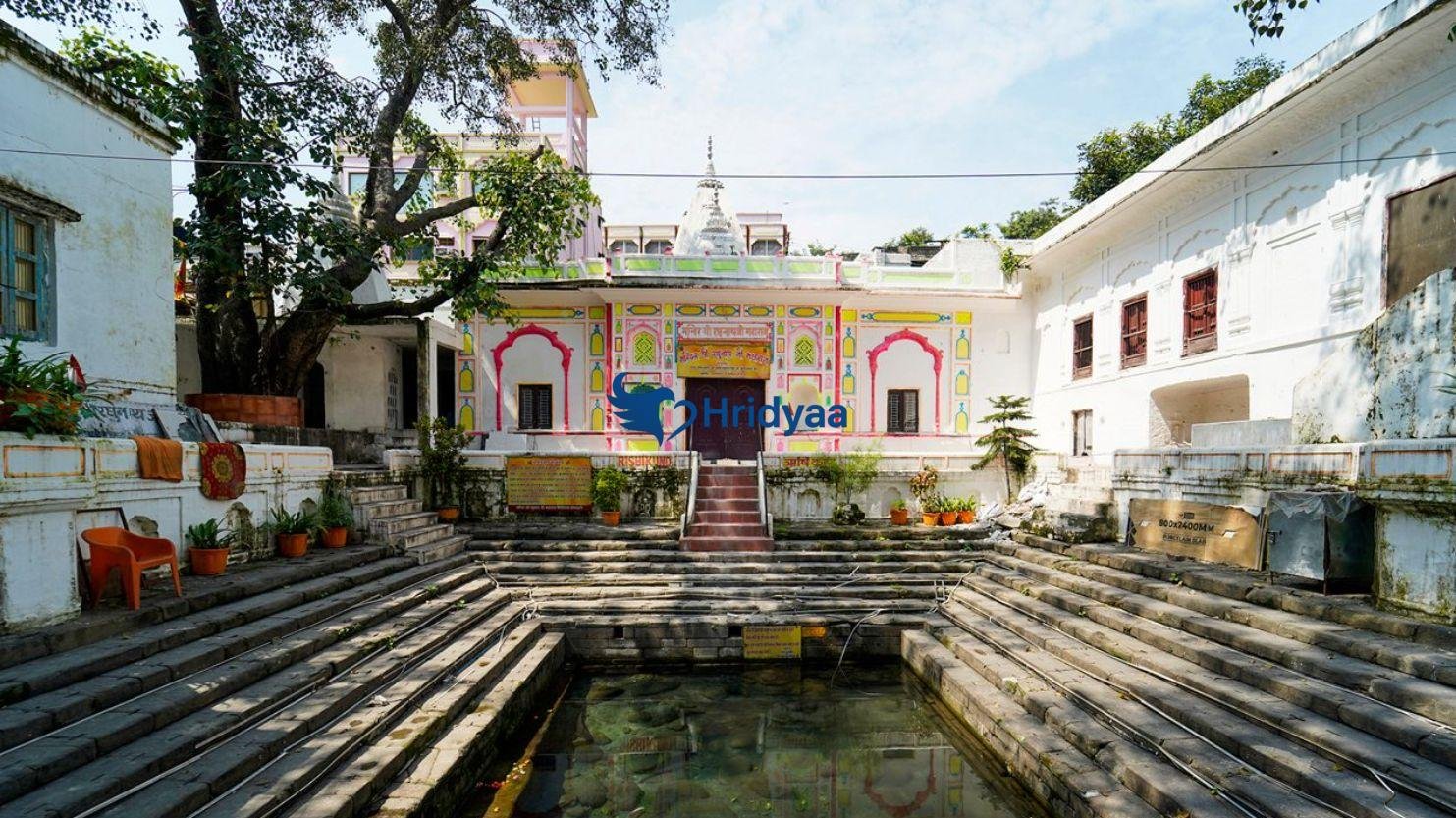
Raghunath Temple is one of the quieter pillars of old-town spirituality in Rishikesh. Overshadowed by riverfront ghats and suspension bridges, this temple remains deeply woven into daily religious life rather than tourism circuits. Located beside Rishikund, Raghunath Temple offers a grounded understanding of how Ram-bhakti traditions continue to shape Rishikesh at a neighborhood level.
Where Exactly Is Raghunath Temple Located?
Raghunath Temple is situated in old Rishikesh, adjacent to Rishikund and within walking distance of Triveni Ghat. Set amid narrow lanes and residential buildings, the temple is not visible from main roads. Its placement reflects an earlier urban pattern where sacred spaces were embedded within community life, not isolated as landmarks. Reaching it requires a short walk through local streets, which is part of the experience.
Historical and Religious Background
The temple is dedicated to Lord Rama, revered here in the form of Raghunath. Tradition links the site closely with Rishikund, where ritual bathing precedes temple worship. While the exact founding date is debated, the temple is considered part of the same early sacred network that includes Bharat Mandir. Over centuries, Raghunath Temple has retained a strong Vaishnava identity, emphasizing devotion, discipline, and continuity rather than architectural expansion.
Why Raghunath Temple Matters Today
Today, Raghunath Temple functions as a daily worship space for residents of old Rishikesh. It becomes especially active during Ram-related festivals and local religious observances. Its importance lies in constancy: priests perform rituals at fixed times, devotees visit routinely, and practices remain largely unchanged. For visitors, this offers a window into living tradition rather than ceremonial display.
What Travelers Often Get Wrong
Many travelers expect a large temple complex or dramatic setting and are surprised by the temple’s modest scale. Others overlook it entirely, assuming nearby Rishikund is the sole attraction. Another common misunderstanding is treating the visit as a quick stop; the temple’s rhythm is subtle and best understood by observing quietly rather than rushing through.
Best Time to Visit and Seasonal Reality
Raghunath Temple can be visited year-round. The most comfortable months are October to March, when weather is mild and movement through old-town lanes is easier. Summers can be warm, particularly at midday, while the monsoon season brings humidity but does not usually interrupt access. Early mornings and evenings align best with prayer timings and a calmer atmosphere.
How to Reach Raghunath Temple
The temple is easily accessible on foot from Triveni Ghat. Auto-rickshaws and taxis can drop visitors near the old market area, after which a short walk leads to the temple entrance. Signage is limited, but locals readily guide visitors. Because the area is residential, patience and awareness of local movement are important.
Rules, Etiquette, and Local Guidelines
Footwear must be removed before entering Raghunath Temple. Modest clothing is expected. Photography inside the sanctum is generally discouraged. Visitors should avoid loud conversation, especially during aartis. During peak ritual times, locals are given priority, and visitors are expected to wait respectfully.
What to Expect When You Actually Visit
Inside, the temple feels intimate and unhurried. The space fills briefly as devotees arrive, offer prayers, and leave. Bells, incense, and soft chanting define the atmosphere rather than announcements or crowds. Outside, daily life continues in the lanes, creating a layered experience where sacred practice and ordinary routine coexist.
Raghunath Temple and Rishikund: A Shared Ritual Space
The close relationship between Raghunath Temple and Rishikund is central to understanding the site. Many devotees bathe at the kund before entering the temple, following long-held ritual order. This pairing illustrates how water bodies and temples function together in traditional town planning, especially in older parts of Rishikesh.
Also Read: Rishikund in Rishikesh: History, Meaning, and How to Visit
Final Take: Is Raghunath Temple Worth Visiting?
Raghunath Temple Rishikesh is worth visiting if you want to experience the town’s spiritual life at ground level. It does not offer spectacle, views, or crowds. What it offers is continuity — a place where devotion unfolds quietly, day after day. For travelers interested in the roots of Rishikesh rather than its highlights, this temple adds essential depth.


Join The Discussion