
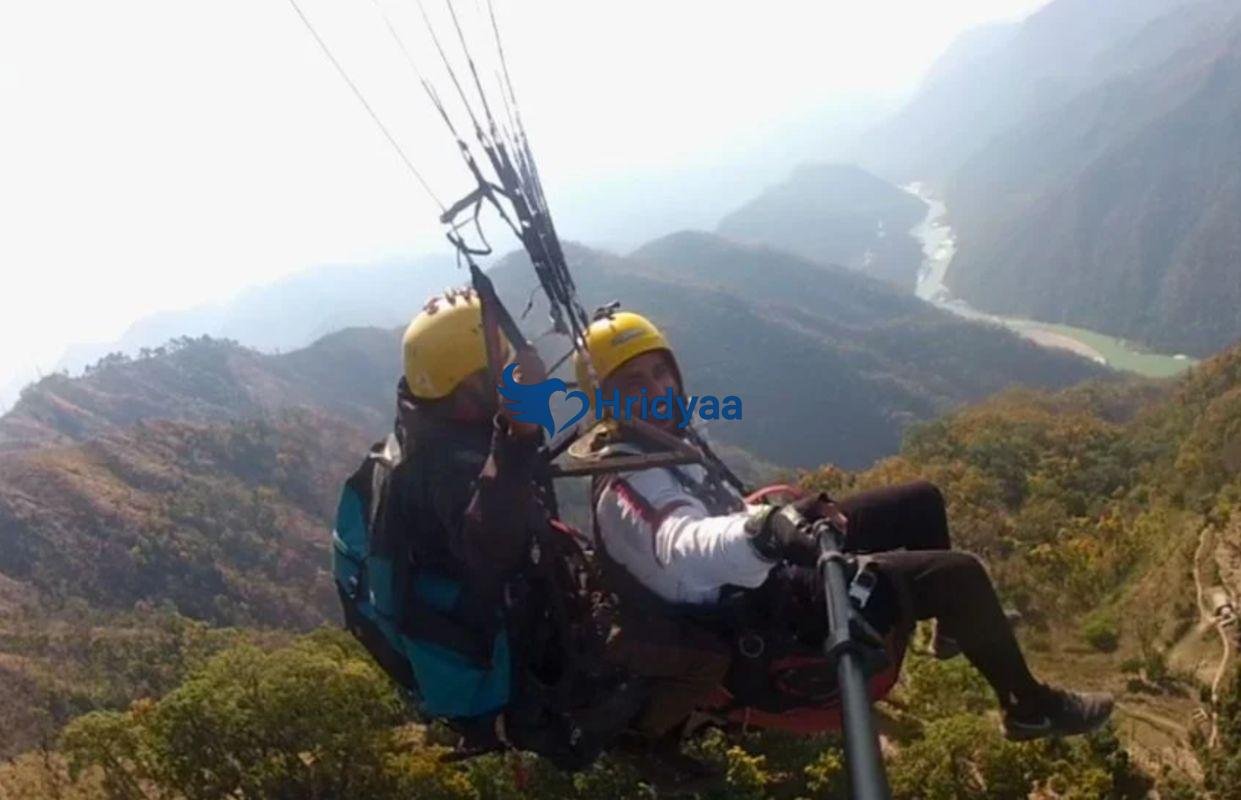
Paragliding in Rishikesh is one of the least understood adventure activities in the region. Unlike rafting or trekking, it is not available everywhere, every day, or for everyone. Paragliding here depends heavily on terrain, wind patterns, and strict safety windows, which makes it a controlled and limited experience rather than a mass tourist activity. When conditions align, however, it offers a rare aerial perspective of the Ganga valley and the Himalayan foothills surrounding Rishikesh.
Why Rishikesh Is Suitable for Paragliding
Rishikesh lies at the edge of the lower Himalayas, where ridgelines rise sharply above river valleys. This geography creates natural take-off points with clean air flow and sufficient height difference for short-duration flights. Unlike high-altitude paragliding destinations, Rishikesh offers low-to-mid altitude flying, which is safer for tandem flights and beginner experiences. The combination of open valleys, thermal availability in certain months, and clear landing zones near the river makes selective paragliding possible.
Where Paragliding Happens in Rishikesh
Paragliding activity in the Rishikesh region is limited to specific hill zones, most commonly around Shivpuri and nearby ridge points above the Ganga. These are not permanent paragliding sites with daily operations. Launch points are chosen based on wind direction and seasonal conditions, and landing zones are typically open riverbeds or cleared fields. There are no paragliding setups within central Rishikesh or near crowded ghat areas.
Tandem Paragliding vs Solo Flying
For visitors, tandem paragliding is the only practical option. In this format, passengers fly with a certified pilot who controls take-off, flight, and landing. Solo paragliding is practiced only by trained pilots with prior certification and local clearance. Unlike some destinations, Rishikesh does not function as a paragliding training hub; its airspace and terrain are better suited for guided experience flights rather than long training programs.
Who Paragliding in Rishikesh Is For
Paragliding in Rishikesh is suitable for travelers seeking a short, scenic aerial experience, not prolonged airtime or acrobatic flying. Basic fitness and comfort with heights are required, but no prior experience is necessary for tandem flights. It is not recommended for individuals with severe fear of heights, heart conditions, or recent injuries. Children and older adults may fly subject to weight and safety assessment by operators.
Best Time for Paragliding in Rishikesh and Seasonal Reality
The best time for paragliding in Rishikesh is from October to April, when wind conditions are relatively stable.
- October to November: Clear skies, gentle thermals, ideal conditions
- December to February: Cooler air, limited flying windows, weather-dependent
- March to April: Stronger thermals, good visibility, short flights
- May to June: Hot air currents, inconsistent wind — limited operations
- July to September (monsoon season): Paragliding suspended due to rain and turbulence
Flights are often conducted only in morning hours when wind stability is highest.
How Paragliding Sessions Are Conducted
Paragliding sessions begin with a safety briefing and equipment check. Participants are transported to the launch point by vehicle or short uphill walk. After harness fitting and wind assessment, take-off happens quickly when conditions allow. Flight duration is usually 5 to 10 minutes, depending on wind and altitude. Landing is controlled and assisted by ground crew. Delays and cancellations are common if wind conditions change suddenly.
Safety Standards and Regulations
Safety in paragliding depends entirely on weather judgment and pilot experience. Certified operators monitor wind speed, direction, and thermal activity continuously. Helmets and harnesses are mandatory. Flights are canceled without notice if conditions are unsafe — this is a sign of responsible operation, not inconvenience. Informal or roadside paragliding offers without certification should be avoided strictly.
What Travelers Often Get Wrong
A common misconception is expecting long, cinematic flights like those seen in alpine regions. In reality, paragliding in Rishikesh offers short, controlled descents, not extended soaring. Another misunderstanding is assuming availability on demand. Flights are conditional, and waiting or rescheduling is normal. Some travelers also confuse paragliding with paramotoring, which is not practiced here.
What to Expect When You Actually Fly
The experience is brief but intense. Take-off happens faster than most people expect, leaving little time for fear to build. Once airborne, the noise disappears, replaced by wind and open space. Views of the Ganga, forested slopes, and river beaches unfold below. The flight ends smoothly, often sooner than anticipated. Most flyers describe the experience as calm rather than thrilling.
Environmental and Airspace Responsibility
Paragliding zones around Rishikesh fall within sensitive ecological and regulated airspace regions. Operators follow strict flight paths to avoid disturbance to wildlife and settlements. Overflying temples, ghats, and dense habitation is avoided. This restraint is why paragliding here remains limited but sustainable.
Final Take: Is Paragliding in Rishikesh Worth It?
Paragliding in Rishikesh is worth it if you view it as a controlled aerial glimpse of the landscape rather than a high-adrenaline adventure. It rewards flexibility, patience, and respect for weather conditions. While it may not satisfy experienced pilots seeking long flights, it offers first-time flyers a safe and memorable introduction to free-flight against the backdrop of the Ganga valley.


Join The Discussion