
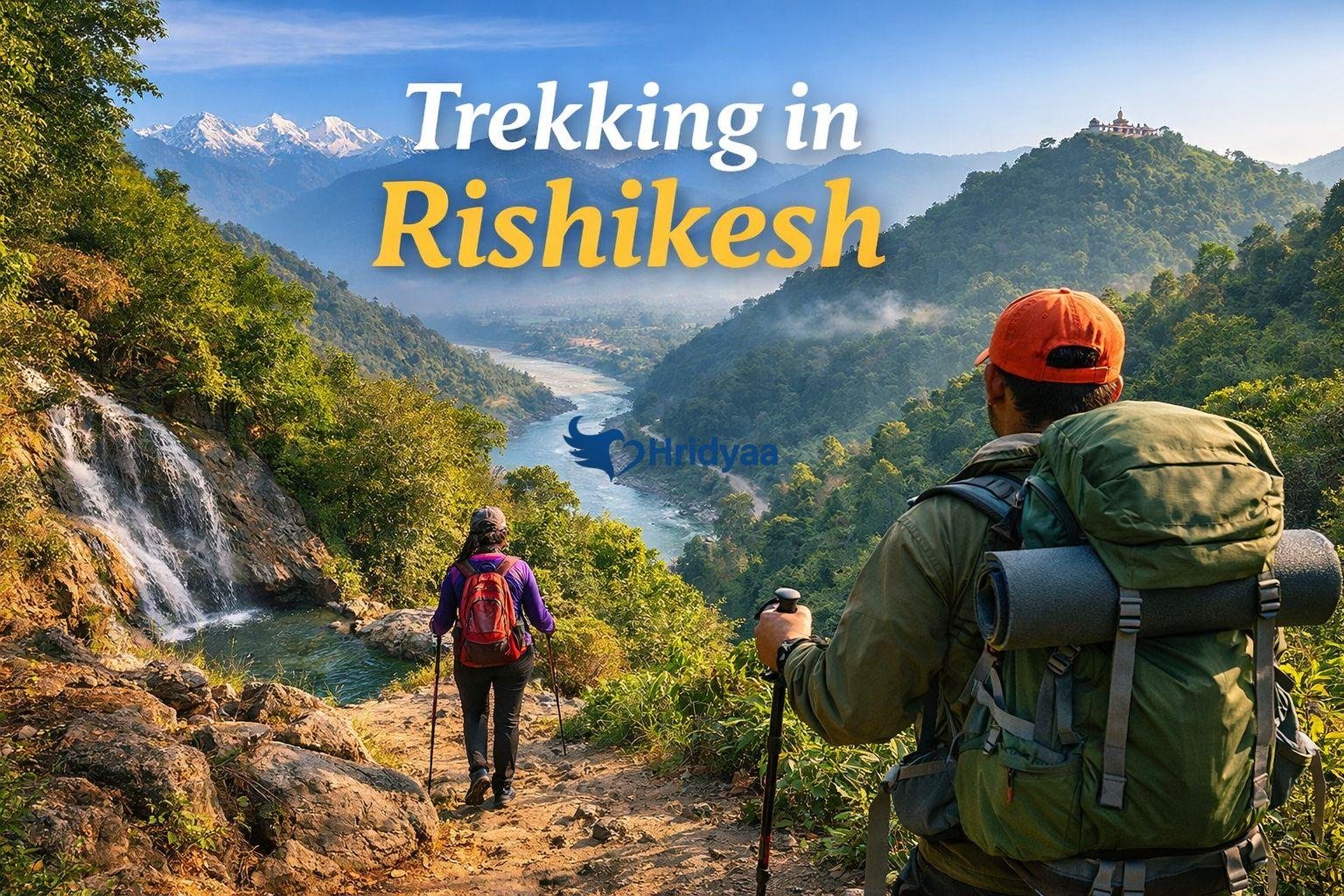
Trekking in Rishikesh is often misunderstood as an add-on activity to yoga, rafting, or temple visits. In reality, trekking here represents one of the most authentic ways to understand the geography and character of Rishikesh. Unlike high-altitude Himalayan treks that demand technical preparation, treks around Rishikesh are shaped by forest trails, river valleys, and village paths. They are accessible, deeply scenic, and closely connected to local life rather than extreme adventure.
Why Rishikesh Is a Unique Trekking Destination
Rishikesh sits at the meeting point of the Ganga plains and the lower Himalayan foothills, creating terrain that changes rapidly within short distances. This geography allows trekkers to move from riverbanks to forest ridges in a matter of hours. What makes trekking here unique is the absence of artificial trekking infrastructure. Most trails are traditional paths used by villagers, sadhus, and shepherds long before trekking became a travel activity. The experience feels organic, not curated.
Types of Treks You’ll Find in Rishikesh
Trekking routes around Rishikesh generally fall into three broad categories.
Forest treks pass through sal forests, shaded trails, and seasonal streams, offering solitude and birdlife rather than dramatic views. Ridge and viewpoint treks climb gradually toward hilltops and temples, rewarding trekkers with panoramic views of the Ganga valley. Village-linked trails connect remote hamlets with roads and rivers, offering insight into rural Garhwal life. These treks are less about summits and more about immersion.
Popular Trekking Routes in Rishikesh (Reality Check)
Some trekking routes near Rishikesh have gained popularity, but expectations need to remain grounded.
Neer Garh Waterfall trek is short and scenic, best during post-monsoon months when water flow is visible. Kunjapuri Temple trek is known more for sunrise views than wilderness, and often overlaps with motorable access. Trails around Shivpuri and Phool Chatti offer quieter forest walks but require navigation awareness. None of these are high-altitude or multi-day Himalayan treks — their value lies in accessibility and atmosphere.
Best Time for Trekking in Rishikesh and Seasonal Reality
The best time for trekking in Rishikesh is from October to April, when temperatures are manageable and forest paths are stable.
- October to February: Cool weather, clear skies, excellent visibility
- March to April: Warmer days, flowering forests, longer daylight
- May to June: Hot afternoons, early morning treks preferable
- July to September (monsoon season): Slippery trails, leeches, flash streams — trekking not recommended
Monsoon trekking is risky due to landslides, sudden water flow, and reduced trail visibility.
How Difficult Is Trekking in Rishikesh?
Most treks around Rishikesh are classified as easy to moderate. Elevation gain is gradual, and technical climbing is absent. However, difficulty often comes from uneven terrain, heat exposure, and lack of signage. First-time trekkers can manage most routes with basic fitness, but assuming “easy” equals “effortless” is a mistake. Proper footwear and hydration remain essential.
Guided Treks vs Independent Trekking
Independent trekking in Rishikesh is possible on well-known routes, but guided treks add value in lesser-known forest and village trails. Local guides understand seasonal changes, wildlife movement, and alternative paths during closures. Guided trekking also supports local livelihoods and reduces navigation-related risks. For solo travelers unfamiliar with the terrain, guided options are strongly advisable.
Safety, Rules, and Environmental Responsibility
Safety during trekking in Rishikesh depends largely on self-awareness. Forest areas may have limited mobile network coverage. Trekking after sunset is unsafe due to wildlife movement and poor visibility. Carrying plastic, playing loud music, or disturbing local water sources is frowned upon and increasingly regulated. Seasonal forest advisories should always be respected, especially during fire-prone months.
What to Expect When You Actually Trek in Rishikesh
The experience is quieter than most travelers expect. Trails are often empty, broken occasionally by villagers or grazing cattle. Views appear suddenly rather than dramatically. You may walk long stretches without viewpoints, only to arrive at a ridge overlooking the Ganga far below. Facilities are minimal — no cafés, no toilets, no shelters — which reinforces the need for preparation and realistic expectations.
Trekking for Beginners vs Experienced Walkers
For beginners, Rishikesh trekking offers a safe introduction to Himalayan terrain without altitude risk. Short-distance treks allow learning pacing, hydration, and terrain reading. Experienced trekkers may find routes physically easy but mentally refreshing, especially as recovery walks or nature immersion days between longer expeditions. The appeal lies not in challenge, but in rhythm and landscape.
Final Take: Is Trekking in Rishikesh Worth It?
Trekking in Rishikesh is worth it if you value natural movement over milestones. It is not about conquering peaks or ticking off distances. It is about walking through a living landscape shaped by river, forest, and foothills. For travelers willing to slow down, respect seasonality, and walk without constant rewards, trekking here offers depth that many louder destinations cannot.


Join The Discussion