
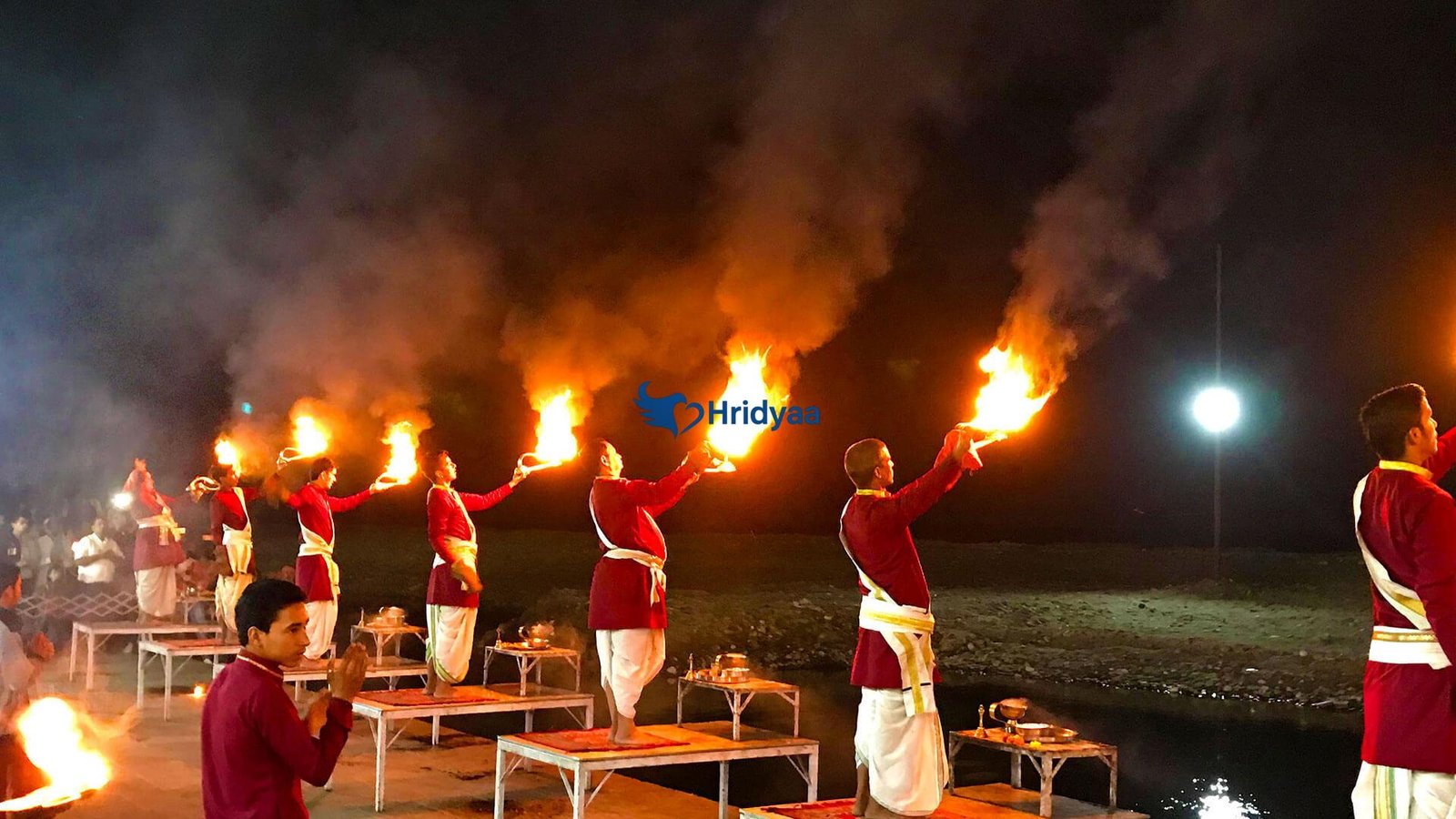
The Ganga Aarti at Triveni Ghat is one of the most visible daily rituals in Rishikesh, but it is also one of the most misunderstood. Unlike the quieter, ashram-led ceremonies upstream, this aarti unfolds at a busy riverfront where pilgrimage, daily life, and tourism overlap. Held every evening on the banks of the Ganga, it reflects how faith operates in a living town rather than a secluded spiritual retreat. To understand it properly, it helps to see Triveni Ghat not as a performance, but as a working religious space shaped by crowds, schedules, and the river itself.
Where Exactly Is Triveni Ghat Located?
Triveni Ghat lies in the heart of Rishikesh town, slightly south of the more tourist-heavy zones like Ram Jhula and Lakshman Jhula. It is situated close to Rishikesh Railway Station and Haridwar Road, making it one of the most accessible ghats in the city. The ghat sits on a broad curve of the Ganga, where the river slows down after descending from the hills, creating a natural gathering point for ritual bathing and evening ceremonies. This central location is the reason it attracts not just visitors, but also a steady flow of local residents throughout the day.
Why This Place Matters Today
Today, Triveni Ghat functions as Rishikesh’s primary public ghat. It is where large-scale religious events, government-linked ceremonies, and daily rituals coexist. The evening Ganga Aarti here is attended by pilgrims arriving from Haridwar, families from nearby neighborhoods, and travelers who want a more grounded experience of river worship. Unlike ashram-based aartis, this one is not curated for silence or symmetry. Its importance lies in its inclusiveness — anyone can join, observe, or simply sit by the water without needing affiliation or advance planning.
What Travelers Often Get Wrong
Many visitors assume the Triveni Ghat Ganga Aarti will feel similar to the more choreographed ceremonies at Parmarth Niketan. In reality, it is less structured and often noisier. Another common misconception is timing. The aarti does not begin at a fixed clock time year-round; it shifts with daylight hours. Travelers also expect uninterrupted river views, but during peak seasons, the ghat can feel crowded, with vendors, devotees, and photographers all sharing limited space. Understanding this prevents disappointment and helps set realistic expectations.
Best Time to Visit and Seasonal Reality
The most comfortable time to attend the aarti is between October and March, when evenings are cooler and the river level is stable. Summers bring heavy crowds and high temperatures, while the monsoon season between July and September can alter access due to rising water levels and safety restrictions along the Ganga. During festivals and long weekends, crowd density increases sharply, and arriving early becomes essential. Sunset remains the practical anchor — reaching the ghat at least 30–40 minutes before dusk allows time to find a place and observe the preparations.
How to Reach Triveni Ghat
Reaching Triveni Ghat is straightforward. It is walkable from Rishikesh Railway Station and easily accessible by auto-rickshaw or taxi from Tapovan, Swarg Ashram, and areas around Ram Jhula. Vehicles drop visitors near the main road, after which a short walk leads down to the steps of the ghat. Unlike ghats further upstream, no bridge crossing is required, making it especially convenient for elderly visitors and families.
Safety, Rules, and Local Guidelines
The ghat is generally safe, but evenings can get crowded, so keeping personal belongings secure is important. During periods of high river flow, authorities may restrict access to the lower steps — these seasonal safety measures should be respected. Photography is allowed, but flash use close to priests and devotees is discouraged. Floating diyas are sold nearby, but visitors should avoid plastic-based offerings to help reduce river pollution. Bathing during the evening hours is not recommended due to slippery steps and low visibility.
What to Expect When You Actually Visit
When the aarti begins, the atmosphere shifts gradually rather than dramatically. Priests chant, bells ring, and oil lamps are raised against the darkening sky, while the Ganga continues its steady flow. Loudspeakers carry prayers across the ghat, mixing with everyday sounds — conversations, footsteps, and traffic from the road above. You may find yourself standing for most of the ceremony, with limited seating available. The experience feels raw and communal, less about spectacle and more about witnessing faith as part of daily life in Rishikesh.
Final Take: Is It Worth Visiting?
The Ganga Aarti at Triveni Ghat is worth visiting if you want to see how spirituality functions in a real, working town rather than a curated spiritual setting. It may not offer visual perfection or silence, but it provides authenticity and scale. For first-time visitors to Rishikesh, it offers valuable context — showing the Ganga not just as a symbol, but as a lived presence shaping the rhythm of the city.


Join The Discussion