
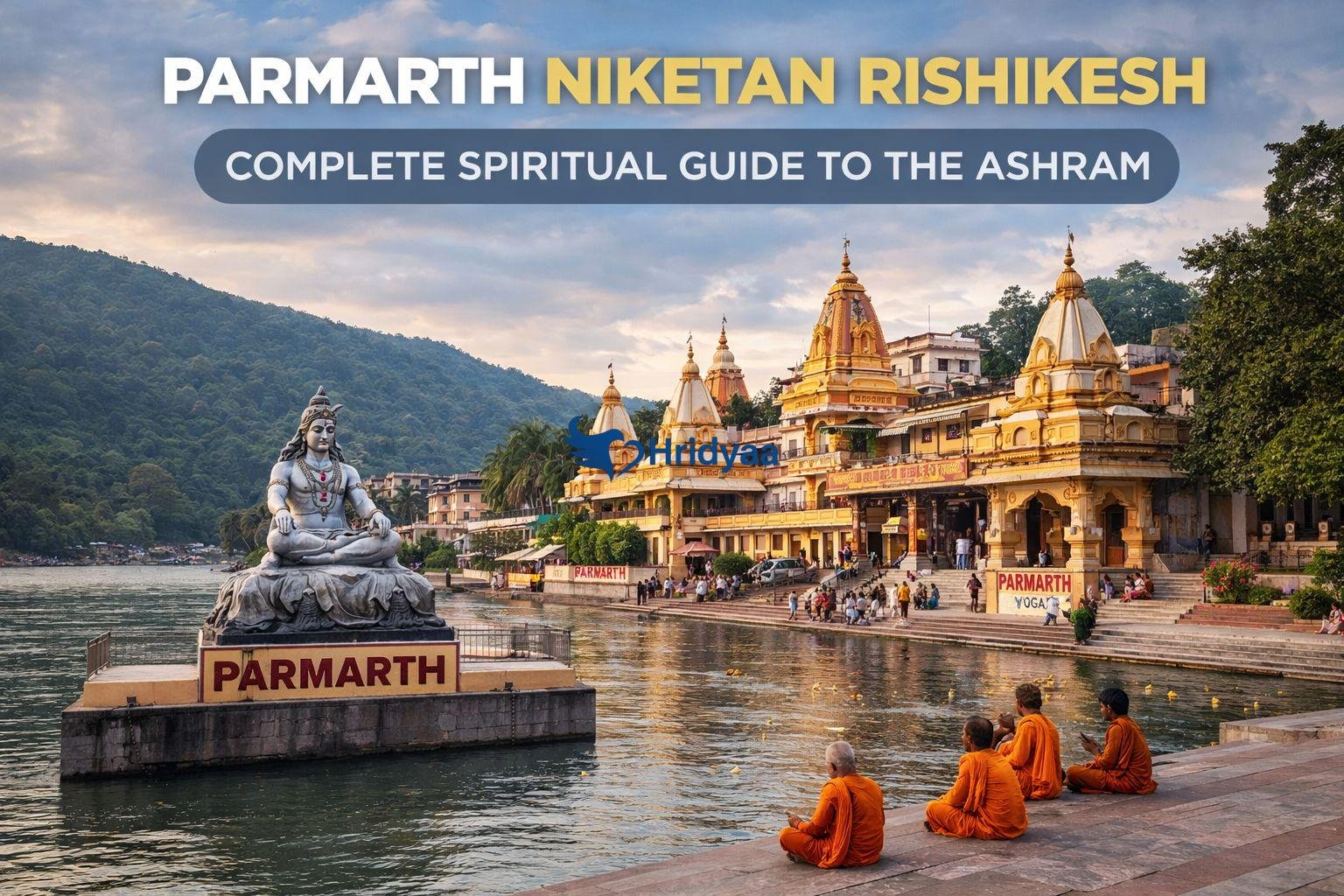
Parmarth Niketan is not simply a place you visit—it is a place where people live a spiritual discipline. Among the many spiritual institutions in Rishikesh, Parmarth Niketan holds a unique position as one of the most respected and active ashrams, known for its emphasis on prayer, service, yoga, and inner transformation.
Situated on the banks of the sacred Ganga, Parmarth Niketan attracts seekers from across India and around the world. Some arrive for a single evening aarti, others stay for weeks or months to follow a structured spiritual routine. What unites them is not tourism, but intention.
This guide presents Parmarth Niketan as it truly is: a spiritual ashram first, not a sightseeing stop. It explains what the ashram represents, how daily life functions here, how visitors can experience it respectfully, and how it differs from other spiritual places in Rishikesh.
Where Is Parmarth Niketan Located?
Parmarth Niketan is located on the eastern bank of the River Ganga, close to the Ram Jhula area of Rishikesh. Its riverside location is not incidental—it plays a central role in the daily spiritual practices of the ashram.
The ashram can be reached on foot from Ram Jhula, and the walk itself feels like a gradual transition from the outer world into a quieter, more disciplined space. Unlike centrally located ghats or markets, Parmarth Niketan is slightly set apart, which helps maintain its peaceful atmosphere.
This setting allows the ashram to function both as a place of worship and a place of residence, with the river acting as a constant presence in daily prayer, meditation, and reflection.
Is Parmarth Niketan a Temple or an Ashram?
Parmarth Niketan is primarily an ashram, not a single temple. Understanding this distinction is essential to understanding how the place functions.
An ashram is a spiritual residence where people follow a disciplined way of life centered around prayer, learning, service, and self-inquiry. Parmarth Niketan operates on this model. It houses residents, students, monks, teachers, and long-term spiritual seekers who follow daily schedules and spiritual practices.
Within the ashram campus, there are temple spaces and prayer halls where worship takes place. These serve the spiritual needs of residents and visitors, but they exist as part of a larger living institution rather than as standalone temples.
This is why Parmarth Niketan feels different from places that are visited briefly for darshan. It is designed for continuity, discipline, and inner work, whether one stays for a day or for an extended period.
Spiritual Significance of Parmarth Niketan
The spiritual significance of Parmarth Niketan lies in its integration of practice and service. Rather than focusing solely on rituals, the ashram emphasizes living spirituality—applying prayer, meditation, and yogic principles to daily life.
The ashram is known for its commitment to yoga as a path of inner balance, meditation as a tool for awareness, and service as an expression of spiritual understanding. These principles guide both residents and visitors, shaping the atmosphere of the place.
Over the years, Parmarth Niketan has become a center where traditional Indian spirituality meets sincere global interest. This balance has helped it earn respect not only within Rishikesh, but internationally, as a place where spiritual learning is practiced rather than merely taught.
Daily Spiritual Practices at Parmarth Niketan
Life at Parmarth Niketan follows a structured spiritual rhythm. The day begins early, often before sunrise, with prayers and moments of silence that set the tone for everything that follows. This early start is not symbolic—it reflects the ashram’s belief that inner clarity is best cultivated when the mind is quiet.
Yoga and meditation form a central part of daily practice. These sessions are not treated as fitness routines but as tools for balance and awareness. Participants are encouraged to move slowly, breathe consciously, and remain present rather than focus on performance.
Throughout the day, residents and long-term seekers engage in study, service, and personal reflection. Acts of service—whether maintaining the campus, assisting in communal activities, or helping others—are considered part of spiritual practice rather than separate from it.
For visitors, simply observing this disciplined flow offers insight into how spirituality is lived here. The atmosphere remains calm, purposeful, and inward-looking, even when the ashram hosts large gatherings or international guests.
Ganga Aarti at Parmarth Niketan
The Ganga Aarti at Parmarth Niketan is one of the most recognized spiritual gatherings in Rishikesh, yet it retains a sense of reverence and order that reflects the ashram’s values.
As evening approaches, people gather quietly along the riverbank. Monks, students, residents, and visitors sit together, creating a shared space that feels inclusive but focused. When the aarti begins, priests offer prayers with lamps, chants, and incense, facing the flowing Ganga.
What distinguishes this aarti is its sense of collective participation. Rather than watching from a distance, many attendees join in prayer, chant softly, or sit in silence. The river, lamps, and voices come together in a way that feels intentional rather than performative.
The aarti is open to all and does not require tickets or prior arrangements. Visitors are encouraged to arrive early, sit respectfully, and allow the experience to unfold without distraction.
Staying at Parmarth Niketan Ashram
Parmarth Niketan offers accommodation for those who wish to experience ashram life more deeply. Staying here is not comparable to staying in a hotel—it involves discipline, simplicity, and participation.
Guests are generally expected to follow the daily schedule, maintain modest behavior, and respect periods of silence or communal activity. The stay is designed to support inward focus rather than comfort or luxury.
People who choose to stay often do so to immerse themselves in yoga, meditation, or spiritual study. Short stays are possible, but the environment is best suited for those who approach it with intention rather than curiosity alone.
Visiting Parmarth Niketan Without Staying Overnight
Many people visit Parmarth Niketan without staying at the ashram, and this is completely acceptable. Day visitors are welcome, provided they approach the place with respect and awareness.
Visitors usually come to attend the evening Ganga Aarti, sit quietly by the river, or spend some time walking through the ashram premises. Certain areas are reserved for residents and long-term students, but the main river-facing sections, prayer spaces, and common areas are accessible.
There is no pressure to participate actively. Some visitors sit silently, others observe, and some join prayers in their own way. What matters most is maintaining a quiet and respectful presence.
A short visit can be deeply meaningful, especially for those who want to experience the spiritual atmosphere without committing to an overnight stay.
How Parmarth Niketan Is Different from Other Spiritual Places in Rishikesh
Rishikesh is filled with spiritual spaces, but Parmarth Niketan stands apart because it functions as a living spiritual institution, not just a place of worship.
Ghats like Triveni Ghat are primarily ritual spaces where people come for specific religious acts. Smaller ashrams often focus on individual teachers or limited practices. Parmarth Niketan, however, integrates prayer, discipline, learning, and service into a single continuous way of life.
Another difference is consistency. The spiritual routine here continues every day, regardless of season or crowd size. Even during busy periods, the internal rhythm of the ashram remains steady and inward-focused.
For seekers, Parmarth Niketan offers depth and structure. For visitors, it offers a window into how spiritual practice can be lived, not just observed.
Important Guidelines for Visitors
Parmarth Niketan is a place of worship and spiritual discipline, and visitors are expected to align their behavior accordingly.
Modest clothing is strongly recommended. Shoulders and knees should be covered, and attire should reflect the sacred nature of the space. Loud conversations, phone use, and casual behavior that might be acceptable in tourist areas are discouraged here.
Photography is allowed in certain areas, but it should never interrupt prayers, meditation, or the Ganga Aarti. When in doubt, it is best to refrain.
Silence is not enforced everywhere, but maintaining a calm presence helps preserve the atmosphere for those who live and practice here daily.
By observing how residents behave, visitors can naturally understand how to move, sit, and participate respectfully.
Best Time to Visit Parmarth Niketan
Parmarth Niketan can be visited throughout the year, but the experience varies with timing.
Early mornings are ideal for those seeking quiet and introspection. The ashram feels especially peaceful at this time, and the rhythm of daily practice is most visible.
Evenings draw larger gatherings, especially during the Ganga Aarti. This is the best time for visitors who want to witness the collective spiritual energy of the place.
Seasonally, cooler months offer greater comfort for sitting outdoors and attending longer sessions. During festivals, the ashram becomes more vibrant, though also more crowded.
Frequently Asked Questions About Parmarth Niketan
Is Parmarth Niketan open to everyone or only to spiritual seekers?
Parmarth Niketan is open to everyone, regardless of background or belief. While it functions as a spiritual ashram, visitors are welcome as long as they respect the environment, routines, and purpose of the place.
Is there any entry fee to visit Parmarth Niketan?
No, there is no entry fee to visit Parmarth Niketan. Entry to the ashram and attendance at the Ganga Aarti are free. Visitors may make voluntary donations if they wish, but nothing is compulsory.
Do I need to book in advance to attend the Ganga Aarti here?
No advance booking is required for the Ganga Aarti. It is open to all. However, arriving a little early helps you find a comfortable place to sit and experience the aarti without distraction.
Can families and children visit Parmarth Niketan?
Yes, families and children are welcome. Parents are encouraged to ensure children remain calm and respectful, especially during prayers and the aarti. Evening visits can be crowded, so daytime or early evening may feel easier for families.
Is Parmarth Niketan a good place for first-time visitors to Rishikesh?
Yes, Parmarth Niketan is often one of the most meaningful places for first-time visitors because it offers a clear sense of Rishikesh’s spiritual identity without requiring prior knowledge or long stays.
What kind of clothing is appropriate when visiting Parmarth Niketan?
Modest clothing is recommended. Clothes that cover shoulders and knees are considered respectful. This applies especially during prayers, meditation sessions, and the Ganga Aarti.
Can I take photographs inside Parmarth Niketan?
Photography is allowed in some areas, but it should be done discreetly. Visitors should avoid taking photos during prayers or aarti unless it can be done without disturbing others.
Is Parmarth Niketan suitable for people looking for yoga or meditation?
Yes, Parmarth Niketan is well known for its focus on yoga and meditation as spiritual practices. While casual visitors can observe, those interested in deeper learning often choose to stay for longer periods.
How much time should I spend at Parmarth Niketan if I’m not staying overnight?
Most day visitors spend between one to two hours, especially if they attend the evening aarti. There is no fixed duration—many stay as long as they feel connected and comfortable.
What makes Parmarth Niketan different from other ashrams in Rishikesh?
Parmarth Niketan stands out for its balance of discipline, openness, and service. It maintains a structured spiritual routine while remaining accessible to visitors, making it both a place of learning and a place of shared devotion.
Final Thoughts on Parmarth Niketan
Parmarth Niketan is not a place designed to impress. It does not rely on grandeur or spectacle. Its strength lies in consistency—daily prayers that happen without pause, service carried out quietly, and a discipline that continues regardless of who is watching.
For some, a short visit offers calm and clarity. For others, longer stays become transformative. What Parmarth Niketan offers is not an experience to consume, but an atmosphere to enter.
Those who visit with patience and respect often leave with a deeper understanding of why Rishikesh is called a spiritual town—not because of the number of ashrams, but because of places like this, where spirituality is lived every day.


Join The Discussion